I spent eighteen months filling every hour with errands and phone calls before I understood that the busyness was the emptiness, not the cure for it.

Add VegOut to your Google News feed. 
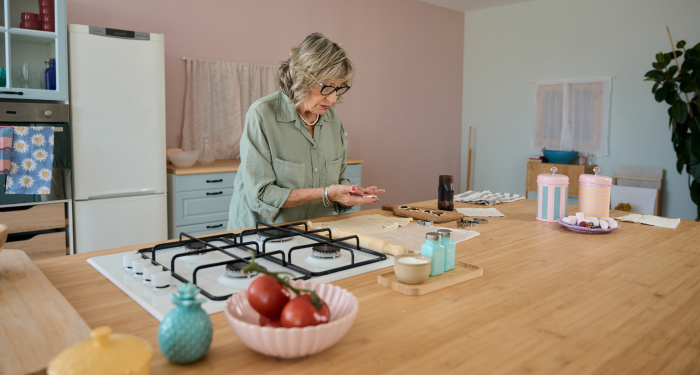
A woman I used to work with, Margaret, retired from thirty-one years of teaching in 2019. She told me once, over tea at a café near the old school, that she'd spent the first six months of retirement reorganising her linen cupboard four times. Not because it needed it. Because the silence in the house after 7:45 a.m., when she would have been standing in front of a classroom, felt like a sound she couldn't identify. She kept the radio on all day, every station, even ones she didn't like. She scheduled lunch with someone every single day for weeks. She said she was "keeping active." She was terrified.
I think about Margaret often, because I recognise something in her story that I've felt in my own bones. That frantic, almost athletic commitment to filling time. The way a person can mistake a packed calendar for a full life, and how long it takes before the difference becomes visible.
The Busy Schedule as Anaesthetic
For most of my adult life, I wore busyness like armour. I suspect many people reading this have done the same. Errands, obligations, phone calls returned during the drive home, dinners planned weeks in advance, weekends structured down to the hour. There was a rhythm to it that felt productive. Purposeful. The trouble was that none of it required me to sit still long enough to notice how hollow the centre of things had become.
Some psychologists have explored the relationship between environmental stimulation and the way we process our inner lives. The basic idea is that external input, whether it comes from noise, activity, social interaction, or even the low hum of a busy workplace, may occupy the mental resources that would otherwise be available for self-reflection. When the stimulation is constant, we lose the ability to distinguish between "I am engaged" and "I am avoiding." They feel identical from the inside.
Margaret told me she didn't understand this until the reorganising stopped working. The cupboard was perfect. The radio was grating. The lunches were exhausting. And one afternoon she sat in her kitchen with nothing scheduled and nothing broken and nothing to fix, and she cried for forty minutes without knowing exactly why.
What the Quiet Reveals
The shift usually arrives uninvited. A retirement, like Margaret's. A period of illness that pins you to the sofa for weeks. A loss that rearranges your priorities so suddenly that the calendar you kept full starts to look absurd. The busy schedule that had been holding everything together falls away, and what's underneath is not peace. Not at first. At first, it's a kind of ringing silence, like the moment after a loud machine switches off and you can suddenly hear yourself breathing.
Studies on meaning in life and psychological well-being have explored how major disruptions, particularly loss and illness, can function as catalysts for a fundamental reassessment of what actually constitutes a meaningful day. The person doesn't become happier automatically. They become available to happiness they had been too busy to receive.

I've watched this happen in people I love. The initial panic when the schedule empties. The restlessness that looks a lot like boredom but is actually grief, grief for the identity that busyness had been propping up. And then, slowly, if they're patient enough or tired enough to stop fighting it, a strange settling. A willingness to sit with the quiet instead of running from it.
Stimulation Dressed Up as Meaning
For years I confused excitement with purpose. A full diary meant a full life. An empty Saturday meant I'd failed somehow, that I was falling behind some invisible standard of participation. I think this confusion runs deeper than personal habit. There's something cultural in it, a collective agreement that stillness is laziness and that a person's value can be measured by how little unstructured time they have.
The problem is that stimulation and meaning may operate on entirely different circuits. Stimulation often responds to novelty: new information, new environments, new social interactions. It can produce a spike of engagement that fades quickly and demands replenishment. Meaning, by contrast, tends to be slower. It builds through repetition, through depth, through the willingness to return to the same place or the same person or the same small ritual and extract reward from depth rather than breadth. The restless mind skips over these layers entirely, always scanning for the next new thing, mistaking that scanning for aliveness.
I spent decades scanning. I was very good at it. I could fill a weekend so thoroughly that by Sunday evening I'd collapse into bed genuinely exhausted, and I'd call that exhaustion "living fully." What I didn't notice was that the exhaustion never converted into satisfaction. It just converted into more exhaustion, which I then medicated with more plans.
The Skill Nobody Teaches
Here's what took me the longest to understand: contentment in monotony is a skill. I'd always assumed some people were simply wired for it. That the woman who could spend a whole morning with a cup of tea and a book and a patch of sunlight on the kitchen floor was built differently from me, that she possessed some constitutional stillness I'd missed out on.
She wasn't built differently. She'd learned something. Usually the hard way.
The people I know who are genuinely peaceful with repetitive, quiet days have almost always passed through a period of forced stillness. An injury. A bereavement. A job that vanished. A marriage that went quietly silent from the inside. Something removed the scaffolding and they had to learn to stand without it. The learning was miserable. But what came after the misery, if they stayed with it long enough, was a recalibration of what "enough" actually means.
Enough turned out to be much smaller than any of them expected. A walk that followed the same route every morning. The same café, the same table by the window. Cooking the same three meals in rotation, not out of resignation but because familiarity had started to feel like a form of care. The morning light hitting the counter at the same angle, noticed for the first time because they'd finally stopped rushing past it.

The Loss That Teaches You to Stay
I've been thinking about why the shift so often follows loss. I think it's because loss strips away pretence with a brutality that nothing else can match. You can't perform busyness when you're sitting in a hospital waiting room at two in the morning. You can't maintain the illusion of a packed, purposeful life when the person who made it feel purposeful is gone. The schedule doesn't just empty; it becomes meaningless in a way that exposes how much meaning you'd been outsourcing to it.
I sat with this question for months—why did rest feel so wrong even when I was exhausted?—before I recorded a video about the science of doing nothing and realized the guilt itself was the last symptom of a life that had mistaken motion for purpose.
And in that exposure, if you can bear it, something shifts. You start to notice that the things which actually sustain you are embarrassingly ordinary. The weight of a mug in your hands. The sound of rain against a window you're not trying to get anywhere through. A conversation with someone who already knows everything about you, which means neither of you has to perform. People who've stopped being able to feel joy in things that used to light them up often describe a quality of going through the motions, and the path out rarely involves adding more activities. It involves subtracting until what's left is real.
Margaret told me, about a year after the linen cupboard phase, that she'd started waking up at six and just sitting in her garden with coffee. Not reading. Not listening to anything. Just sitting. She said the first few times it felt ridiculous, like she was playacting at being a calm person. Then one morning it stopped feeling like playacting. It just felt like morning.
What Remains When You Stop Performing
I've noticed that people who reach this place rarely talk about it with evangelism. They don't recommend it or package it into advice. There's a quietness to the knowledge that resists being turned into a lesson. Maybe because the lesson only lands when the ground has already been broken by something painful, and no one wants to wish that on someone else.
What I can say from watching it happen, and from feeling the early edges of it myself, is that the shift changes what you notice. You start seeing texture in places that used to look flat. The same walk becomes a different walk depending on the weather, the season, whether you slept well, whether you're carrying something heavy in your mind. The sameness becomes a surface onto which your inner state projects itself with startling clarity. You can't hide from yourself inside a routine the way you can hide from yourself inside chaos.
And maybe that's the real skill. The willingness to be unguarded with yourself. To let a quiet morning be a mirror rather than a threat. To stop treating boredom as a problem that requires a solution and start treating it as a space that might, if you stay in it long enough, have something to show you.
Margaret still has tea with me when our schedules line up. She's different now, in a way that's hard to articulate. More present, maybe. Less afraid of pauses in conversation. She told me last time that she'd stopped reorganising things entirely. "The cupboard's a bit of a mess, honestly," she said, smiling. "But I know where everything is." And the way she said it, I understood she was talking about more than linen.
What’s Your Plant-Powered Archetype?
Ever wonder what your everyday habits say about your deeper purpose—and how they ripple out to impact the planet?
This 90-second quiz reveals the plant-powered role you’re here to play, and the tiny shift that makes it even more powerful.
12 fun questions. Instant results. Surprisingly accurate.