The silence where a question used to be can reshape your entire relationship with your parents, and most of us never learn how to talk about it.

Add VegOut to your Google News feed. 
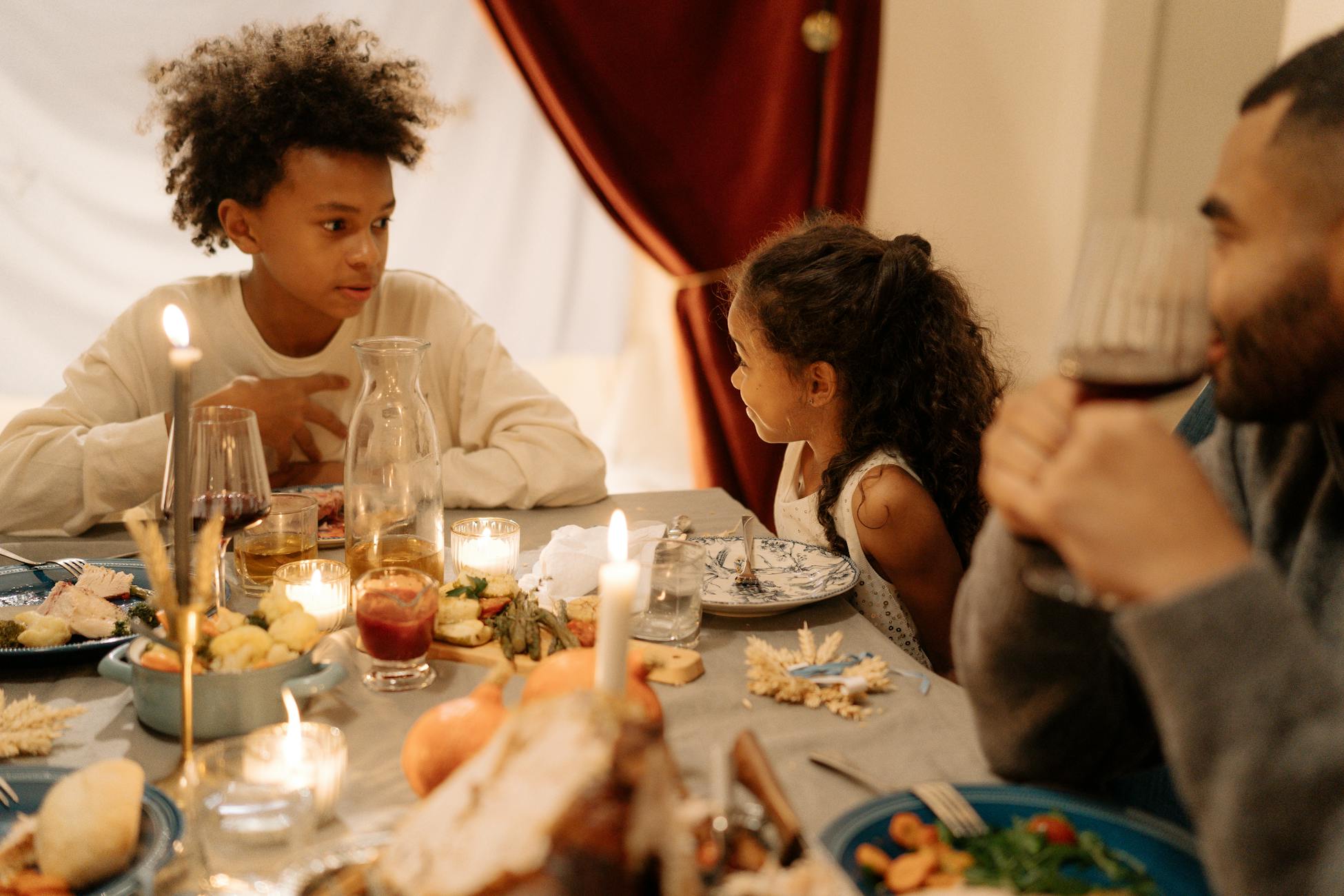
Research suggests that parental disappointment is one of the emotions children fear most from early childhood onward, and adolescents learn to detect it with an almost preternatural accuracy. What the research doesn't capture, though, is what happens when you're fifty years old, sitting across from your mother at a holiday table, and you realize she's carefully steering the conversation away from the one subject she used to raise every single time you called. She's not asking about grandchildren anymore. And that silence, that conspicuous absence of a question that once felt intrusive, has become the loudest thing in the room.
The Question That Disappears
My mother used to ask. She'd work it in between questions about whether I was eating enough and whether I'd fixed the leak in the bathroom. "Anyone special?" she'd say, which was Greek-immigrant shorthand for: when are you giving me grandchildren? After the divorce at thirty-six, she gave me a grace period. A couple of years where the question retreated. Then it came back, gently, folded inside other conversations about cousins' weddings or a neighbor's new baby.
And then, somewhere around my mid-forties, it stopped.
No announcement. No conversation where we agreed to close the topic. The question just evaporated, and in its place was a particular kind of care: my mother being extra attentive, extra cheerful, filling the space where the question used to sit with recipes she'd found and stories about the souvlaki shop. She was protecting me, I think. Or protecting herself. Maybe both. That's the thing about family silence. It can be an act of love and an act of grief at the same time, and nobody teaches you how to hold both of those truths in your body without one of them turning into resentment.
What Silence Actually Communicates
There's a difference between a parent who accepts your life and a parent who has decided to stop talking about the part of your life that disappoints them. I know the difference because I've felt it in my chest. Acceptance has warmth to it. It opens space. The other thing, the strategic silence, has a weight. It sits between you like furniture nobody acknowledges.
My father was worse at hiding it than my mother. He's a man who ran a souvlaki shop for thirty years, who worked six days a week so his kids could have something different, and whose entire framework for understanding success was: you build something, you pass it down, your children build something, they pass it down. The restaurant was supposed to become mine. I walked away. And then the grandchildren were supposed to come. They didn't. Two foundational expectations, both unmet. He never said a word about either one directly. He just got quieter at family gatherings, a little more focused on his plate, a little less likely to tell the long stories he used to tell about his own father.
I've watched this pattern play out with friends too, both in the Greek community and outside of it. One friend told me his mother started sending him articles about freezing sperm. Another said her parents simply began introducing her as "our daughter, the lawyer" at family events, emphasis on the career, as if constructing an alternative narrative for why there were no children: she was too busy being successful. The story they told others became the story they told themselves. A kind of borrowed pride to replace the specific pride they'd imagined.
The Grief Underneath the Disappointment
Here's what took me years to understand: my parents' disappointment about grandchildren wasn't really about grandchildren. It was about mortality. It was about continuity. My mother grew up in a village where your worth was measured partly by what you produced and partly by what continued after you. Recipes passed down. Names recycled through generations. The same songs sung over the same dishes at the same table, forever. When that chain breaks, it doesn't just feel like a personal loss. It feels like an existential one. Like the whole story might end.
I used to resent this. In my thirties and forties, when I was defining myself entirely by the restaurant, I thought my parents' fixation on grandchildren was a failure to see me as I was. A refusal to accept that my life had value on its own terms. And there was truth in that. But there was also something I was missing, something I only started to see after I began paying closer attention to what objects and rituals represent to people who gave up everything to start over in a new country. For my parents, grandchildren weren't accessories. They were proof that the immigration worked. That leaving Greece, learning a new language badly, enduring decades of exhausting labor, all of it had a point beyond survival.
When I see it that way, the disappointment feels less like judgment and more like mourning. They're mourning a future they imagined. And I'm mourning the version of myself who could have given it to them without complication.
The Things We Perform for Each Other
The silence goes both ways. My parents stopped asking. I stopped explaining. We built an entire architecture of avoidance around this one subject, and then we decorated it with pleasantries and extra helpings of spanakopita. The performance of being fine became so practiced that sometimes I forget we're performing at all. Then something breaks through: a cousin brings a baby to Easter dinner, and I catch my mother holding that child with an expression I can only describe as hungry. And the whole careful structure wobbles.
What parents often don't realize is that the things they leave unsaid can land harder than the things they voice. A direct question can be deflected, argued with, laughed off. But a parent who has clearly chosen to stop asking, who has visibly rearranged their expectations and their conversational habits around your absence of children, communicates something that can't be deflected. They communicate that they've given up. And being the reason your parents gave up on something they deeply wanted, even when you know the decision was yours to make, even when you know it was the right one, carries a particular kind of weight.
I spent my whole childhood translating for my parents. Medical forms, invoices, lease agreements. I was ten years old, standing between them and the English-speaking world, making sure they were understood. And now here we are, decades later, and the one thing none of us can translate is this silence. I don't have the vocabulary for it in English or Greek.
Where the Vegan Table Fits
Going plant-based added another layer to this, if I'm honest. When I started creating vegan versions of my mother's recipes, there was a period where she took it as yet another departure. Another way I was leaving the path she'd imagined. No grandchildren and now no lamb at Easter. But something unexpected happened over time. The plant-based cooking became a bridge. She'd call to ask how I'd made the vegan moussaka. She'd suggest modifications. She once told me, grudgingly, that the cashew-based béchamel was "not terrible," which in my mother's emotional language is roughly equivalent to a standing ovation.
Food became the place where we could still pass something down, even without grandchildren to pass it to. I was adapting her recipes, preserving the flavors, keeping the tradition alive in a different form. And I think that mattered to her more than she let on. The chain hadn't broken. It had just bent in a direction she hadn't anticipated.
I sat with this question for months before recording a video about whether or not to have a family, trying to untangle my own feelings from the weight of everyone else's expectations. What I didn't expect was how many people would reach out afterward to say they felt seen for the first time.
Holding Both Things at Once
The hardest part of this whole experience has been accepting that my parents can love me completely and still be disappointed. That their disappointment doesn't cancel their love, and their love doesn't erase their disappointment. For a long time, I needed it to be one or the other. I needed to either be angry at them for wanting grandchildren or guilty for not providing them. The idea that I could hold both compassion for their grief and confidence in my own choices felt impossible. It felt like a contradiction.
It isn't. It's just uncomfortable. And discomfort, I've learned, is where most of the honest living happens.
I think about the generational arguments that feel so personal because they're really about whether your suffering counted. My parents suffered enormously to give me choices. One of those choices turned out to be the choice not to have children. They didn't see that coming. Neither, frankly, did I.
My mother called last week. She told me about a new vegan restaurant that opened near the old souvlaki shop in Hamilton. She'd walked past it and thought of me. She described the menu in detail. She asked if I'd tried making vegan avgolemono yet. She did not ask about grandchildren. She has not asked in years.
And I sat there on the phone, listening to her voice, grateful and grieving in equal measure. Because she was trying so hard. And so was I. And the question that used to sit between us, loud and insistent, has been replaced by something quieter and stranger: the shared knowledge that we are both, in our own ways, learning to love a life that looks different from the one we imagined. The healing between parents and adult children doesn't always look like resolution. Sometimes it looks like two people choosing, again and again, to keep showing up to the same table, even when the empty chairs are visible to both of them.
The oregano still smells the same. That counts for something.
What’s Your Plant-Powered Archetype?
Ever wonder what your everyday habits say about your deeper purpose—and how they ripple out to impact the planet?
This 90-second quiz reveals the plant-powered role you’re here to play, and the tiny shift that makes it even more powerful.
12 fun questions. Instant results. Surprisingly accurate.