The phone in your hand holds 300 contacts and none of them belong to you anymore — they belong to a version of you that had time, proximity, or a reason to keep showing up.

Add VegOut to your Google News feed. 
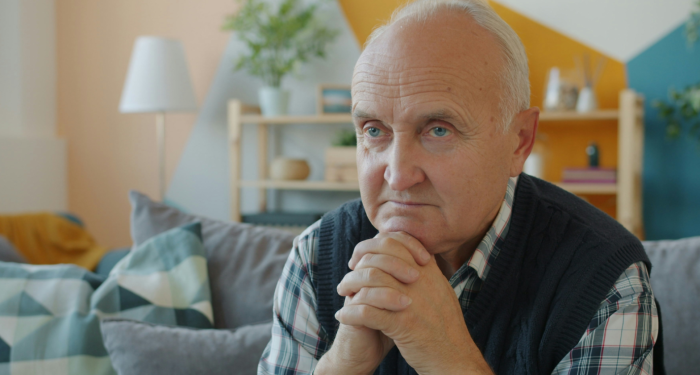
You're sitting on the couch, coffee gone cold, scrolling through your phone contacts. You pass name after name. Some you recognize immediately. Some take a second. And with each one, you feel this small internal negotiation: Could I call this person? What would I even say? Would they wonder what I wanted? You keep scrolling. You reach the bottom. You set the phone down. And then you sit with something that feels enormous and impossibly quiet at the same time.
That was me last Saturday. I'm 44 years old. I have a phone full of contacts, a life full of acquaintances, and a social calendar that revolves entirely around obligations. Family dinners. Work calls. Parent-teacher conferences. And when I tried to find someone outside those categories, someone I could call just because I wanted to hear their voice, I came up empty. Every single name carried a timestamp of distance. Six months. Two years. Five years. The math was always the same: too long to just pick up and call without it feeling like an event.
The Slow Disappearance Nobody Warns You About
Friendships in your twenties feel like weather. They just happen to you. You're standing in a dorm hallway, and someone makes you laugh, and three weeks later you're splitting a pizza at 2 a.m. talking about your parents' divorce. There's no negotiation, no scheduling, no anxiety about whether you're being weird by showing up unannounced. You just show up.
Then your thirties arrive, and friendships start requiring infrastructure. Calendars. Babysitters. A two-week lead time for a dinner that gets rescheduled twice. And by the time you're deep into your forties, you look around and realize the infrastructure collapsed so gradually you didn't notice. You're not angry at anyone. Nobody did anything wrong. You all just… stopped.
Research suggests that middle-aged Americans report higher rates of loneliness compared to some other age groups and populations in other countries. That finding haunts me because it suggests something structural, something embedded in how we build our adult lives. We pour everything into career and family, two buckets that are socially sanctioned, and we let the third bucket (the one labeled "people who know you just because they chose to") drain completely dry.
The thing is, I didn't choose isolation. I chose everything else, and isolation was what was left over.

The Explanation Tax
Here's what kept me from dialing any of those numbers: the explanation. The conversational toll booth you have to pass through when you reach out to someone after a long silence. "Hey, I know it's been a while…" or "I was just thinking about you and…" Every version of the opening line felt like an apology, and every apology implied I'd done something wrong by disappearing, which meant I'd also have to account for why I disappeared, and honestly the answer (I got busy, I got tired, I forgot how to do this) felt too pathetic to say out loud.
So I didn't call anyone.
There's a psychological layer here that goes beyond scheduling conflicts. The interplay between social anxiety and depression creates a feedback loop where the longer you go without reaching out, the more anxious the act of reaching out becomes, and the more anxious it becomes, the longer you go. I've watched this loop run in the background of my life for years. Each month of silence adds another layer of awkwardness, until the awkwardness calcifies into something that feels permanent. The friendship didn't end with a fight. It ended with a gradient.
We Mistake Proximity for Connection
I have people I see regularly. The parents at school pickup. The guy at the gym who spots me on bench press. My neighbor who waves when we're both taking out the trash. I know their names. I know fragments of their stories. But I couldn't call any of them on a Saturday afternoon to say, "I'm feeling kind of lost and I don't know why." That sentence requires a different kind of relationship, one built on accumulated vulnerability, on having seen each other be messy and still choosing to come back.
I used to have those relationships. I had friends who knew my bad habits, my recurring dreams, the specific way I get quiet when I'm hurt instead of loud. And I knew theirs. But proximity was doing all the heavy lifting. We lived in the same city, worked in the same building, drank at the same bar. When the proximity ended, so did the mechanism that kept us close. What I mistook for deep friendship was actually deep convenience, and that realization stings more than I'd like to admit.
Writers on this site have explored how kindness can become an identity that obscures who you actually are. I think something similar happens with social busyness. You can be surrounded by people for decades and never build the kind of connection that survives a change in context. You were the coworker. The neighbor. The school-parent friend. And when the context shifts, the role evaporates, and you're left holding a contact list full of ghosts.
What I'm Actually Grieving
I spent a while thinking I was grieving specific people. And sure, there are names I miss. But the bigger grief is for a version of myself who knew how to do this. The version who could walk into a room and turn a stranger into a friend within an hour. The version who didn't calculate risk before being vulnerable. That person existed. I have the memories to prove it. But somewhere between 30 and 44, I replaced spontaneity with caution and openness with efficiency, and I got very, very good at being alone without realizing I was practicing for something I never wanted to master.
The grief also includes something harder to name: the recognition that I let these relationships go because, on some level, I believed I didn't need them. I had my family. I had my work. I had my routines. I told myself that was enough, that being self-sufficient was a virtue. And maybe it is, in certain contexts. But self-sufficiency has a shadow, and the shadow looks a lot like sitting on your couch on a Saturday, scrolling through your phone, realizing that the safety net you thought you had is made of names you can no longer use.
The Rebuilding Nobody Talks About
I've read the advice. "Join a club. Take a class. Volunteer." And those are fine suggestions, genuinely. Research suggests that new friendships can form at any stage of life when people intentionally create space for them. But what nobody talks about is the emotional cost of starting over. At 44, you carry a self-consciousness that a 22-year-old doesn't. You're aware of your own patterns. You know you're the kind of person who lets friendships lapse. And that self-knowledge makes you hesitant to start something you're not sure you can maintain. It's a cruel paradox: the self-awareness that could make you a better friend also makes you afraid to try.
This connects to something I've been wrestling with for a while now—how our obsession with being special, with standing out and being different, actually cuts us off from the very connections we're starving for. I ended up making a video called "You're NOT Special" about this paradox, because I realized that embracing what we share with others, rather than what makes us unique, might be the whole point.
I think the art of making friends again requires something I haven't been willing to offer: the willingness to be awkward. To send the text that might not get a reply. To show up at the thing where you don't know anyone and stand there feeling like a teenager at a school dance. To call someone you haven't spoken to in three years and say, simply, "I have no good reason for calling except that I miss talking to you," and let that be enough.
What I Did Instead of Calling
After I set the phone down, I sat there for a while. Then I opened the notes app and started writing down names. Not to call them. Not yet. Just to look at them. To remember who these people were to me and who I was when I knew them. There was Marcus, who I used to go hiking with every other Sunday until I moved across town and "every other Sunday" became "we should do that again sometime." There was Dana, who made me laugh harder than anyone I've ever met, and whose last text to me ("Dinner soon?") went unanswered eight months ago.
I wrote down eleven names. Eleven people who, at various points in my life, knew me well enough that calling them wouldn't have required any explanation at all. Eleven people I let go of in increments so small they were invisible in the moment and devastating in the aggregate.
I haven't called any of them yet. But I picked one. Dana. And I'm going to send a text that says something honest. Something like: I was thinking about you and I realized I've been a terrible friend and I'd like to fix that if you're open to it. No elaborate excuse. No pretending it hasn't been eight months. Just the truth, sitting there on the screen, waiting to be received or ignored.
That's the part nobody prepares you for. The reaching out might not work. The friendship might have passed its expiration date. But the alternative, the one where I scroll through 300 names and call none of them, where I mistake a full contact list for a full life, that's already not working. It hasn't been working for years. And I'm tired of pretending it has.