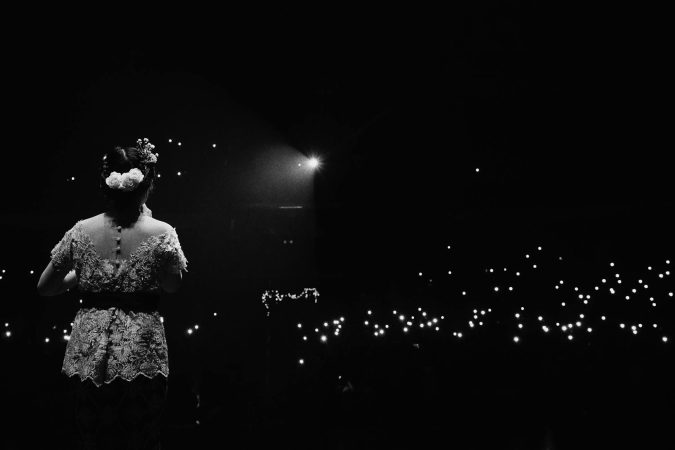
The person who can read every room perfectly is often the person no room has ever truly known.

Add VegOut to your Google News feed. 
A woman named Claire once told me she could walk into any dinner party and, within ninety seconds, identify who was performing confidence, who had fought with their partner on the drive over, who needed to be drawn out, and who needed to be left alone. She described this skill the way someone might describe a party trick — casually, almost dismissively. She was forty-three, lived alone, and when I asked her how many close friends she had, she paused for so long I thought she hadn't heard the question. "I have a lot of people who think they know me," she finally said. "That's different."
Most people assume that emotional intelligence and deep friendship go hand in hand. The logic seems airtight: if you understand people well, you should be able to connect with them deeply. Social skills breed social closeness. Empathy builds bonds.
But I've come to think this gets the causation backwards. For a specific subset of people, their extraordinary ability to read emotional atmospheres didn't develop alongside close relationships. It developed instead of them. The skill became so refined, so automatic, that it replaced the thing it was supposed to serve.
The surveillance that looks like warmth
When a child grows up in a household where emotional weather shifts without warning, they develop something that looks almost supernatural. They learn to read micro-expressions, vocal tone, the particular quality of silence that means anger versus the silence that means sadness. They become fluent in the social smile — both producing it and detecting it in others.
This vigilance gets misread as warmth. As emotional generosity. As being "so intuitive."
And in a sense, it is intuitive. But intuition born from hypervigilance has a different texture than intuition born from safety. One scans for threat. The other reaches toward connection. They can look identical from the outside.
The adults I've known who score off the charts in emotional perception — the ones who notice everything, who always know what to say, who seem to move through social settings like water — are often the same adults who go home afterward and feel nothing. Or feel everything, all at once, with nobody to tell.
I learned that psychologists who study attachment patterns have observed that people with avoidant attachment styles often display high social functioning. The person isn't awkward. They aren't withdrawn. They're polished. They're performing closeness while maintaining an internal distance so practiced they may not even recognize it as a choice anymore.
Performance as a survival architecture
There's a difference between reading a room and being in a room. The person who reads the room is working. Calculating. Adjusting. They're managing impressions — theirs and everyone else's.
Erving Goffman, the sociologist who spent his career studying exactly this kind of thing, described what he called dramaturgical behavior. We all do it to some degree. But for people who grew up needing to manage the emotional states of the adults around them, the performance never ends. There is no backstage.
Think about what that means. Every social interaction is a set. Every conversation requires direction. Every relationship becomes a production in which they are simultaneously the actor, the audience, and the crew. The one thing they never get to be is a person in the room who isn't working.
People call this charisma. Emotional intelligence. Social grace.
Fine.

But the cost is that nobody actually knows them. They know everyone's patterns, preferences, triggers, and unspoken needs. And nobody knows theirs. Because they never stopped performing long enough for someone to see what was underneath.
Why the friendlessness feels chosen
The conventional narrative about friendless adults tends toward pity. We assume isolation, sadness, some failure of social skill. But for people with this particular wiring, the absence of close friends doesn't feel like deprivation. It feels like the natural consequence of being the one who always manages the dynamic.
Close friendship requires something specific: the willingness to be seen badly. To be boring. To need something. To show up without the social mask and risk that the other person won't like what's underneath.
For someone who learned early that their safety depended on managing how others perceived them, this kind of vulnerability registers as danger. Not intellectually — they know, rationally, that their friend won't abandon them for having a bad day. But the nervous system doesn't care about rational knowledge. It cares about pattern recognition. And the pattern says: if you stop performing, something bad happens.
So they keep performing. They maintain dozens of warm acquaintanceships. They're beloved at work. They remember everyone's birthday. They ask the right questions and give the right answers and leave every interaction having revealed almost nothing about themselves.
We've explored how people raised to say "we're fine" when things clearly weren't develop a fluency in minimizing their own pain. The friendless-but-emotionally-intelligent adult is the next generation of that pattern. They didn't just learn to minimize their pain. They learned to make other people feel so seen that nobody thinks to look back.
The feedback loop nobody warns you about
Here's where the mechanism becomes self-reinforcing. The better you get at reading rooms, the more people enjoy being around you. The more people enjoy being around you, the more social situations you encounter. The more social situations you encounter, the more you perform. The more you perform, the less anyone knows you. The less anyone knows you, the more isolated you feel. The more isolated you feel, the harder you work at reading the room.
Round and round.
Research on loneliness and social isolation has suggested that perceived isolation — the subjective feeling of being unknown, not the objective count of social contacts — may drive the health consequences associated with disconnection. You can have a full calendar and still be profoundly lonely if no one in it has access to who you actually are.
The person with high emotional intelligence and no close friends is often surrounded by people. That's precisely the problem. They're surrounded by people who know the performance. The performance is excellent. And the performance is all anyone has ever been given.
I've spent years living across different countries, building new social circles from scratch, and what struck me repeatedly was how quickly you can become "the person everyone likes" in a new city without anyone actually knowing your interior life. The skill of reading rooms is portable. Intimacy is not.
The specific grief of being good at people
There's a grief that belongs specifically to people who are excellent with others but unknown by them. It's not the grief of rejection. They rarely get rejected. It's the grief of succeeding at something that was never the real goal.
They wanted connection. What they built was a flawless social interface.
People who were the responsible child in their family often carry a version of this pattern. They learned to anticipate needs before they were expressed. They became so good at managing other people's emotional states that their own states became irrelevant — first to the family system, then to themselves.
When you ask these adults what they need, many of them genuinely don't know. The question doesn't compute. They've spent so long orienting outward that the inward-facing instruments have atrophied.
And when someone does try to get close — really close, past the performance — the friendless empath often experiences a paradoxical panic. This is the thing they supposedly want. But it feels wrong. Unsafe. Like being naked in a room where you've always worn armor so convincing that people complimented you on your outfit.
What changes when the performance stops
The difficult truth is that developing close friendships, for these people, requires becoming temporarily worse at social interaction. It means saying the wrong thing. Revealing needs that feel embarrassing. Sitting in silence without trying to manage it. Allowing someone to see them without the emotional intelligence turned up to maximum.
I sat with this exact tension for a long time—the strange gift of being able to understand everyone while feeling understood by no one—and eventually unpacked it in a video about why not having friends became one of the most clarifying experiences of my life. What I realized is that the performance never actually protected me; it just delayed the harder, more necessary work of learning to stop reading the room and start trusting that someone might want to know what's actually in mine.
Adults who build closeness through intention rather than through default structures like marriage or proximity understand something about this. Connection that isn't scaffolded by institutional obligation requires a specific kind of vulnerability — the willingness to be clumsy, to reach toward someone without knowing whether they'll reach back.
For the person who reads every room perfectly, clumsiness feels like a moral failure. They've been praised their whole lives for smoothness. For knowing what people need. For being easy. Asking to be known — truly known, in the messy, inconvenient, unperformative sense — means becoming hard. Becoming a person who takes up space rather than managing it.
That transition is genuinely frightening. It requires trusting that someone will stay even when the performance drops. And for people whose earliest experiences taught them that love was conditional on emotional management, that trust has no experiential foundation. They have to build it from scratch, as adults, with no template.
The room they haven't learned to read
The great irony is that people with this pattern have spent decades developing sophisticated models of everyone else's inner life while remaining strangers to their own. They can tell you what their coworker is feeling about her marriage. They can't tell you what they themselves need on a Wednesday night.
Emotional intelligence, as it's typically measured, rewards outward perception. It rewards the ability to label, manage, and navigate the emotions of others. What it doesn't measure — what it can't measure — is whether the person has ever turned that perceptive apparatus inward. Whether they've ever sat with their own loneliness without immediately converting it into a social strategy.
The room they've never learned to read is the one they're always in. The one with no audience. The one where the performance has no purpose because there's no one to perform for.
Some people reach this realization in their thirties. Some in their fifties. Some never reach it at all, and live out their lives as the person everyone loves and no one knows, and they tell themselves this is enough, and some nights it almost is.
But the body keeps a different kind of score. The loneliness that lives underneath social competence doesn't announce itself as loneliness. It announces itself as fatigue. As a vague sense that something is missing. As the feeling, after a party full of people who adore you, that you could disappear tomorrow and no one would know what you'd lost — because you never showed them what you had.
Claire, the woman who could read any room in ninety seconds, eventually told me what she actually wanted. She wanted one person who didn't need her to be perceptive. One person around whom the vigilance could rest. One room she didn't need to read because she was allowed to simply be in it.
That wanting is not a weakness. It's the part of her the performance was always trying to protect.
What’s Your Plant-Powered Archetype?
Ever wonder what your everyday habits say about your deeper purpose—and how they ripple out to impact the planet?
This 90-second quiz reveals the plant-powered role you’re here to play, and the tiny shift that makes it even more powerful.
12 fun questions. Instant results. Surprisingly accurate.