
That Sunday sadness has nothing to do with hating Monday — it's the grief of watching yourself disappear back into a version of you that someone else designed.

Add VegOut to your Google News feed. 
Sunday night sadness is not about Monday. Most people who feel that strange, heavy pull around 6 p.m. on a Sunday will immediately blame their jobs, their commute, their boss. But some psychologists have started naming something far more uncomfortable: the dread isn't about what you're going back to. The dread is about what you're leaving behind.
The conventional explanation is burnout. You're tired, overworked, underpaid, and the weekend wasn't long enough. Reasonable enough. Except that doesn't explain the people who genuinely like their work — who find meaning in it, who chose it on purpose — and still feel that sinking weight settle in their chest as Sunday winds down. If you like your job and you still dread the transition, the standard burnout narrative collapses. Something else is happening.
What some psychologists suggest is structural. During the week, nearly every hour belongs to someone or something else. Your calendar is a series of obligations wearing the disguise of choices. But weekends — especially unplanned ones — create pockets of time where no one is asking you to perform. No role. No deliverable. No audience. And inside those pockets, a version of you shows up that doesn't get to exist anywhere else.
The Self That Only Appears When No One's Watching
I spent most of my twenties believing that the person I was at work and in social settings was the real me. Competent, engaged, responsive. I could hold a dinner table, remember people's names and circumstances, follow three conversations at once, make someone feel genuinely heard. That was the performance. I didn't know it was a performance because I was so good at it.
The person who showed up on unplanned Saturday mornings — the one who read for three hours without checking his phone, who walked through the city before it fully woke up, who sat with a thought long enough to actually finish it — that person felt like the extra. The indulgence. The version of me I had to earn through productivity.
I had it exactly backwards.
The unstructured self was the real one. The weekday self was the adaptation. And every Sunday evening, without understanding why, I was mourning the loss of someone I'd only just gotten reacquainted with.
Research on creative self-expression and psychological resilience supports what I felt but couldn't articulate: unstructured time isn't leisure. It's an environment in which authentic selfhood can surface. When that environment disappears on a weekly cycle, the emotional response isn't laziness or weakness. It's grief.
Why Structure Feels Like Erasure
Think about what a structured day actually requires. You wake at a time determined by your obligations. You dress in a way that signals competence to others. You organize your thoughts around problems that someone else defined. You modulate your energy, your tone, your attention span to fit the rhythm of meetings, deadlines, and other people's expectations.
None of this is necessarily bad. Some of it is satisfying. But all of it is externally referenced.
The question "What do I actually want right now?" becomes almost impossible to ask inside that structure. Not because you're oppressed, but because the structure doesn't need you to ask it. The structure needs you to function. Functioning and existing are different things.

I think this is why so many people who appear successful on the surface still carry a quiet loneliness underneath — something writers on this site have explored before. The loneliness isn't social. You might have friends, a partner, colleagues who respect you. The loneliness is ontological. The person you actually are doesn't have enough room to breathe.
And then the weekend arrives. Friday night you're still decompressing. Saturday morning you start to slow down. By Saturday afternoon, something shifts. You stop performing. You stop optimizing. You do things that have no outcome attached to them. You sit on the floor and organize books you've already read. You cook something complicated for no reason. You stare out a window without reaching for your phone.
That person — the one doing apparently nothing — is the one you lose every Sunday night.
The Grief No One Validates
Part of what makes Sunday night sadness so disorienting is that there's no culturally acceptable way to name it. If you said "I'm grieving the loss of my authentic self because structured time erases it," people would look at you like you'd lost your mind. So instead you say, "I just have the Sunday scaries," and everyone nods, and you move on without understanding what actually happened.
But the emotional signature is real. That hollow feeling is specific. It shares characteristics with anticipatory grief — mourning something before it's fully gone. You're still on the couch. You're still in your own clothes, your own rhythm, your own mind. But you can feel the other version of yourself assembling. The alarm is already set. The lunch is already packed.
For years I assumed this meant something was wrong with my relationship to work. I spent a decade on deliberate self-improvement, trying to find work that felt so aligned I'd never dread Monday. I read about flow states and ikigai and purpose-driven careers. And some of that was useful. But none of it addressed the core issue: even meaningful work requires you to compress yourself into a role, and roles, by definition, are not the whole person.
The sadness wasn't telling me to find better work. The sadness was telling me I didn't have enough unstructured time to exist.
Unstructured Time as Psychological Oxygen
Some research suggests that unstructured time — not "relaxation" or "self-care" as marketed, but genuinely undirected time — serves a critical psychological function. It's where a sense of identity can develop. Where values get tested against actual behavior rather than aspiration. Where everyday creativity and self-expression emerge not as hobbies but as the raw material of knowing who you are.
I later understood that what psychologists call self-affirmation — reflecting on your core values and identity rather than performing them — requires exactly this kind of spaciousness. Research has shown that even brief exercises in self-affirmation can boost general well-being and happiness. But here's the catch: you can't affirm a self you haven't had time to meet.
When your week is a conveyor belt of external demands, the self that gets affirmed is the professional self. The accommodating self. The self that exists in relation to what others need. The unstructured weekend self — the one who actually knows what matters to you — only gets about thirty waking hours per week to exist. And most of those hours are spent recovering from the other one hundred and twelve.
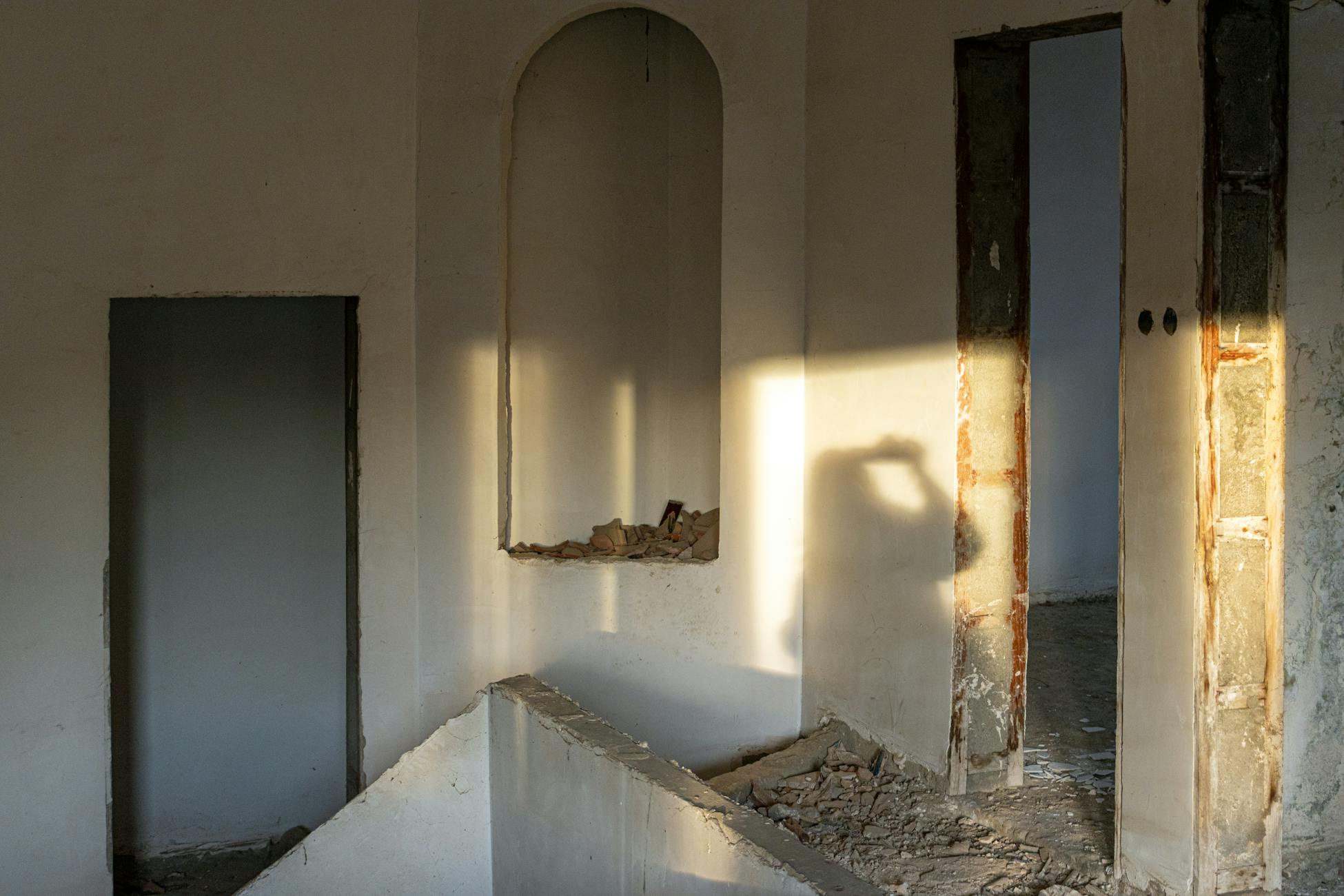
I remember a period in my early thirties when the social scaffolding of my life came down in sections. For about two years, I was more alone than I'd ever been. I ran more. I walked more. I read without purpose. I sat with discomfort I couldn't solve. And something strange happened: the Sunday sadness disappeared completely. Not because my life was better — by most external measures, it was worse. But the gap between my real self and my performed self had closed. Every day felt the same, and that sameness was me.
The Problem With "Work-Life Balance"
The entire framework of work-life balance assumes that "life" is what happens outside of work. That framing already concedes the territory. Your identity, your interiority, your actual preferences and rhythms — all of that gets filed under "life," which is the thing you do when you're not being productive.
A more honest framing would be: structured-time self versus unstructured-time self. And the question isn't how to balance them. The question is whether the unstructured-time self gets enough room to do what it needs to do, which is simply exist without justification.
Most people I know have developed elaborate systems to manage this tension without ever naming it. They fill weekends with plans — brunches, errands, fitness classes — because unstructured time, when you're not used to it, feels terrifying. The emptiness forces contact with a self you might not recognize. And that contact can surface feelings you've been outrunning since your twenties.
This is connected to something I've been thinking about for a long time: the way chronic people-pleasing gets mistaken for personality. When your default is accommodation — when you've built an identity around being useful, responsive, available — unstructured time doesn't just feel empty. It feels like an identity crisis. Because without someone to respond to, who are you?
Sunday night sadness, in this context, becomes something very specific. It's the moment you feel the door closing between the self that knows the answer to that question and the self that doesn't need to know, because the alarm is set and the role is waiting.
This connects to something I've been wrestling with for years, which I eventually talked about in a video on why I left traditional employment—the core realization was that structured work doesn't just take your time, it takes the version of you that exists when no one's watching.
What Actually Helps
I won't pretend I've solved this. I haven't. But I've gotten better at recognizing the pattern, and recognition alone changes the experience.
The first thing that shifted was I stopped treating unstructured time as a reward. It became a requirement. I built mornings — even weekday mornings — with pockets of directionless time. Twenty minutes of walking with no podcast. A cup of coffee finished before looking at a screen. Small windows, but real ones. Enough for the other self to blink awake, even if briefly.
The second shift was harder. I stopped filling weekends with social obligations I didn't actually want. This sounds selfish. For someone who spent years being too accommodating, saying no to Saturday plans felt like a moral failing. But the math was simple: every hour I gave to something I felt neutral about was an hour stolen from the only version of myself I actually liked.
The third shift was philosophical. I stopped believing that the productive self was the real self and the unstructured self was the indulgent one. I reversed the hierarchy. The person I am when no one needs anything from me — that's the baseline. Everything else is adaptation.
Sunday nights still carry a particular weight. I notice it. A slight heaviness around the ribs. A reluctance to set the alarm. But now I know what I'm feeling. I'm not dreading Monday. I'm missing someone.
The someone is me.
And knowing that — naming it precisely — makes it possible to build a life where that person doesn't only get to exist on weekends. Where the unstructured self isn't a guest in your own life but a permanent resident. Where Sunday doesn't feel like a funeral because Monday doesn't require a disappearance.
That's the project. Not finding work you love so much you never dread it. Not optimizing your weekends so efficiently that every hour is "well spent." The project is making enough unstructured room in your life — daily, not just on Saturdays — for the person you actually are to stay in the room.
Even when the alarm goes off. Even when the calendar fills. Even on Monday morning, when the world asks you to become someone useful again.