The same neural mechanism that makes you forget where you left your keys might be the reason your best ideas arrive in the shower — and neuroscience is finally catching up to what forgetful people have always sensed about themselves.

Add VegOut to your Google News feed. 
Add VegOut to your Google News feed.
I was standing in my kitchen last Tuesday morning, holding an empty mug, staring at the French press like it owed me money. I'd walked in there with a purpose — a very specific purpose — and within the eight steps it took to cross from the living room, that purpose had evaporated completely. Just gone. Like smoke through a screen door.
This happens to me more than I'd like to admit. I forget names at dinner parties. I forget the thing I was absolutely going to write down before bed. I once drove to the grocery store, parked, walked inside, and stood in the produce section for a full two minutes before remembering I'd come for dish soap.
For most of my adult life, I treated this as a flaw — something to manage, maybe even medicate. A deficiency in the machinery. But about a year ago, I stumbled across a line of neuroscience research that reframed everything I thought I knew about forgetting. And it hasn't left me since.
The short version: the same neural pruning process that causes you to lose track of mundane details is the exact mechanism that clears cognitive space for creative, original thought. It's not a bug. It's the feature.
The brain was never designed to remember everything
We tend to think of memory as a filing cabinet — the better organized and more complete it is, the better our brains are working. But neuroscience tells a very different story.
A landmark 2017 paper by Blake Richards and Paul Bhatt Frankland, published in the journal Neuron, argued that the purpose of memory is not to store accurate records of the past. Instead, memory exists to help us make better decisions in the future. And that means forgetting isn't a failure of memory — it's one of memory's core functions.
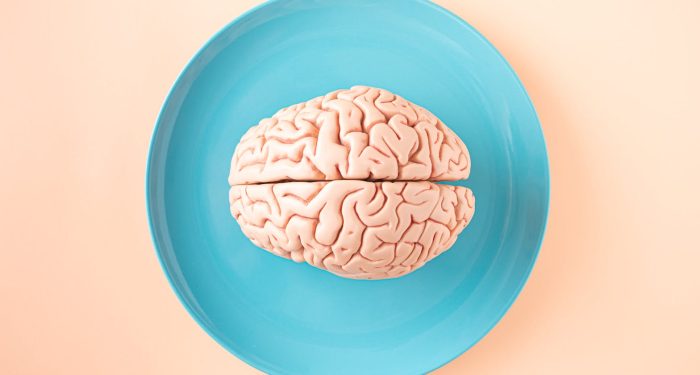
Their research showed that the brain actively works to erase certain memories through a process called synaptic pruning and neurogenesis in the hippocampus. New neurons literally overwrite old connections. The brain is, in a very real sense, choosing what to dissolve.
And here's the part that stopped me mid-sentence when I first read it: the memories most likely to be pruned are the specific, granular, context-heavy ones. The ones that anchor you to a particular time and place. The kind that make you rigid.
What stays? The general patterns. The abstractions. The gist of things.
If I'm being honest, that description — someone who loses the specifics but holds onto patterns — sounds like every creative person I've ever known.
Pruning is how the garden grows
Think of it like this. If your brain held onto every single piece of sensory data from every single day — every license plate you glanced at, every face in the crowd, every conversation fragment overheard in a coffee shop — you'd be drowning. Paralyzed by detail. Unable to see the forest because every individual leaf demanded equal attention.
Forgetting strips away the noise. And what's left, after the pruning, is something more flexible. More connective. More available for recombination.
This is what creativity actually is, at the neurological level — not the production of something from nothing, but the novel recombination of existing elements. And recombination requires a certain looseness in the system. It requires that the elements aren't bolted down too tightly.
Research from the University of Toronto, building on Richards and Frankland's framework, found that people with slightly "fuzzier" memories — those who remembered the gist but not the precise details — performed significantly better on tasks requiring creative problem-solving and pattern recognition. Their brains weren't failing to encode information. Their brains were doing exactly what they were supposed to do: generalizing.
Generalization is the cognitive soil where metaphor grows. Where analogy lives. Where you suddenly see the connection between the way mycelium networks communicate beneath a forest floor and the way ideas spread through a community — not because you memorized both systems in perfect detail, but because your brain extracted the underlying pattern and discarded the rest.
The uncomfortable flip side
Now, I don't want to romanticize this to the point of absurdity. Forgetting where you parked your car is annoying. Forgetting a friend's birthday can feel careless — and sometimes it is. There's a difference between adaptive forgetting and genuine cognitive concern, and I'm not here to blur that line.
But I've noticed something interesting about how we judge forgetfulness in ourselves versus how we judge it in others. When someone else forgets something, we often read meaning into it that may not be there — assuming disinterest, disrespect, or even hostility. When we forget something ourselves, we feel shame. Either way, the assumption is that something has gone wrong.
But what if the pruning was going right?
I think about this a lot when I'm on my trail runs. Some of my best ideas — not just good ideas, but the ones that feel like they've been waiting behind a door I didn't know existed — come to me about forty minutes into a run. Not at my desk. Not while I'm trying to think. While I'm moving through trees, half-distracted, my mind loose and unfocused.
Neuroscientist Moshe Bar has written extensively about this phenomenon. His research, published in journals including Trends in Cognitive Sciences, demonstrates that a wandering mind — one that isn't tethered to specific, detailed recall — is far more likely to generate associative thinking. The kind of thinking that produces original ideas. Bar calls it "broad associative processing," and it's essentially the creative mode of the brain.
It only activates when the brain isn't clutching too tightly to what it already knows.
What this means for how we live
I spent years in finance before I shifted into writing. And one of the things I remember most vividly about that world — ironic, given the topic — was the premium placed on precision. On remembering every figure, every client preference, every decimal point. That kind of memory is genuinely useful in certain contexts. I'm not dismissing it.
But I also remember feeling creatively dead during those years. Not because the work was inherently uncreative, but because my brain was so saturated with specific, high-stakes details that there was no room left for the loose, associative thinking that makes life feel textured and surprising.
When I started writing — and especially when I started exploring ideas around mindfulness and Buddhist philosophy for my book — I noticed something shift. I was worse at remembering appointments. I was worse at keeping track of the small administrative details of daily life. But I was generating connections I'd never made before. Seeing patterns across disciplines. Drawing lines between a conversation I'd had three months ago and an article I'd half-read on plant cognition.
The pruning had made room.
It mirrors something we already know about plant life
And this is where things get interesting — at least for me, as someone who's spent the last several years thinking deeply about plant-based living and the intelligence embedded in natural systems.
Gardeners know that you have to prune a plant for it to flourish. You cut away the dead growth, the excessive branching, the parts that are consuming energy without producing fruit. The plant doesn't suffer from the pruning. It redirects. It channels energy into new growth, stronger stems, more abundant flowering.
The brain does the same thing. Synaptic pruning — the very process that makes you forget your neighbor's dog's name — is the mechanism that allows your neural pathways to redirect energy toward novel connections. It's not metaphorical. It's structural.
There's something almost Buddhist about it, honestly. The letting go is the growth. The emptying is the filling. We wrote about this in my book Hidden Secrets of Buddhism, though I didn't frame it in neuroscience terms at the time. I was talking about attachment — about how holding too tightly to fixed ideas about ourselves and the world creates suffering. Loosening that grip creates possibility.
The neuroscience just confirmed what contemplative traditions have been saying for centuries.
Why this matters more than you think
We live in a culture that pathologizes forgetting and worships recall. We celebrate people with photographic memories. We panic at the first sign of a word slipping away mid-sentence. We download apps and take supplements and do brain-training games — all in service of remembering more, faster, with greater precision.
And I get it. Memory matters. I'm not suggesting we all aspire to forget where we live.
But I think there's real value in reframing our relationship with forgetfulness. In recognizing that a brain that prunes aggressively is a brain that's making space. A brain that loses the grocery list might be the same brain that, twenty minutes later, solves a problem you've been stuck on for weeks — precisely because it wasn't trying to hold everything at once.
Richards and Frankland put it simply: "The goal of memory is not the transmission of information through time, per se. Rather, the goal of memory is to optimize decision-making." And optimized decision-making, it turns out, often requires less information, not more. It requires the ability to see the signal without being overwhelmed by the noise.
That's what forgetting gives you. That's what the pruning does.
A gentler way to think about it
I eventually remembered what I'd walked into the kitchen for that Tuesday morning. It was turmeric. I'd been planning to add it to my oatmeal — a habit I picked up years ago and that I forget about, and then remember, in these strange little cycles.
But in the forty-five seconds I stood there, empty mug in hand, staring at nothing, something else surfaced. An idea for an essay I'd been struggling with. A connection between two things I'd been turning over separately for weeks. It arrived unbidden, fully formed, like it had been assembling itself somewhere just out of view — waiting for a gap in the noise.
I forgot the turmeric again by the time I sat down to write it. But the idea stayed.
Maybe that's the whole point. The brain knows what to keep and what to release. It's been pruning since before we had language to describe it. And the people who forget the most — who lose their keys, who miss the exit, who stand in kitchens with blank expressions — might just be the people whose brains are working the hardest to make room for something new.
It's not a coincidence. It's architecture.
What’s Your Plant-Powered Archetype?
Ever wonder what your everyday habits say about your deeper purpose—and how they ripple out to impact the planet?
This 90-second quiz reveals the plant-powered role you’re here to play, and the tiny shift that makes it even more powerful.
12 fun questions. Instant results. Surprisingly accurate.
What’s Your Plant-Powered Archetype?
Ever wonder what your everyday habits say about your deeper purpose—and how they ripple out to impact the planet?
This 90-second quiz reveals the plant-powered role you’re here to play, and the tiny shift that makes it even more powerful.
12 fun questions. Instant results. Surprisingly accurate.