The couples who fight well and the couples who fight terribly feel the same fury — the difference was built decades before they ever met each other.
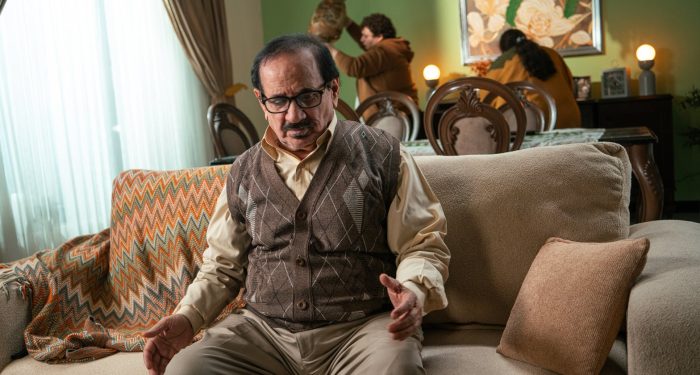
The couple in the restaurant booth near the window had been arguing for at least ten minutes before I noticed. She was leaning forward, both hands flat on the table. He had his arms crossed, jaw tight, looking past her toward the door. Their voices weren't loud enough to make out words, but the rhythm was unmistakable. Short, clipped sentences fired back and forth. Then a pause. Then she said something that made him close his eyes. I thought he was going to stand up. I thought she was going to reach for her coat. Instead, he uncrossed his arms and picked up his coffee. She sat back. They kept talking, quieter now, and ten minutes later they were splitting a piece of pie.
I have no idea what they were fighting about. I have no idea whether it was resolved. But I watched two people stay at the same table through the worst part of a disagreement, and that image has stayed with me longer than most things I've read about relationships. Because the research confirms what that scene suggested. The couples who argue well aren't less angry than the couples who argue badly. They simply had at least one model in childhood of someone who stayed in the room during a disagreement without becoming dangerous.
Most people believe the couples who argue well have somehow mastered their emotions. That they feel less rage, less frustration, less of that white-hot impulse to say the thing that will land hardest. The conventional wisdom says good conflict is calm conflict, and calm conflict is the product of two emotionally intelligent adults who have done enough therapy to metabolize their anger before it reaches their mouth. What I've found, over seven decades of watching people try to love each other, is that this explanation is almost entirely wrong.
The research confirms what observation already suggested. Relationship psychologists have found that emotional self-regulation during conflict has little to do with the intensity of the emotion being regulated. Studies suggest that couples who argue well and couples who argue badly report comparable levels of anger, frustration, and hurt. The distinction is in what happens next. One group can stay in the room. The other can't. And the reason one group can stay in the room traces back to something that happened long before the relationship began.
What a Concept That Researchers Describe as the Ability to Remain Emotionally Present During Conflict Actually Means
When I refer to staying emotionally present during conflict, I don't mean physical presence. Plenty of people stay in the room while leaving entirely. They go silent, they stare at a wall, they begin composing a grocery list in their head while their partner speaks. And plenty of people who walk out of the room during a fight come back twenty minutes later ready to engage. The staying I mean is neurological. The capacity to remain available to another person's distress while simultaneously experiencing your own, without interpreting either as a threat to survival.
That capacity is not something most people develop through willpower or reading. It is modeled. Someone has to show you, when you are small and your nervous system is still being wired, that a raised voice does not necessarily precede a raised hand. That two people can disagree, loudly, messily, with visible frustration, and neither person gets destroyed.
I remember my grandmother and my grandfather arguing about money in their kitchen. I was maybe eight. The argument was not quiet. My grandmother's voice climbed to a register I'd never heard from her. My grandfather set his fork down hard enough that the plate rattled. And then they kept eating dinner. The argument resolved into something closer to a negotiation, then a kind of tired agreement to revisit it later. Nobody left. Nobody threw anything. Nobody went cold for three days afterward.
That single scene taught me something no book ever could: disagreement has a shape, and the shape includes an ending that isn't catastrophic.
The Nervous System Remembers What the Mind Forgets
Children who grow up watching conflict that turns dangerous learn a particular lesson in their bones. The lesson is not that arguments are bad. The lesson is that arguments signal the approach of something unbearable. Their nervous system encodes disagreement as a survival threat, and the encoding happens at a level below conscious thought. Decades later, when a partner raises a concern about the dishes or the budget or the way they felt dismissed at dinner, the body responds before the mind has any say in the matter. Heart rate spikes. Muscles tense. The prefrontal cortex, the part responsible for measured response, goes partially offline.
This is the mechanism behind disorganized attachment patterns, where the person you need for comfort is also the person your body has learned to fear. The child who watched a parent become dangerous during conflict grows into an adult who simultaneously craves and dreads intimacy during moments of tension. They want to resolve the fight. They also want to flee it, because somewhere deep in their wiring, resolution and danger occupy the same room.
The people who apologize fastest in any disagreement are often running this exact program. The apology isn't empathy. It's a payment to make the danger stop.
One Model Was Enough
Here's what struck me when I first encountered observations about conflict resolution: the threshold appeared to be remarkably low. People who argued well didn't need two parents who modeled flawless communication. They didn't need a childhood free of conflict. Often, they needed just one person. One adult who demonstrated, even imperfectly, that anger could be expressed without the room becoming unsafe. An aunt who argued with her husband and then made coffee for both of them. A father who disagreed with a neighbor and came home shaking his head but not shaking his fists. A teacher, and I think about this one often, who told a student she was frustrated with their behavior and then, the very next period, asked them how their weekend was with genuine curiosity. The model didn't have to be perfect. It had to be present. The child's nervous system needed one data point that contradicted the equation that conflict equals danger. One experience of watching someone stay angry and stay safe at the same time. That single reference point gave the developing brain an alternative template, and this concept aligns with what attachment researchers call earned secure attachment style in emotionally focused couples therapy. The idea is that people who had insecure childhoods can develop security through specific corrective experiences. The first corrective experience, often, is simply witnessing non-dangerous conflict.
The Anger Is Not the Problem
We have built an entire cultural infrastructure around anger management, as though the anger itself is the pathology. Couples are taught to use "I" statements, to take deep breaths, to count to ten. These tools are not useless. But they operate on the assumption that the problem is the feeling, when the problem is actually the interpretation of the feeling.
A person who grew up with a model of safe conflict interprets their own anger during an argument as information. They're angry because the issue matters and they need to communicate why. A person who grew up with dangerous conflict interprets their own anger as a warning. Something terrible is about to happen and they need to shut down the interaction.
Same emotion. Completely different meaning.
And the meaning was assigned in childhood, before the person had any say in the matter.
This is why anger management techniques fail so often in couples therapy. They address the surface, the volume, the word choice, the timing, while leaving the underlying architecture untouched. The architecture is the nervous system's classification of conflict as either survivable or annihilating. No breathing exercise can rewire that classification on its own.
Research on how happy couples argue differently suggests that the distinguishing factor is not reduced anger. Happy couples interrupt each other. They raise their voices. They say things they later wish they hadn't. But they stay oriented toward the other person. They remain, however imperfectly, in the room. Their nervous system allows it because somewhere in their history, someone showed them it was possible.
What Happens When Nobody Showed You
I taught hundreds of students over thirty-two years whose homes had never demonstrated this. Their experience of adult conflict was exclusively threatening. Voices meant violence. Tension meant someone was about to leave permanently. The only resolution was submission or silence.
These students didn't lack intelligence or empathy. They lacked a template. When disagreements arose with friends, with teachers, with early romantic partners, they had exactly two modes available: total avoidance or total escalation. The middle ground, where you can be angry and present, hurt and still listening, was a landscape they had never seen and therefore couldn't navigate.
The people who grew up learning that their brain learned to delay panic because their childhood required functionality over feeling carry a similar wound into adult relationships. They can manage a crisis at work. They can remain composed under external pressure. But when the pressure comes from someone they love, the old wiring activates, and composure either hardens into withdrawal or cracks into something uncontrolled.
There's a generation of adults who were taught, by the specific conditions of their childhood, to experience wanting something as aggression. Asking for what you need during a fight requires the belief that asking won't trigger destruction. Without that belief, needs get buried. Buried needs don't decompose. They calcify.
Repair Isn't About Technique
The good news, if there is good news, is that the adult brain retains some capacity to build new templates. The earned secure attachment style is a real and documented phenomenon. People who grew up without a model of safe conflict can, through sustained corrective experience, develop one. But the corrective experience has to be embodied, not intellectual. Reading about secure attachment won't rewire the nervous system any more than reading about swimming will teach you to float.
The corrective experience looks like this: you are in a conflict with someone who matters to you. Your body wants to flee or fight or freeze. And the other person stays. They stay angry. They stay present. They do not become dangerous. The argument ends, and you are both still there, and neither of you is destroyed.
That has to happen many times before the nervous system begins to update its predictions. Research on healing estranged family relationships suggests this kind of repair requires what therapists describe as ongoing evidence of safety. Repeated demonstrations that conflict can exist without catastrophe. One good conversation after twenty years of silence doesn't do it. The body needs a pattern, not an exception.
I have watched this play out with people I care about. A friend in her sixties whose marriage nearly ended three times before her husband finally understood that her shutting down during fights wasn't stubbornness. It was a survival reflex encoded before she could speak. He didn't fix it by being patient in the way self-help books describe patience. He fixed it by staying in the room, argument after argument, year after year, being angry and being safe at the same time, until her nervous system slowly, grudgingly conceded that this particular conflict might not be lethal. She told me once, over coffee, that the moment she knew something had shifted was unremarkable by any outside measure. They were arguing about whether to sell their house. She was furious. He was furious. And for the first time in their marriage, she noticed she was still breathing normally. Her hands weren't shaking. She was angry, and she was still there. She said it felt like standing in a room she'd walked past her entire life but never entered.
That took a decade. Nobody talks about the decade.
The Quiet Inheritance
At seventy, I think about inheritance differently than I did at forty. The things we pass to our children are only partially deliberate. The house, the savings, the education. Those are the visible transfers. The invisible ones are the templates. How we held tension in our bodies when we were angry. Whether we slammed doors or kept them open. Whether our children ever saw us furious and still kind, frustrated and still present, hurt and still willing to hear the other person out.
I'm still not sure I provided that model consistently enough. I know there were years when I didn't. Years when my own conflict style was closer to flight than engagement, when I left rooms I should have stayed in, when my children watched me choose silence over the discomfort of working something through.
The research says one model was enough. I hope that's true. I hope the nights I stayed, the arguments I saw through to their clumsy, imperfect resolutions, left some trace in my daughter's nervous system. Some small data point that says: anger is survivable. Disagreement has a shape. The shape includes an ending where everyone is still at the table.
Couples who argue well carry that data point. Couples who argue badly never received it. The anger between them is identical. The difference was built in a kitchen or a hallway or a car ride decades ago, by someone who probably never knew they were building anything at all.
Where to Start If Nobody Built It for You
If you're reading this and recognizing yourself. If your body has always treated disagreement as an emergency, if you've spent relationships either fleeing or detonating, if every fight feels like it might be the last one. I want to be honest with you. There is no five-step fix for a nervous system that was wired in childhood. But there are places to begin, and beginning matters more than most people think.
First, notice the body before you try to manage the words. The next time a conflict arises with someone you love, pay attention to what happens below your neck before you pay attention to what's happening in the conversation. Is your chest tightening? Are your hands cold? Is there an impulse to leave that feels physical rather than strategic? That impulse is not your character. It's your history. Naming it, even silently, even just thinking "this is the old pattern," creates a sliver of space between the reflex and the response.
Second, tell the person you're arguing with what's happening inside you, not just what you think about the issue. "I'm shutting down and I don't want to be" is more useful than any "I" statement ever written. It lets the other person see you instead of seeing a wall. And it gives them a chance to be the person who stays. To become, without either of you realizing it, a corrective experience.
Third, if you are the partner of someone whose body treats conflict as danger, understand that their withdrawal or their escalation is not about you. It is about a room they were in long before they met you. Your job is not to fix their wiring. Your job is to stay. Angry if you need to be, frustrated if that's what's honest. Without becoming unsafe. Every argument where you manage that is a brick in a foundation they never had.
And finally, seek out the embodied work. Therapy that addresses the nervous system directly — somatic experiencing, EMDR, emotionally focused therapy — can do what insight alone cannot. Understanding why you shut down during conflict is valuable. But the body doesn't update its predictions based on understanding. It updates based on experience. Find a therapist who knows the difference.
I think about my grandmother setting that rattling plate back to rights. She never once mentioned conflict resolution. She never read a book about attachment theory. She just kept eating dinner. And somewhere across the table, an eight-year-old boy watched two people be angry at each other and still pass the salt.