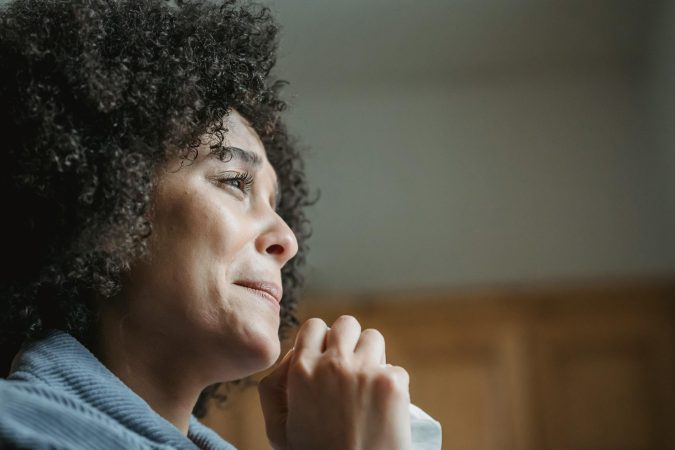
The man spending $2 million a year to not die might be the clearest mirror we have for a fear most of us carry quietly, one that started long before any of us ever heard the word 'biomarker.'

Add VegOut to your Google News feed. 
Add VegOut to your Google News feed.
I've been watching a man try to live forever, and it's making me think about everything I've been doing wrong about wellness for the last twenty years.
His name is Bryan Johnson. He wakes before dawn every day, swallows over a hundred pills, monitors more than seventy organ systems, eats 950 calories of the same food, and is in bed by 8:30 every night. His biological age scores have dropped. His inflammation markers are near zero. His cardiovascular fitness is elite. By every metric he tracks, the protocol is working.
And yet two of his three children have cut ties with him. His marriage ended. He left his fiancée while she was undergoing chemotherapy for stage three breast cancer. When his remaining son, Talmage, decided to leave for college, Johnson broke down in tears. His son chose to start his own life, and Johnson couldn't handle it.
I keep thinking about that detail. A man who has optimized every organ in his body, who has handed his decision-making over to an algorithm because he doesn't trust his own mind, who publicly declared "false" when asked if he would one day die, broke down because someone he loved chose freedom over proximity. That tells me something the spreadsheets never will.
When the Protocol Becomes the Problem
There's a version of health optimization that looks, from the outside, like the pinnacle of self-discipline. The supplement stacks. The bloodwork every few weeks. The sleep tracking, the caloric precision, the relentless measurement of biomarkers most people can't pronounce. And some of it genuinely helps. I'm not here to argue against eating well or caring about your body.
But there's a line, and it's worth being honest about where it sits. The line is where the pursuit of health stops being about feeling alive and starts being about managing the terror of not being in control. Psychologist Adrian Furnham has written extensively about how health anxiety often masks a deeper intolerance of uncertainty, a need to feel sovereign over something when life feels fundamentally ungovernable. The obsessive tracking, the rigid protocols, the refusal to deviate from the plan: these can function less as wellness practices and more as rituals of containment. They keep the anxiety from spilling over.
Johnson himself has said publicly that the human mind is not a reliable source of judgment. So he removed it from command. An algorithm now tells him what to eat, when to sleep, what to take, and how well he did. Think about that sentence for a moment. He didn't just optimize his health. He fired himself from his own life.
And the thing is, I recognize pieces of myself in that impulse. Maybe you do too. The phase where I tracked every macro. The phase where I couldn't eat at a restaurant without mentally auditing the menu. The phase where I confused rigidity with discipline and called it wellness because it had a vocabulary that sounded aspirational instead of afraid.
What the Longest-Lived People Actually Do
The VegOut channel recently released a documentary-style exploration of this exact tension, and it made me rethink some assumptions I'd been carrying for years. The video examines both the Silicon Valley longevity crusade (the billions being poured into cellular reprogramming, senolytic drugs, AI-driven pharmaceutical design) and the places on Earth where people actually live the longest, without any of it.
The contrast is striking. In the video, you watch Johnson's hyper-controlled daily routine, the hundred-plus supplements, the algorithmic obedience, the scores and scans. Then you learn about communities with no protocols, no billion-dollar labs, no supplement regimens, where people regularly live past a hundred. The data keeps confirming what these communities demonstrate, but the longevity industry keeps ignoring it: the strongest predictors of a long life are social connection, purpose, shared meals, movement woven into daily living, and a sense of belonging.
We explored a version of this pattern when looking at how childhood kitchen table dynamics shape our adult relationship with food, and the same principle applies here. Our earliest experiences of scarcity, control, and fear don't vanish when we grow up. They just find more sophisticated costumes. Sometimes that costume is a supplement stack. Sometimes it's a protocol.
The video traces the science clearly: cellular reprogramming can reset aged cells to a younger state, senolytic drugs can clear out broken cells that drive inflammation, and AI is accelerating drug design from decades to months. The promise is enormous. But the video also asks the question the industry keeps avoiding: is living longer the same as living well?
The Fear Underneath the Optimization
Research in health psychology has a term for what happens when wellness behaviors become compulsive: orthorexia, an obsessive fixation on "correct" eating that can expand into a broader obsession with health purity. A 2019 study published in Eating and Weight Disorders by Donini and colleagues found that orthorexic tendencies correlate strongly with anxiety, perfectionism, and a need for control, particularly in people with histories of insecure attachment.
That last part is what stays with me. Insecure attachment. Meaning: the way you learned to relate to the people who were supposed to keep you safe as a child shapes the way you try to keep yourself safe as an adult. For some people, that looks like people-pleasing. For others, it looks like emotional withdrawal. And for a growing number of people in the wellness space, it looks like turning your own body into a project you can finally, completely manage.
Johnson left his faith at 34. His marriage ended. Two of his children stopped speaking to him. He left a partner during cancer treatment. And then he handed his autonomy to a machine. I'm not diagnosing him. I don't know his interior life. But I notice a pattern: when relationships become uncontrollable (and they always do, because people are not algorithms), the protocol becomes the last safe relationship. It does what you tell it. It doesn't leave. It doesn't get cancer. It doesn't grow up and go to college.
There's a particular kind of loneliness that hides behind a convincing performance of togetherness, and I think health optimization can become one of those performances. You look disciplined. You look committed. You look like someone who has it together. And underneath all of it, you're alone in a way that no biomarker can measure.

The Billion-Dollar Bet Against Being Human
What the VegOut video captures so well is the sheer scale of the financial commitment to this vision. Jeff Bezos has put $3 billion behind Altos Labs, betting that aging can be reversed at the cellular level. Sam Altman has backed Retro Biosciences to add ten healthy years to the human lifespan. Google's Calico Labs has $3.5 billion and a single question: can death be made optional? Peter Thiel has arranged to have his body frozen when it fails, betting the future will know how to wake him up.
These are some of the most powerful people on the planet, and they've declared war on aging, decay, and death itself. The video frames this honestly, acknowledging the genuine scientific breakthroughs (mice given senolytic drugs physically rejuvenated, their organs recovered function, their fur grew back, they ran faster) while also noting what keeps getting left out of the conversation.
Because here's what's interesting: the places where people actually live the longest don't have any of this. No labs. No billions. No protocols. They have shared meals, walking as a primary mode of transportation, multigenerational households, religious or spiritual community, and a sense that life has meaning beyond the individual body. Research on Blue Zones by Dan Buettner and colleagues, published in the American Journal of Lifestyle Medicine, consistently shows that social integration and sense of purpose are stronger predictors of longevity than any single dietary or exercise intervention.
The irony is almost unbearable. The man spending $2 million a year to not die has optimized everything except the things that actually correlate with living longer. Connection. Meaning. The willingness to be changed by another person.
Control as a Trauma Response
I think many of us who've gravitated toward plant-based living have had to sit with this tension at some point. The initial shift often comes from a genuine place: compassion, health, environmental concern. But for some of us, the structure of the lifestyle can quietly become a way to manage anxiety rather than address it. The rules feel safe. The boundaries feel clean. The identity feels solid. And when someone challenges the protocol, it can feel like a threat to survival rather than a dinner party disagreement.
Bessel van der Kolk's work on trauma and the body, particularly in The Body Keeps the Score, describes how people who experienced early powerlessness often develop hypervigilant relationships with their own physiology. They become exquisitely attuned to internal signals, not because they're more health-conscious, but because their nervous system learned early that the body is the first place danger shows up. Tracking every biomarker, controlling every input, measuring every output: these can be sophisticated expressions of a nervous system that never learned it was safe to stop monitoring.
We've written before about how people who were always the strong ones in their family often collapse with exhaustion the moment they're finally allowed to stop. The tiredness was always there; permission was what was new. I think something similar is happening in the longevity space. The fear was always there. The technology just gave it somewhere respectable to live.
What Wellness Actually Looks Like
The video ends by posing a question that I haven't been able to shake: what does it actually take to live a long and meaningful life? Two very different answers are on the table. One involves algorithms, billions of dollars, and the removal of human judgment from the equation. The other involves a walk with a neighbor, a shared meal that takes longer than it needs to, and the willingness to let someone see you without your armor on.
I know which one sounds less impressive. I also know which one the data supports.
Real wellness, the kind that correlates with people who grow happier rather than more rigid as they age, seems to involve a fundamental acceptance that control is an illusion. That the body will change. That people will leave. That loss is woven into the fabric of being alive, and no supplement stack or cellular reprogramming protocol changes that.
This doesn't mean we shouldn't eat well, move our bodies, or pay attention to our health. It means that when the pursuit of health becomes the organizing principle of your entire existence, when it replaces relationships, when it demands the removal of your own judgment, when the people around you have to sign confidentiality agreements on their way out, something has gone very wrong.
Johnson's protocol might give him a longer life. The science is genuinely promising, and some of the breakthroughs in cellular reprogramming could benefit millions of people. But a longer life spent alone, governed by an algorithm, stripped of the mess and unpredictability that make human connection possible, is a particular kind of tragedy. He's trying to live forever in a body that has already been emptied of the things that make life worth extending.
I'm 44, and I've spent enough years in the wellness space to recognize the difference between taking care of myself and hiding inside the act of taking care of myself. The second one feels like discipline. It looks like commitment. But underneath, it's just fear wearing a very expensive disguise. The real courage, the kind that most of us in our forties are only beginning to understand, is letting yourself be known by another person without trying to optimize the interaction. Sitting with uncertainty. Allowing your body to age, to change, to be imperfect, while pouring your energy into the relationships and the meaning that actually predict whether those years will be worth living.
The longest-lived people on Earth figured this out without a single biomarker. Maybe the rest of us can too.
If You Were a Healing Herb, Which Would You Be?
Each herb holds a unique kind of magic — soothing, awakening, grounding, or clarifying.
This 9-question quiz reveals the healing plant that mirrors your energy right now and what it says about your natural rhythm.
✨ Instant results. Deeply insightful.
Justin Brown
Justin Brown is a writer and entrepreneur based in Singapore. He explores the intersection of conscious living, personal growth, and modern culture, with a focus on finding meaning in a fast-changing world. When he’s not writing, he’s off-grid in his Land Rover or deep in conversation about purpose, power, and the art of reinvention.
More Articles by Justin