Bryan Johnson spends $2 million a year trying not to die, but the communities where people actually live the longest spend almost nothing at all — and the gap between those two realities reveals something profound about what it means to be alive.

Add VegOut to your Google News feed. 
Add VegOut to your Google News feed.
I've been thinking about death more than usual lately. Not in a morbid way, more like how you think about the weather when you're deciding whether to go for a walk. It's there. It's always been there. And the older I get, the more I notice two very different responses to that awareness playing out in the people around me. Some people seem to settle into life more fully as mortality becomes real to them. They get softer, more present, more willing to sit with a friend and say nothing for a while. Others start running. They optimize, measure, track, and control, building elaborate systems to push death further and further away. I recognize both impulses in myself, which is probably why the story of Bryan Johnson has stayed with me for weeks.
The Most Optimized Man Alive
Johnson is the man spending $2 million a year on what he calls "Project Blueprint," a protocol so thorough it has essentially replaced his own judgment with an algorithm. He wakes at 4:30 a.m. He takes more than 100 supplements daily, timed and measured. He eats 1,950 calories a day, always the same meals, with his last bite before noon. He monitors over 70 organ systems. His blood is drawn regularly. His body fat, bone density, and brain function are scanned and scored. By his own metrics, the results are impressive: his biological age scores have dropped, his inflammation markers are near zero, his cardiovascular fitness is elite.
And yet. His marriage ended. Two of his three children cut ties with him. He took blood plasma from his remaining son, Talmage, as part of an anti-aging experiment. When Talmage decided to leave for college, Johnson broke down in tears. His fiancée, Taran Southern, was diagnosed with stage three breast cancer, and Johnson left her while she was undergoing chemotherapy. Months later, he had her sign a confidentiality agreement.
These aren't gossip-column details. They're the actual cost of a life organized entirely around the goal of not dying. And that cost is what makes the VegOut video essay on Johnson so striking, because it holds both realities in the frame at once: the breathtaking science and the quiet devastation.
There's a moment in the video where Johnson is asked a simple true-or-false question: "You, Bryan Johnson, will one day die." His answer: "False." Thirty doctors, over a hundred supplements, one goal: don't die. The video frames this against something revealing. It travels to communities where people actually live the longest and finds no protocols, no supplements, no billion-dollar labs. Just connection, purpose, and food grown close to home.
The Billion-Dollar Bet Against Mortality
Johnson is the most visible face of this movement, but he's far from alone. The longevity space has attracted some of the largest fortunes on the planet. Jeff Bezos has funded a lab in San Diego where scientists are taking old human cells and chemically reprogramming them back to a younger state. Sam Altman, the man behind ChatGPT, is backing research aimed at adding ten healthy years to the human lifespan. Google has poured $3.5 billion into a secretive facility studying organisms that barely age at all. Peter Thiel has funded nearly a dozen ventures in the space and arranged to have his own body cryogenically preserved when he dies.
The underlying science is genuinely fascinating. Cellular reprogramming works from a deceptively simple premise: every cell in your body still carries a complete copy of your original genetic code from when you were young. Over time, cells accumulate damage, slow down, malfunction, or become what scientists call senescent. These zombie cells refuse to die and instead leak toxins into surrounding tissue, driving many of the diseases we associate with aging. New drugs called senolytics are being designed to hunt them down and clear them out. In animal studies, the results have been striking: mice given these treatments physically rejuvenated, with organs recovering function and fur growing back.

AI has accelerated the whole process dramatically. Machine learning models can now scan millions of molecular combinations and predict which ones will target specific decay pathways, compressing what used to take a decade into months. The argument emerging from this research is that cancer, Alzheimer's, and heart failure aren't separate problems at all. They're symptoms of one underlying condition: aging itself. Cure that, and you cure everything downstream.
That's an extraordinary claim. And I find myself genuinely excited by parts of it. The idea that my generation might be among the first to see terminal illness become rare, that the suffering my grandparents endured in their final years could become something future generations barely understand. Who wouldn't want that?
The Question Nobody Seems to Be Asking
But here's where it gets complicated for me. Psychologists who study death anxiety have long observed that our relationship with mortality falls along a spectrum. Research by Sheldon Solomon, Jeff Greenberg, and Tom Pyszczynski, the psychologists behind Terror Management Theory, suggests that when people are reminded of their own death, they tend to double down on whatever gives them a sense of symbolic immortality: their legacy, their group identity, their worldview. The healthier response, according to the research, involves what's sometimes called "death acceptance," a willingness to let mortality inform how you live rather than becoming the thing you organize your entire life around avoiding.
The longevity movement, at its best, is driven by people who love being alive. People who want more time to learn, to create, to be present with the people they care about. We've written before about what happens when you strip away the things that used to define you and discover someone underneath who was waiting to exist. That impulse, the desire for more time to become who you actually are, feels healthy and real to me.
But the longevity movement at its worst looks a lot like what Johnson is doing. A life so consumed by the mechanics of not dying that it has been drained of the very things that make living worthwhile: intimacy, spontaneity, the willingness to be inconvenienced by love. Johnson said it publicly: "The human mind is not a reliable source of judgment." So he removed it from command. An algorithm now tells him what to eat, when to sleep, what to take, how well he did. His protocol is meticulous. His life, by most human measures, is empty.
What the Blue Zones Keep Teaching Us
The VegOut video does something I wish more coverage of longevity science would do. It puts Johnson's approach in direct contrast with the places on Earth where people actually live the longest. Communities in Okinawa, Sardinia, Nicoya, Ikaria, and Loma Linda, California, where centenarians are common, operate on principles that would strike a Silicon Valley biohacker as almost laughably simple.
These are people who eat mostly plants. They move naturally throughout the day rather than in scheduled exercise blocks. They have strong social networks and a clear sense of purpose. They belong to communities of faith or meaning. They drink wine in moderation, usually with friends. They don't count macros or monitor biomarkers. They cook together, eat together, grow old together.
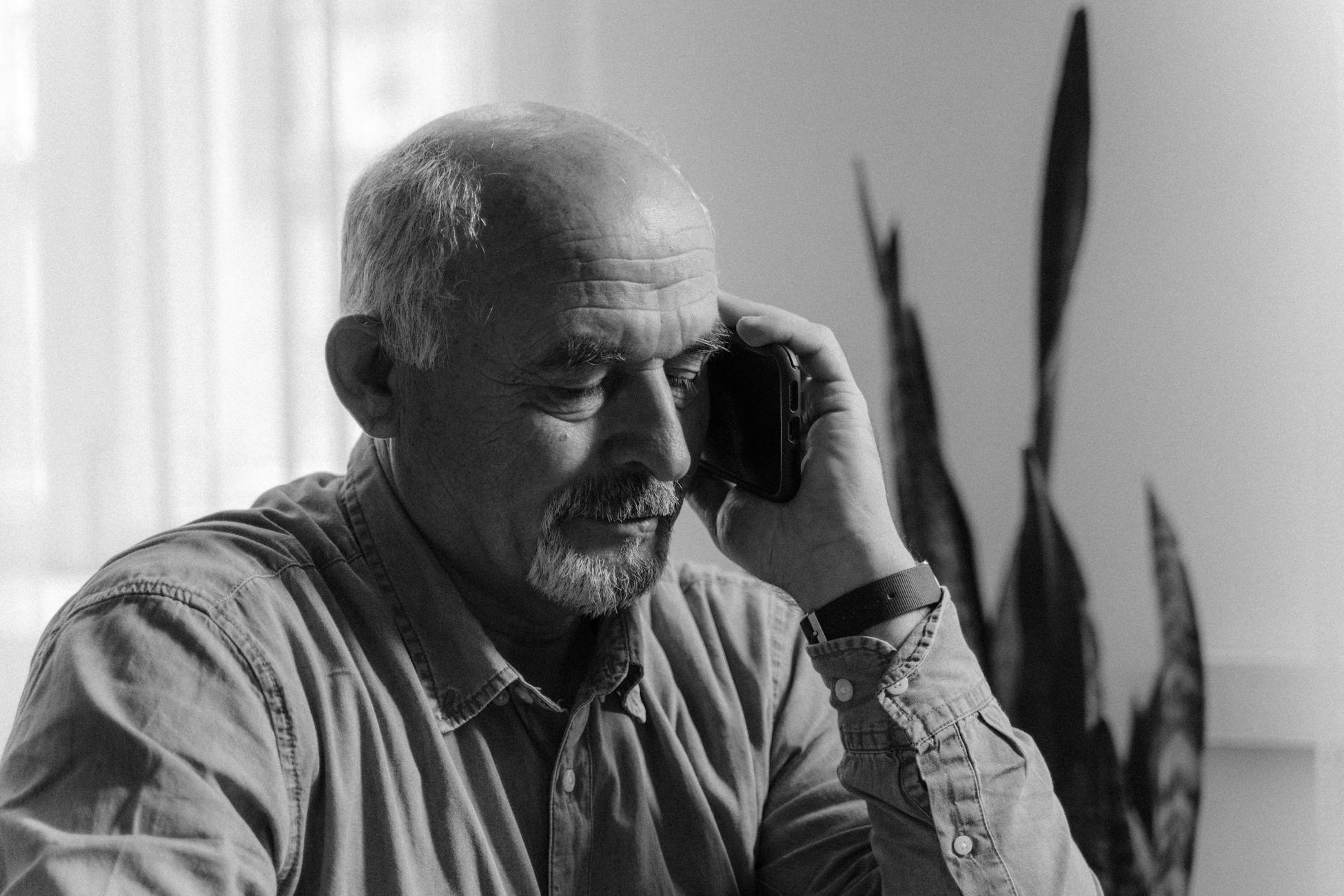
Research on Blue Zones by Dan Buettner and demographic teams has consistently found that the factors most predictive of longevity in these communities are social, not biochemical. A sense of belonging, daily purposeful movement, a plant-forward diet, and deep relationships are the common threads. Studies on social isolation, including a well-known meta-analysis by Julianne Holt-Lunstad and colleagues, have found that loneliness carries a mortality risk comparable to smoking 15 cigarettes a day. Johnson monitors 70 organ systems. The people of Ikaria monitor nothing and outlive almost everyone.
This is the tension the video keeps returning to, and it's the tension I keep sitting with. The science of cellular reprogramming might genuinely extend human life. The senolytics, the AI-designed drugs, the ability to reset aged cells to a younger state: all of that is real and advancing fast. But if the cost of an extra thirty years is a life that looks like Johnson's, stripped of relationships, governed by algorithms, emptied of the mess and tenderness that make a human life feel like a human life, then what exactly have you gained?
The Vegan Connection Runs Deeper Than Diet
I think about this through the lens of plant-based living because that's the world I inhabit, and because the overlap is impossible to ignore. Blue Zone communities eat predominantly plant-based diets. Johnson himself eats a strictly plant-based protocol. The surface-level connection is obvious. But the deeper connection is about philosophy, about what it means to organize your life around aliveness rather than around the avoidance of death.
The people I know in the plant-based community who have shaped me most aren't optimizing for longevity. They're living in a way that reflects care, for their bodies, for animals, for the ecosystems they depend on. The motivation isn't fear. It's attention. A kind of radical noticing that extends outward in every direction.
That distinction matters. When you go plant-based because you're paying attention to suffering and want to reduce it, your relationship with food becomes an expression of values. When you go plant-based because an algorithm determined it's the optimal fuel for cellular performance, food becomes data. Same plate, completely different life.
I keep thinking about what people in their seventies wish they'd done differently in their forties and fifties. The answers are remarkably consistent and have almost nothing to do with health protocols. They wish they'd spent more time with people they loved. They wish they'd worried less about things that turned out not to matter. They wish they'd been braver about saying what they actually felt.
Living Versus Not Dying
I'm 44. I live in Singapore. I run digital media companies. I am, by temperament and profession, someone who spends a lot of time thinking about the future. And I'll admit that the promise of longevity science appeals to me on a visceral level. More time to build things. More time with the people I love. More time to figure out what I'm actually doing here.
But I watched Bryan Johnson cry when his son left for college, and something cracked open. That wasn't a man who loves life so much he wants more of it. That was a man so terrified of loss that he's arranged his entire existence to avoid feeling it. And loss came anyway, as it always does, wearing the face of a young man choosing his own life.
The video closes with a question that has stayed lodged in my chest: What does it actually take to live a long and meaningful life? The emphasis falls on "meaningful," and it should. Because the research from Terror Management Theory, from Blue Zone demographics, from decades of psychological study on well-being in aging populations, all points to the same uncomfortable conclusion. The things that make life worth extending are the very things you have to give up when extension becomes the point.
You can monitor every biomarker and lose your children. You can optimize every meal and leave someone mid-chemotherapy. You can score perfectly on every metric and still live a life that, by any human reckoning, is tragically small.
Or you can eat plants with people you love, move your body because it feels good, sleep when you're tired, and let mortality sit with you at the table like the guest it's always been. The data, as it turns out, is on the side of the people who chose to stop removing and start arriving. The ones who measured nothing and meant everything to each other.
If You Were a Healing Herb, Which Would You Be?
Each herb holds a unique kind of magic — soothing, awakening, grounding, or clarifying.
This 9-question quiz reveals the healing plant that mirrors your energy right now and what it says about your natural rhythm.
✨ Instant results. Deeply insightful.
If You Were a Healing Herb, Which Would You Be?
Each herb holds a unique kind of magic — soothing, awakening, grounding, or clarifying.
This 9-question quiz reveals the healing plant that mirrors your energy right now and what it says about your natural rhythm.
✨ Instant results. Deeply insightful.
Justin Brown
Justin Brown is a writer and entrepreneur based in Singapore. He explores the intersection of conscious living, personal growth, and modern culture, with a focus on finding meaning in a fast-changing world. When he’s not writing, he’s off-grid in his Land Rover or deep in conversation about purpose, power, and the art of reinvention.
More Articles by Justin