The dog doesn't need you to become a better version of yourself — it just needs you to come home, and that quiet absence of expectation is the thing most people are actually choosing when they say they chose love.

Add VegOut to your Google News feed. 
I'll admit something I've never said out loud to another person. For a long stretch of my life, the only living thing I was fully honest with was a dog. Not a therapist, not a partner, not one of my children. A fourteen-year-old mutt with bad hips and breath that could clear a room. I could sit on the kitchen floor at midnight, say nothing, feel everything, and that dog would press her skull into my ribs like she was trying to hold the pieces together from the outside. She never once looked at me like I should be doing better. That lack of judgment, that complete absence of a performance review, became the safest space I had. And for years I called it unconditional love, because that's the phrase everyone uses. But the phrase is incomplete, and the incompleteness matters more than I realized.
The Phrase Everyone Borrows
You hear it constantly. "Dogs love you unconditionally." It shows up on bumper stickers, Instagram captions, eulogies for beloved pets. And on the surface, it's true enough. Studies suggest that dogs form complex, emotionally responsive bonds with their humans that closely mirror the attachment patterns we see in parent-child relationships. They notice your mood. They adjust their behavior. They greet you at the door whether you've been gone eight hours or eight minutes.
But when someone says "my dog loves me unconditionally" and leaves it there, they've stopped one layer too soon. Because the real draw of a dog's love has nothing to do with the love being unconditional in some abstract, spiritual sense. The draw is what the dog doesn't ask you to become. The draw is the absence of a project.
Think about it. Every significant human relationship you've ever had involved somebody looking at you and seeing potential. Seeing who you could be. Your mother wanted you to be kinder, or braver, or more careful. Your partner wanted you to be more present, more communicative, more ambitious, less guarded. Your friends wanted you to be the version of yourself that showed up at brunch, not the one who canceled at the last minute because getting dressed felt impossible. Even therapists, bless them, are in the business of transformation. They hold space for who you are, yes, but only as a way station toward who you might become.
A dog holds space for who you are. Full stop. No destination. No improvement timeline. No disappointed sigh when you fall back into old patterns.
The Quiet Tyranny of Becoming
There's a concept in psychology that gets thrown around in therapy circles: unconditional positive regard. Psychologist Carl Rogers made it central to his humanistic approach, arguing that a therapist must accept the client fully, without conditions, as a foundation for healing. And yet even Rogers acknowledged tension in the idea. As one analysis of the concept explored in Psychology Today, unconditional positive regard in practice often bumps up against the fact that relationships exist in context, that acceptance without any behavioral expectation can become its own kind of trap.
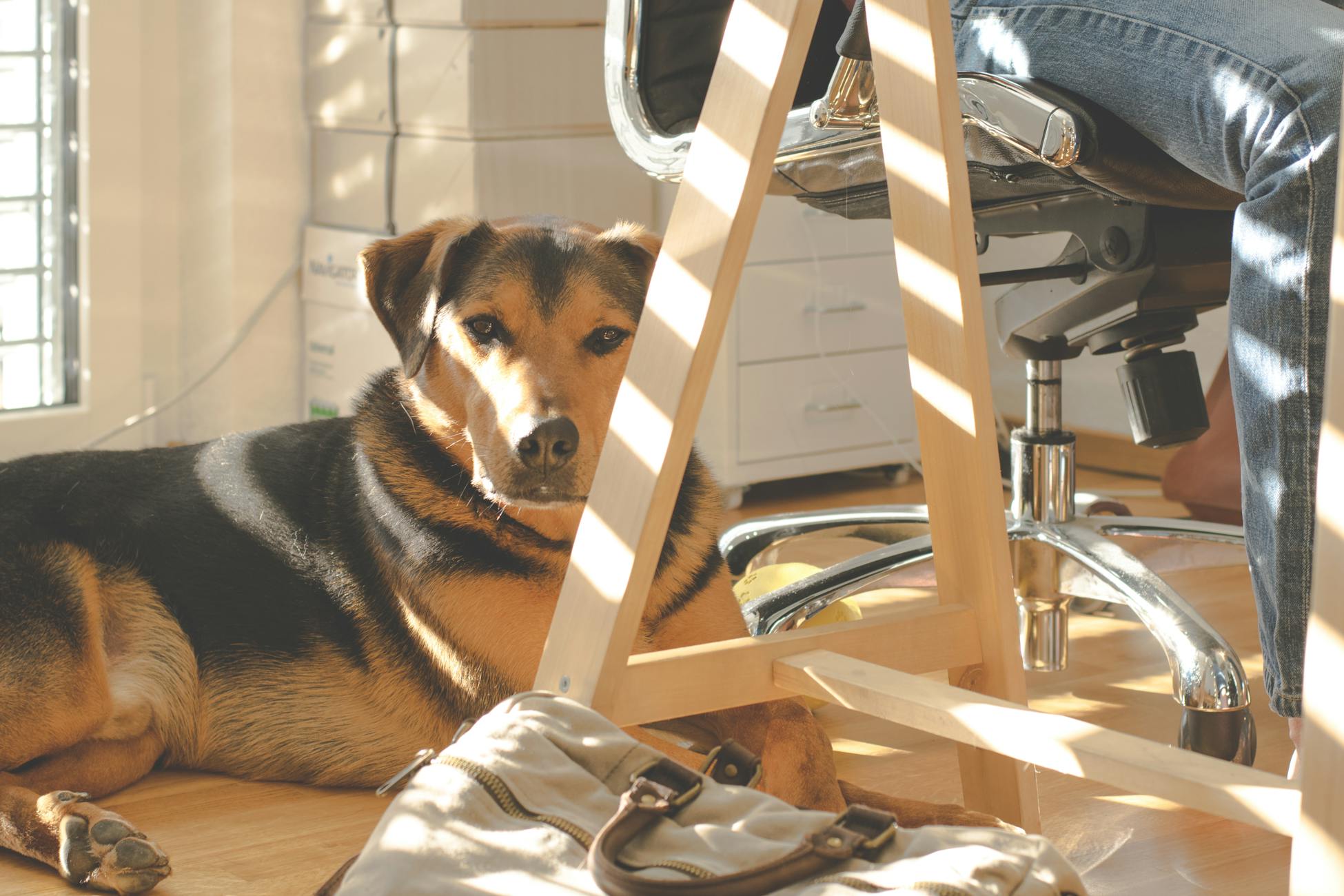
But here's the thing. Dogs sidestep this dilemma entirely. A dog's acceptance doesn't come with a therapeutic framework. It doesn't come with goals or outcomes or a six-month reassessment. The dog doesn't accept you in order to help you grow. The dog accepts you because you exist and you are warm and you opened the door.
And that distinction, the one between "I love you no matter what" and "I love you without needing you to be someone other than who you already are," carries enormous psychological weight. Because most of us spend our entire lives navigating the gap between who we are and who the people around us need us to be. We carry that gap like a second skeleton. We build our personalities around it. We learn early which parts of ourselves earn approval and which parts earn silence, or worse.
The people who say they chose dogs because dogs love unconditionally are telling a partial truth. The fuller truth is quieter and harder to say out loud: the dog loves them without requiring them to become someone they never wanted to be. And that distinction is the entire reason they made the choice.
What We Were Trained to Carry
I've been thinking about this for a long time now, turning it over in my hands like a stone that keeps changing shape. And what I keep coming back to is how early the training starts. How early we learn that love is conditional on improvement.
As children, most of us absorbed a clear message: you are loved, and also you should be better. More polite. More agreeable. Less loud, less needy, less angry, less afraid. Even in loving homes (especially in loving homes), the subtext runs deep. Love and expectation arrive as a package deal, so tightly wrapped together that we stop being able to tell them apart. By adulthood, we don't even notice the expectation anymore. We just feel a low, constant pressure to perform a version of ourselves that someone else designed.
Psychological research suggests that early attachment patterns shape the way we move through the world, often without our conscious awareness. The way we love, the way we withdraw, the way we choose companions (human and animal alike) all carry the fingerprints of those early negotiations between who we were and who we were asked to become.
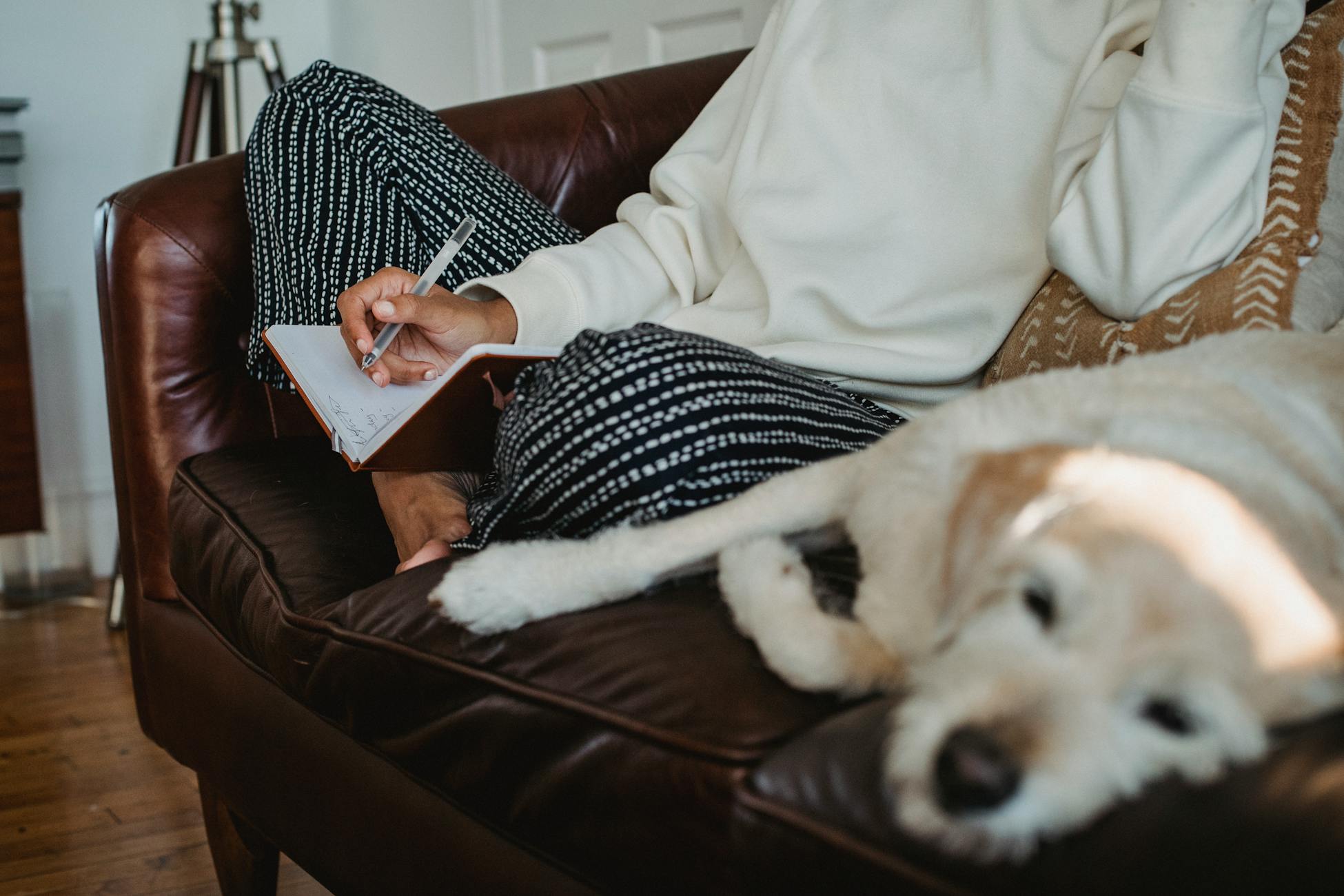
A dog interrupts that pattern. A dog never once looked at me and saw a project. And after decades of being someone's project, or being my own project, or being a project that everyone had an opinion about, the relief of that interruption was so profound it made me cry the first time I really noticed it.
The Companion Who Doesn't Need You Fixed
I've heard people dismiss the dog-as-emotional-anchor thing as sentimental, even pathological. The implication being that if you find your deepest emotional safety with an animal, something must be broken in your ability to connect with humans. And I understand the concern on paper. But in practice, I think the opposite is closer to the truth.
People who recognize what a dog offers them are often people with an unusually clear understanding of what human relationships cost. They know the price because they've paid it. Repeatedly. They've spent years showing up for people who never asked whether anyone was showing up for them. They've contorted themselves into versions of themselves that made other people comfortable. They've accepted love that came with fine print.
So when they come home to a dog who wants nothing more than proximity and a walk and maybe that spot behind the ears scratched in exactly the right way, they're not settling for less than human connection. They're choosing a form of connection that doesn't require self-betrayal as the price of admission.
That's a sophisticated emotional choice, not a deficit.
The Part Nobody Says at Dinner Parties
Here's what I've noticed about people who talk about their dogs with that particular quality of devotion, the ones who say things like "honestly, I prefer my dog to most people." They usually laugh when they say it, because the laugh makes it socially acceptable. But underneath the laugh is something absolutely sincere. And the sincere part is this: the dog lets me be the version of myself I actually am, and that version turns out to be someone I can live with.
That's the revelation hiding inside the cliché of unconditional love. The dog doesn't just love you regardless of your flaws. The dog makes your flaws irrelevant. Not because the dog is simple or because canine cognition lacks the sophistication to judge you, but because the dog operates in a relational framework that doesn't include the concept of "you should be different."
And if you've spent any significant portion of your life feeling like the people who love you are also, simultaneously, disappointed by you (disappointed by your choices, your career, your weight, your politics, your inability to just relax), then you know what it means to sit beside a creature for whom disappointment is structurally impossible. You know what that silence feels like. How much room it creates inside your chest.
I've spent enough years on this planet to understand that emotional distance often looks like a choice from the outside when it's actually a form of self-preservation from the inside. And I think something similar applies to the people who orient their emotional lives around animals. From the outside, it can look like avoidance. From the inside, it feels like the first honest breath you've taken in years.
What the Dog Actually Chose
The other half of this equation deserves attention too. Because the dog didn't just agree to love you without conditions. The dog also chose you without a checklist. The dog didn't evaluate your earning potential, your emotional intelligence score, your attachment style, or your five-year plan. The dog chose you because you were there. You smelled like yourself. You were warm.
There's something almost unbearably tender about being chosen on those terms. About being enough, just as a physical presence, just as a body that shows up and stays. Most of us haven't been chosen that way since we were infants, and even that choosing came loaded with projections about who we would become.
The dog's choosing is clean. And the person who gravitates toward that cleanliness isn't naive about love. They're exhausted by the complicated versions of it. They've learned, the hard way, that being someone's everything often means becoming someone you don't recognize. So they choose the companion who lets them stay recognizable to themselves.
That's the partial truth made whole. That's the distinction that explains everything. The dog doesn't love you unconditionally. The dog loves you without requiring you to become someone you never wanted to be. And if you've ever been loved on the condition that you transform, you know exactly why that distinction is worth building your entire evening around: the walk, the quiet kitchen, the weight of a head on your feet, the absence of a single request that you be anything other than home.