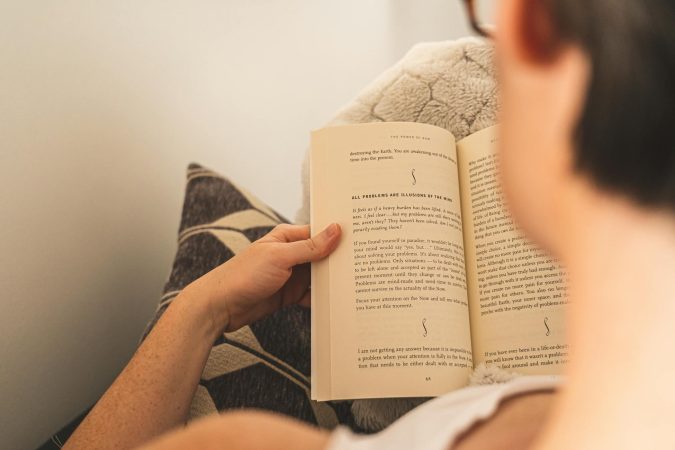
The book you've read four times isn't a crutch — it's a neurological anchor your overstimulated brain is begging you to use.
I've watched The Lord of the Rings trilogy so many times that I can recite whole stretches of dialogue from memory. Not proudly, not as a party trick. Quietly, usually alone, usually after a week that left my brain feeling like a browser with forty tabs open and no way to close any of them. For years I assumed this said something unflattering about me. That I lacked curiosity. That I was retreating from the world rather than engaging with it. Then I started reading about what the brain actually does during familiar experiences, and the picture that emerged was nothing like the one I'd been carrying around.
Most people believe that re-reading a favorite book or rewatching a film you've already seen is a sign of intellectual laziness, or worse, a failure to move forward emotionally. The conventional wisdom frames repetition as stagnation. You should be consuming new things, broadening your horizons, staying current. Algorithms are designed around this assumption, constantly pushing the next thing, the undiscovered thing, the thing you haven't watched yet. But what gets lost in that framing is a basic neurological reality: the modern human nervous system is drowning in novelty, and the brain has a built-in mechanism for relief. Familiar content activates it.
Your Nervous System Wasn't Built for This
The autonomic nervous system regulates functions you don't consciously control: heart rate, digestion, breathing, the fight-or-flight response. When it's working well, it shifts smoothly between states of alertness and rest. When it's dysregulated, the system gets stuck. A person might feel constantly wired, unable to settle, as though danger is always around the next corner. Or they crash into numbness, unable to feel much of anything at all.
The environment that shaped this system over hundreds of thousands of years was relatively predictable. Seasons changed slowly. Social groups were small. Stimuli arrived at a pace a human brain could process and file. Now consider what happens before most people have finished their morning coffee: dozens of push notifications, news headlines designed to provoke alarm, social media feeds engineered to maximize engagement through emotional volatility, emails requiring decisions, group chats scrolling faster than anyone can read. The nervous system treats each of these as a micro-event requiring assessment. Safe or unsafe. Respond or ignore. Care or dismiss.
By noon, the system that evolved to track weather patterns and predator movements has been asked to evaluate hundreds of novel inputs. The fatigue that follows has nothing to do with physical exertion. The body is tired because the brain spent four hours deciding what mattered.
That background hum of unfinished assessment is something writers on this site have explored before, and the mechanism behind it is central to understanding why repetition feels so good.
Predictability as Medicine
When you rewatch a film you know by heart, something specific happens in your brain. Research suggests that the prefrontal cortex, the region responsible for executive function and decision-making, gets a break. There are no plot twists to anticipate. No new characters to evaluate. No uncertainty about whether the story will end well. The cognitive load drops dramatically, because predictability appears to reduce the brain's demand for active threat assessment. The mind settles. Breathing slows. The nervous system receives a signal it rarely gets from modern life: nothing new is coming. You can stand down.
This mechanism explains why children demand the same bedtime story every night. Research into why children crave repetition reveals that familiar stories help young brains consolidate learning, but they also serve an emotional function. The known story creates a container of safety. The child knows what comes next, and that knowledge allows their nervous system to relax into the experience rather than brace against it.
Adults don't outgrow this need. They just learn to be embarrassed by it.
The Emotional Regulation Loop
Researchers have been mapping how the brain manages emotions, and the findings challenge the assumption that we should always be pushing through discomfort toward something new. A study covered by Science Daily found that the brain uses a network of regions to regulate emotional responses in real time, with the prefrontal cortex acting as a kind of volume dial on intensity. When that system is overtaxed, emotional regulation breaks down. Small frustrations feel enormous. A mildly negative interaction at work can ruin an entire evening.
Familiar media offers the prefrontal cortex a recovery period. Because the emotional arc of a known book or film is predictable, the brain doesn't need to deploy its full regulatory apparatus. You already know the sad part is coming. You already know the protagonist survives. The emotional experience still registers, sometimes powerfully, but the regulatory cost is lower. You feel without being destabilized.
That distinction matters enormously. Emotional experience without regulatory overload is restorative. Emotional experience with regulatory overload is what most people call an anxiety spiral.
Separate research has also shown that reflexive attempts to dampen emotional responses can actually backfire in people who are already emotionally depleted, reducing their tolerance for distress rather than building it. The people who rewatch familiar films aren't suppressing emotion. They're giving themselves a controlled dose of it inside a structure their brain already trusts.
Repetition Builds Something Permanent
There's a separate argument for repetition that has nothing to do with comfort and everything to do with depth. Repetition transforms how information is stored. Each time you re-read a book, you notice things that were invisible on the first pass. Not because the book changed, but because you did. The neural pathways involved in processing that material have been reinforced, and the brain now has bandwidth to attend to subtlety it previously missed.
A novel read at twenty-two lands differently at forty-five. The words are identical. The reader isn't. Every re-read becomes a kind of measurement, a way of tracking who you've become since the last time you encountered the same material. People who re-read aren't stuck. They're conducting an ongoing, private audit of their own growth.
I noticed this with a paperback copy of Meditations by Marcus Aurelius that I've carried through multiple countries and at least three apartment moves. The passages I underlined years ago are not the passages that stop me now. The book didn't evolve. My nervous system did. My capacity for understanding shifted. Repetition revealed the shift.
The same principle applies to music, to recipes, to walking familiar routes. Predictable inputs free the brain to process at a deeper level. Novelty forces surface-level engagement because the brain is too busy cataloging new information to reflect on what it means.

The Shame Around Repetition
Culture rewards novelty-seekers. The person who has seen every new release, read every buzzy book, visited every trending restaurant: that person is positioned as curious, engaged, alive. The person who rewatches the same six films on rotation is positioned as boring, or stuck, or incapable of growth.
This framing serves the attention economy perfectly. Streaming platforms, publishers, social media companies, all of them profit from the constant consumption of new content. A person who quietly re-reads Pride and Prejudice every autumn is a terrible customer. They don't generate clicks. They don't provide data points. They don't feed the algorithmic machine that depends on novelty-driven engagement.
The shame people feel about their repetitive habits is, at least in part, manufactured. The nervous system's preference for the familiar has been reframed as a deficiency so that the cure, more new content, can be sold back to us.
Think about how differently we treat repetition in other contexts. A musician who practices the same scales daily is disciplined. An athlete who runs the same training route is committed. A meditator who sits in the same spot at the same time is devoted. Yet a reader who returns to the same novel is somehow stunted.
The inconsistency is revealing. We only pathologize repetition when it doesn't produce something visible to others.
What Familiar Content Actually Signals
People who gravitate toward familiar books and films tend to share certain traits. They are often highly attuned to their environment, meaning they absorb more stimulation than average and therefore need more structured recovery. They frequently report that their re-reading or rewatching happens at specific times: after travel, after social events, after periods of high stress or change.
The behavior is rhythmic, not random. The brain is self-prescribing.
I later learned that psychologists have a term for this kind of instinctive self-care: co-regulation. Typically, co-regulation describes the process by which one person's calm nervous system helps settle another's, a parent soothing a child, a partner's steady breathing calming your own. But familiar media can serve a similar function. A known voice narrating a known story. A musical score you can anticipate beat by beat. The familiar rhythm of a beloved author's prose. These become co-regulatory partners when human ones aren't available.
That finding reframes something I'd always noticed in myself. On nights when everything felt loud and unresolved, I never reached for something new. I reached for something I already knew. The impulse wasn't regression. It was regulation.
The people who still find comfort in small rituals of predictability are tapping into the same mechanism. The morning coffee, the evening walk, the Sunday film. These aren't signs of a small life. They're evidence of a nervous system that knows what it needs.
Permission to Stop Consuming
The counterpoint deserves respect: novelty genuinely does promote neuroplasticity, broadens perspective, introduces ideas that challenge and expand. Nobody benefits from a perfectly sealed bubble of the already-known. Growth requires some friction.
But friction and flooding are different things. A person who reads one challenging new book a month and re-reads a favorite in between is not avoiding growth. They're pacing it. They're alternating between expansion and integration, which is exactly how the nervous system learns best. Push, then consolidate. Stretch, then rest. Novel input followed by familiar ground.
The problem with modern content culture is that it eliminated the consolidation phase entirely. There's always another episode, another recommendation, another list of things you haven't seen yet. The brain never gets the signal that it can stop processing and start absorbing. People who still access their internal world without external prompting have something increasingly rare: a nervous system that hasn't been entirely colonized by the demand for novelty.
Here's what this looks like in practice: the next time you finish a day that left you overstimulated and depleted, try reaching for something familiar instead of scrolling for something new. Deliberately. Not as a guilty pleasure but as a conscious choice. Put on the album you've heard a hundred times. Open the book with the cracked spine. Queue up the film you could narrate in your sleep. And then pay attention to what your body does when you give in to it. Notice the shoulders dropping. The breathing evening out. The jaw unclenching. You're not being lazy. You're letting your nervous system complete a cycle it's been trying to finish all day.
Better still, build it into the rhythm of your week. Designate one evening as a return rather than a discovery. After a week of new inputs, new demands, new problems requiring novel solutions, give your brain a night where nothing is unknown. Over time you may find that the rest of your week feels more manageable, not because anything external changed, but because you gave your nervous system the consolidation period it was starving for.
Your brain is not stuck in the past. It's building a bridge back to the present, using the only materials it trusts completely: the ones it already knows. And in a world that profits from your perpetual overwhelm, choosing the familiar isn't a retreat. It's one of the most quietly radical things you can do for yourself.
If You Were a Healing Herb, Which Would You Be?
Each herb holds a unique kind of magic — soothing, awakening, grounding, or clarifying.
This 9-question quiz reveals the healing plant that mirrors your energy right now and what it says about your natural rhythm.
✨ Instant results. Deeply insightful.

Justin Brown
Justin Brown is a writer and media entrepreneur based in Singapore. He co-founded a digital media company that operates publications across psychology, sustainability, technology, and culture, reaching tens of millions of readers monthly. His background spans digital strategy, content development, and the intersection of behavioral science and everyday life.
At VegOut, Justin writes about plant-based living, food psychology, and the personal dimensions of changing how you eat. He is interested in the gap between knowing something is good for you and actually doing it, and his writing explores the behavioral and emotional forces that make lasting dietary change so difficult for most people.
Outside of publishing, Justin is an avid reader of psychology, philosophy, and business strategy. He believes that the best writing about food and lifestyle should challenge assumptions rather than confirm them, and that understanding why we resist change is more useful than being told to change.
More Articles by Justin