I turned my body into a spreadsheet to outrun mortality, and all I got was a life too measured to actually live.

Add VegOut to your Google News feed. 
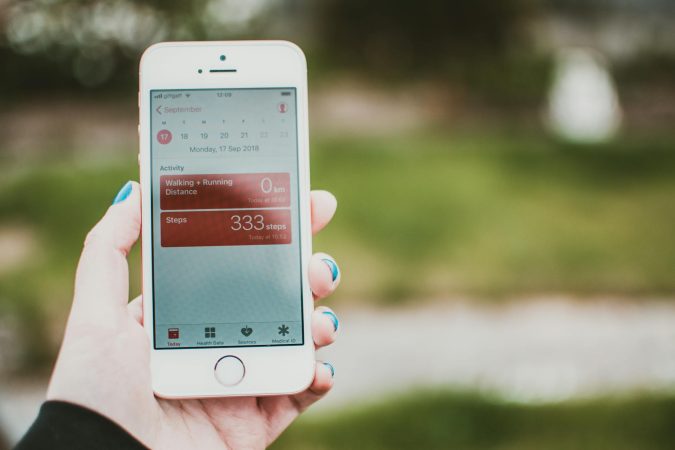
About two years ago, I started tracking everything. I mean everything. Blood glucose, sleep latency, HRV, vitamin D levels, omega-3 ratios, cortisol curves, inflammatory markers. I had a spreadsheet that would have made a lab technician weep with admiration. I weighed my food on a kitchen scale. I ate the same plant-based meals at the same times, adjusted my blue light exposure by the hour, and went to bed at 9:15 PM every single night because my data told me that was my optimal window for deep sleep. I told myself this was about health. About longevity. About living well for as long as possible. But if I'm honest, really honest, it was about something much older and much harder to optimize away. I was terrified of dying. And I thought that if I could just get the numbers right, the fear would stop.
It didn't stop. It grew arms and legs and a job title.
The Man Who Made My Fear Look Normal
I first came across Bryan Johnson's protocol about eighteen months into my own tracking obsession. Here was a man spending $2 million a year on not dying. Over 100 pills a day. Seventy organ systems monitored. 950 calories of precisely measured food, last meal at 11 AM, in bed by 8:30 PM. His biological age scores were dropping. His inflammation markers were near zero. By every quantifiable metric, he was winning.
And I felt a strange comfort seeing him. Because if someone that wealthy and that committed was doing what I was doing, only bigger, then maybe I wasn't spiraling. Maybe I was just ahead of the curve.
But then I started paying closer attention to the parts of Johnson's story that didn't show up on a blood panel. His marriage ended. Two of his three children cut ties with him. His remaining son, Talmage, became part of the protocol itself, donating blood plasma for Johnson's anti-aging experiments. When Talmage decided to leave for college and start his own life, Johnson broke down in tears. In 2019, his fiancée Taran Southern was diagnosed with stage three breast cancer. Johnson left her while she was undergoing chemotherapy. Months later, he had her sign a confidentiality agreement.
The data was impeccable. The life around it was in ruins.
When the Algorithm Becomes the Authority
Johnson has said publicly that the human mind is not a reliable source of judgment. So he removed it from command. An algorithm now tells him what to eat, when to sleep, what to take, and how well he did it. When asked directly whether he, Bryan Johnson, will one day die, he answered: "False."
I watched that and felt something cold move through me. Because I recognized the logic. I had my own version of it. I didn't have a team of thirty doctors or a billion-dollar exit funding my supplements, but I had the same underlying conviction: that if I could measure enough, control enough, optimize enough, I could make death into a solvable problem. The body becomes a machine. The machine becomes a project. And the project becomes so consuming that you don't notice you've stopped living the life you're supposedly extending.
VegOut explored this tension in a recent video that fundamentally changed how I think about the longevity movement. It traces the parallel between Johnson's hyper-optimized existence and the communities around the world where people actually live the longest, and the contrast is devastating:
The video makes a point that has stayed with me: the places on Earth where people live past 100 (the so-called Blue Zones) have no protocols, no supplements, and no billion-dollar labs. What they have is community, purpose, movement woven into daily life, and meals shared with people they love. The data keeps confirming this, but the longevity industry keeps ignoring it.

The Science Is Real. The Question Is What We Do With It
I want to be clear about something. The science behind cellular reprogramming is genuinely extraordinary. Scientists funded by Jeff Bezos are taking old human cells and resetting them to younger states. A team backed by Sam Altman is engineering ways to add ten healthy years to the middle of your lifespan. Google's secretive Calico Labs has poured $3.5 billion into studying organisms that barely age. New drugs called senolytics are being designed to hunt down senescent cells (the broken, inflamed cells that accumulate with age and drive disease), and in animal studies the results have been striking. Mice physically rejuvenated. Organs recovered function. Fur grew back.
AI has accelerated all of this. Machine learning models can now scan millions of molecular combinations and predict which ones will target specific aging pathways. What used to take a decade and a billion dollars can happen in months. The argument gaining traction is that cancer, Alzheimer's, and heart failure aren't separate problems at all. They're symptoms of one underlying condition: aging itself. Cure the root and you cure everything downstream.
That's a staggering possibility. And I believe the research matters. But somewhere along the way, the conversation shifted from "how do we age with less suffering" to "how do we eliminate death entirely." And those are very different questions with very different psychological costs.
What Two Years of Tracking Actually Taught Me
Here's what I discovered during my years of obsessive self-monitoring, and it's something no biomarker ever captured. The fear didn't decrease as my numbers improved. It increased. Every time I hit a target (deeper sleep, lower inflammation, better lipid ratios), the goalposts moved. There was always another marker to optimize, another study suggesting I should add something or remove something. The project expanded to fill every available space in my mind.
I stopped accepting dinner invitations because they disrupted my eating window. I turned down a trip with friends because the time zone change would wreck my sleep data for a week. I found myself unable to enjoy a meal my partner cooked because she'd used oil I hadn't accounted for in my tracking app. I was living longer on paper and shorter in every way that mattered.
Research on health anxiety and what psychologists call cyberchondria describes exactly this pattern. A 2019 study published in Journal of Anxiety Disorders by Mathes, Norr, Allan, Albanese, and Schmidt found that repeated health-related checking behaviors reinforce anxiety rather than relieve it. Each check provides momentary reassurance, followed by a rebound of doubt that demands another check. The cycle doesn't resolve the fear. It institutionalizes it.
Terror Management Theory, developed by Sheldon Solomon, Jeff Greenberg, and Tom Pyszczynski based on the work of Ernest Becker, offers an even deeper lens. The theory holds that awareness of our own mortality is the central psychological challenge of human existence, and that much of what we build (our identities, our legacies, our belief systems) functions as a buffer against that awareness. When those buffers fail or when we strip them away deliberately, as Johnson did when he left his faith and handed authority to an algorithm, the anxiety doesn't disappear. It has to go somewhere. Often it goes into the body itself, which becomes the last frontier of control.
I think that's what happened to me. And I think that's what's happening on a much grander scale in the longevity industry.

The Thing the Blue Zones Keep Telling Us
The video from VegOut draws attention to something the data confirms but the optimization culture ignores. In Okinawa, Sardinia, Nicoya, Ikaria, and Loma Linda, the communities where people routinely live past 100, the secret has nothing to do with supplements or sleep trackers. It has to do with daily habits rooted in connection and purpose. These are people who eat simply (mostly plants, mostly whole foods), move because their lives require it, and are embedded in social structures that give them a reason to get up in the morning.
Dan Buettner's research on Blue Zones, published through National Geographic and later synthesized in peer-reviewed work with Michel Poulain and Gianni Pes, consistently identifies the same factors: plant-forward diets, natural movement, strong social ties, sense of belonging, and what the Okinawans call ikigai, a reason for being.
None of these require a spreadsheet.
When I first went plant-based years ago, it was motivated by something simpler than optimization. I cared about animals. I cared about the environmental cost of what I was eating. I wanted to feel aligned with my values. Somewhere along the way, veganism became another variable in the spreadsheet, another thing to perfect rather than a way of living that connected me to something larger than my own body.
What I'm Doing Differently Now
I still eat plant-based. I still care about my health. I still check in with my doctor and pay attention to how I feel. But I stopped tracking biomarkers obsessively about four months ago, and the withdrawal was real. The first week without data felt like free-falling. I didn't know if my sleep was "good" because I didn't have a score telling me. I had to rely on something terrifyingly low-tech: how I actually felt when I woke up.
I started cooking with my partner again without measuring everything. I went to a friend's birthday dinner that ran until midnight and ate food I didn't prepare. I felt the old anxiety spike, the voice that said you're losing ground, you're falling behind, your cells are accumulating damage right now. And I let it be there. I didn't try to solve it. I just sat with it, which is the one thing the optimization mindset can never tolerate.
A study by Kristin Neff and Christopher Germer, published in Clinical Psychology Review, found that self-compassion practices were significantly more effective at reducing health anxiety than self-monitoring behaviors. The mechanism is counterintuitive: instead of trying to control the source of fear, you change your relationship to the fear itself. You stop trying to make the feeling go away and start making room for it.
That's what the Blue Zone centenarians seem to understand intuitively. Death isn't a problem to be solved. It's a reality that gives shape and urgency to a life. Sometimes the things you stop doing matter more than the things you start.
The Cost Bryan Johnson Isn't Measuring
In the VegOut video, there's a line that stopped me cold: "He's trying to live forever, but he's living it alone." Johnson's protocol has produced extraordinary clinical results. His body is, by many measures, decades younger than his chronological age. But his fiancée faced cancer treatment without him. His children, two of three, are gone from his life. His remaining son's departure for college was experienced as a crisis rather than a natural milestone.
Johnson removed the human mind from command because he believed it was unreliable. And maybe he's right that our judgment is flawed, biased, and inconsistent. But the things that exhaust us most deeply are often the very things we've been avoiding feeling. Judgment, with all its messiness, is also what allows us to prioritize a person over a protocol. To choose presence over optimization. To say, "This meal isn't perfect, but the person I'm sharing it with makes it worth every untracked calorie."
I spent two years trying to control my body into silence. Trying to make the fear of dying shut up by giving it perfect data. And what I learned is that the fear doesn't want data. It wants meaning. It wants to know that the life it's afraid of losing is actually being lived.
The richest, most technologically advanced people on the planet are betting that death is a problem to be solved. Maybe they'll succeed. Maybe your grandchildren really will grow up in a world where the word "terminal" sounds archaic. But I keep thinking about the centenarians in Okinawa, eating their sweet potatoes, walking to the market, laughing with neighbors they've known for sixty years. They aren't trying to live forever. They're just fully inhabiting the lives they have.
That, I think, is the answer the spreadsheet could never give me. And the longer I walk this path, the more I realize that the things worth caring about are rarely the ones you can quantify.
If You Were a Healing Herb, Which Would You Be?
Each herb holds a unique kind of magic — soothing, awakening, grounding, or clarifying.
This 9-question quiz reveals the healing plant that mirrors your energy right now and what it says about your natural rhythm.
✨ Instant results. Deeply insightful.
Justin Brown
Justin Brown is a writer and entrepreneur based in Singapore. He explores the intersection of conscious living, personal growth, and modern culture, with a focus on finding meaning in a fast-changing world. When he’s not writing, he’s off-grid in his Land Rover or deep in conversation about purpose, power, and the art of reinvention.
More Articles by Justin