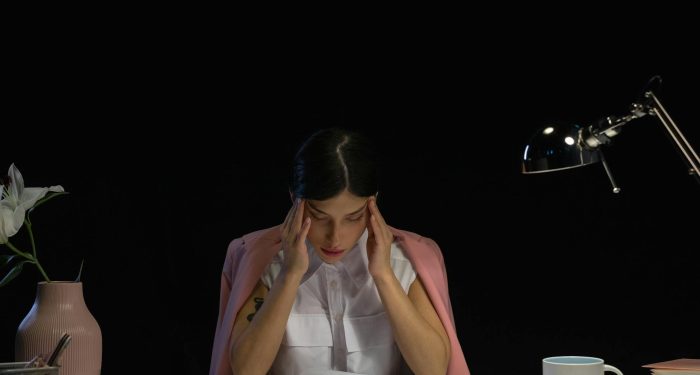
The child who learned to read every flicker of emotion on a parent's face grew into the adult who can map an entire room's mood in seconds — and freeze when asked what they themselves feel.
Sensitive children who get told to toughen up don't stop feeling. They stop feeling inward. The emotional antennae stay active, but they rotate permanently outward, scanning other people's moods, tensions, micro-expressions, and silences. By adulthood, these children become astonishingly perceptive about everyone else in the room. Ask them how their coworker is doing, and they'll give you a layered, nuanced portrait. Ask them how they are doing, and the answer is often vague and uncertain, something like 'fine' or 'I don't know.'
Most people assume that emotional intelligence is a single skill. You either have it or you don't. The popular understanding goes something like this: if someone can read others well, they must also understand themselves well. That assumption is dangerously wrong. The capacity to perceive emotions in others and the capacity to identify emotions in yourself are two separate developmental tracks, and when a child's environment rewards one while punishing the other, you get adults who are brilliant emotional translators for everyone except themselves.
What I've found, after decades of teaching teenagers and then years of sitting in therapy untangling my own patterns, is that the phrase stop being so sensitive does something very specific to a child's developing brain. It teaches the child that their internal emotional signals are noise. Static. Something to be suppressed or, at minimum, hidden. But the child still lives in an environment with emotionally unpredictable adults, so they can't afford to stop reading emotions entirely. They just redirect the skill. They get extremely good at reading you.
The Radar That Never Shuts Off
A child who grows up in a household where emotional expression is treated as weakness, inconvenience, or drama develops what amounts to a social survival radar. They learn to detect a parent's irritation before the parent even knows they're irritated. They notice the tightening around someone's eyes, the change in vocal pitch, the way a hand grips a coffee mug a little harder than necessary. This is brilliant adaptive behavior. It keeps the child safe.
The cost is invisible for years.
The cost is that the child never builds a corresponding vocabulary for their own inner states. Psychologists have identified distinctions between cognitive empathy and affective empathy — understanding what someone else feels versus experiencing emotions yourself. A child who is told their sensitivity is a problem may develop cognitive empathy to an extreme degree. They become experts at modeling other people's emotional worlds. But affective empathy, the kind that requires you to sit inside your own emotional experience and name what's happening, atrophies. There's no safe environment in which to practice it.
I spent thirty-two years teaching high school English, and I could spot these students every semester. They were the ones who wrote devastatingly insightful essays about fictional characters' motivations but struggled when I asked them to reflect on their emotional response to a chapter. They'd stare at me, genuinely confused by the question.
I recognized them because I was one of them.
The Architecture of Outward Attention
What makes this pattern so persistent is that it gets rewarded. The hyper-attuned child becomes the teenager everyone calls "mature for their age." They become the friend who always knows what to say, the partner who can sense a shift in mood from across the house, the colleague who manages group dynamics without anyone noticing. These are socially valuable skills. People praise them. Employers promote for them.
Meanwhile, the person deploying these skills often has no idea what they want, what they need, or what they're feeling at any given moment. They might describe themselves as "easy-going" or "flexible" when what they actually mean is that they've never had the internal framework to form a preference in the first place.
Studies on emotional development milestones in children suggest that emotion regulation is a learned skill, and it follows a developmental sequence. Children first learn to identify emotions in others through facial expressions and tone. Then, with guidance from caregivers, they learn to label their own internal states. The second step requires a caregiver who validates the child's emotional experience by acknowledging and normalizing their feelings. When a caregiver instead says stop crying or you're overreacting or don't be so sensitive, the second step gets skipped. The child learns to identify emotions in others — because survival demands it — but never learns to do the same for themselves.
One skill got built. The other one didn't.
The pattern crystallizes. Outward perception becomes a fortress. Inward perception becomes a blank wall.
What It Looks Like at Forty
I started journaling at thirty-six. My therapist had asked me, for the third session in a row, what I was feeling, and for the third session in a row I described what I thought about the situation instead. She pointed out that I was describing my thoughts about the situation, not my feelings - a distinction I genuinely didn't understand at the time.
That moment cracked something open. I went home and started writing, trying to catch emotions as they moved through me, and I discovered they were fast, blurry, and completely unlabeled. I could tell you that the woman at the grocery store was having a terrible day and was probably fighting with her husband and was embarrassed about it. I could not tell you whether I was sad, angry, or hungry. The signals felt identical.
Forty-seven notebooks later, I'm better at it. Not good. Better.
The adults who grew up this way often describe a similar experience. They walk into a room and immediately start cataloging: who's tense, who's pretending to be fine, who just had an argument, who's about to cry. They do this automatically, the way most people breathe. Then someone asks how they are, and the system crashes. There's no internal catalog. There's no vocabulary. There's just a vague sense of something that could be anything.
Psychologists have observed a pattern similar to alexithymia, a difficulty in identifying and describing one's own emotions. What's striking is that it can coexist with extraordinary emotional perception aimed at others. The two capacities live in different rooms of the same house, and the door between them was sealed shut in childhood.
Defense Mechanisms Disguised as Gifts
The cruelest part of this dynamic is the misidentification. They're often labeled as empaths or praised for their emotional intelligence. They receive compliments for the very skill that was forged in fear. The ability to read a room was never a gift. It was a smoke detector installed by a child who learned that undetected emotional shifts in a caregiver could mean danger.
When we talk about children of emotionally unavailable parents becoming capable adults, we're describing the same mechanism. The competence is real. The cost is hidden. And the cost is a lifetime of managing everyone else's emotional experience while your own goes unwitnessed, including by yourself.
I see this pattern in adults who become the connector in every group but never feel like a true member of any. They're indispensable because they hold the emotional temperature for everyone around them, and they're exhausted because no one does the same for them. Often, no one even thinks to ask.
And that loneliness has a specific quality. It shows up on ordinary days, in small moments when you want to share something and realize no one knows the real you well enough for it to land. Because you never learned to show the real you. You were too busy tracking everyone else.
Turning the Antenna Inward
Recovery from this pattern is disorienting. I don't use that word lightly. When you've spent decades with your emotional attention pointed outward, turning it inward feels like trying to read a book in a language you half-remember from childhood. The words are familiar. The meaning takes enormous effort to reconstruct.
My therapist once told me to sit with a feeling for sixty seconds without analyzing it, explaining it, or connecting it to someone else's experience. Sixty seconds. I lasted about twelve before I started thinking about how the feeling might be affecting my tone in conversations with others. The default is that strong.
What helped, slowly, was the journaling. Not journaling about events. Journaling about sensations. Where in my body did I feel tightness? Was my jaw clenched? Were my shoulders up around my ears? The body, it turns out, had been keeping records the mind refused to file. I'd note physical sensations - tightness in my chest, shallow breathing, cold hands - and sit with those facts until an emotion would surface, tentatively, like an animal that had been in hiding for a very long time.
Sad. The word was sad. It took me twenty minutes to get there.
Studies on empathy development in young people suggest that the ability to understand others and the ability to understand oneself are related but separate capacities that benefit from different kinds of practice. Understanding others requires observation. Understanding yourself requires interoception, the awareness of your own internal states. Children who were told to stop being sensitive got extensive, involuntary training in the first and almost none in the second.
The work of adulthood, for these people, is building the second skill from scratch. At forty. At fifty. At seventy. It doesn't matter when. The antenna can be redirected. It just takes patience with yourself, which is, of course, the exact quality that was never modeled.
What Nobody Told the Sensitive Child
The sensitive child needed to hear that their feelings were information - signals telling them something about themselves that mattered.
Instead, the message was: your feelings are a problem. They make other people uncomfortable. They take up too much space. Learn to manage them, which really meant learn to hide them, which really meant learn to stop knowing they exist.
Adults who were raised by parents whose presence was adequate but not intimate recognize this dynamic. The parents weren't villains. They were products of their own upbringing, doing what they believed was right, which was raising a child who could handle things. Tough. Resilient. Independent. They succeeded, technically. They produced an adult who handles everything, who reads every room, who never falls apart.
They also produced an adult who doesn't know what they feel. Who confuses anxiety with excitement and can't tell the difference until hours later when the situation has passed and the body is still buzzing with something unresolved. Who mistakes grief for fatigue and sleeps twelve hours trying to fix a sadness they haven't identified. Who registers anger as hunger and eats standing at the kitchen counter at eleven at night without understanding why. Who can describe their best friend's emotional landscape in forensic detail — the unspoken tension with a sibling, the quiet disappointment about a career, the loneliness they'd never admit to — and then goes completely blank when asked about their own interior life, because the question itself feels foreign, like being asked to describe the layout of a house they've never been invited into.
The skill was built outward. It was never turned inward. And here is the part that should unsettle you: the gap between those two directions doesn't close just because you've named it. Naming it is where most people stop. They read an article like this one, they feel seen for a moment, and then the antenna swivels back outward because that's what it knows how to do. The distance between surviving and actually living isn't a gap you cross once. It's a gap you stand inside, daily, trying to hold still long enough to feel something that is yours and not a reading of someone else's weather.
I'm not sure that distance ever fully closes. I think it might be the permanent condition of having learned the world backward — other people first, yourself never.
What’s Your Plant-Powered Archetype?
Ever wonder what your everyday habits say about your deeper purpose—and how they ripple out to impact the planet?
This 90-second quiz reveals the plant-powered role you’re here to play, and the tiny shift that makes it even more powerful.
12 fun questions. Instant results. Surprisingly accurate.