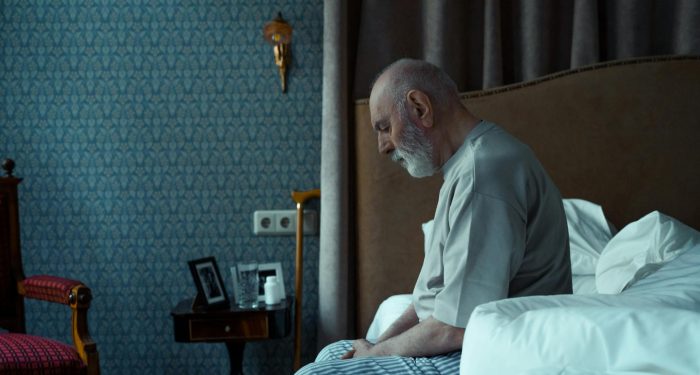
The people who anticipate every need before it's voiced didn't learn that skill from a management seminar — they learned it in childhood, when love had a price tag and the currency was usefulness.

Add VegOut to your Google News feed. 
Add VegOut to your Google News feed.
Someone once told me I was "so good at just knowing what needs to be done." They meant it as a compliment. I took it as one — smiled, nodded, felt that brief warmth in my chest that comes when someone notices you.
But later that evening, sitting alone in my home office in Singapore with a task list I'd already cleared and a kitchen I'd already cleaned without being asked, I felt something else settle in. Not pride, exactly. Something heavier. Something closer to exhaustion that had nothing to do with the dishes.
I've been that person for as long as I can remember. The one who refills the water pitcher before it's empty. The one who drafts the agenda no one requested. The one who notices the trash is almost full and just — handles it. Quietly. Without fanfare. Without being asked.
And for years, I believed this was simply conscientiousness. Good character. A work ethic I should be proud of — the thing that helped me co-found a company, run multiple publications, and build a career in digital media from the ground up.
I don't believe that anymore.
The Trait That Looks Like Virtue But Feels Like Survival
Behavioral scientists have a term for people who chronically anticipate and meet others' needs without prompting. It's called compulsive caretaking — and while it often looks indistinguishable from generosity or diligence, its roots are rarely generous at all. They're defensive.
Research on parentification and role reversal in childhood, published in the Journal of Family Psychology, has shown that children who were expected to manage adult emotions or household needs prematurely often develop a hypervigilant attunement to what others require — not out of empathy, but out of a learned necessity to secure attachment.
The common trait these people share is not ambition or selflessness. It's a deeply internalized belief — usually pre-verbal, formed before they had the language to name it — that their value is contingent on what they provide. That love, or something approximating it, was conditional on usefulness.
And they never fully unlearned it.
I recognize that belief the way you recognize your own handwriting. Not because someone pointed it out, but because it's been on every page I've ever written.
How Conditional Love Becomes Invisible Architecture
Here's the thing about conditional love in childhood: it doesn't always look like cruelty. Sometimes it looks like praise.
"You're such a good helper."
"I don't know what I'd do without you."
"You're the responsible one."
These are sentences that glow with warmth on the surface. Underneath, they carry a blueprint: this is what earns you belonging.
And so the child builds a self around the blueprint. Not a false self, exactly — it's more complicated than that. The psychoanalyst Donald Winnicott wrote extensively about the "false self" that develops when a child adapts to the caregiver's needs rather than expressing their own. But what I've found, in my own reckoning with this at 44, is that the self built on usefulness doesn't feel false. It feels like the only version that was ever safe enough to exist.
That's what makes it so hard to dismantle. You're not removing a mask. You're questioning the foundation of the house you've been living in for decades.
The exhaustion this creates is unlike ordinary fatigue. It's not the tiredness that comes from too many hours or too little sleep — and believe me, running a digital media company means I'm familiar with both. It's the kind that settles behind your sternum like a stone you've been carrying so long you forgot it wasn't part of your body.
We've written about this kind of bone-deep fatigue that sleep can't fix — the kind rooted in unprocessed disappointment — and the response was staggering. People wrote to say they'd been tired for years and never understood why. Most of them, when they described their lives, described the same pattern: they were the ones who always did the work without being asked.
The Performance of Effortlessness
One of the cruelest features of this conditioning is how invisible it makes your labor — even to yourself.
When you've been trained to anticipate needs, you don't experience it as effort. You experience it as obvious. Of course you noticed the milk was low. Of course you sent the follow-up email. Of course you checked on a team member who seemed off during a meeting. Who wouldn't?
Most people wouldn't. That's the part that takes years to understand.
Research published in Personality and Social Psychology Bulletin found that individuals with high rejection sensitivity — often developed in early environments where love felt precarious — tend to engage in what the researchers call "relationship maintenance behaviors" at significantly higher rates than their peers. They monitor, they adjust, they preemptively smooth. And they do it so seamlessly that the people around them rarely notice it's happening.
This is the performance of effortlessness. It looks like someone who "just has it together." In reality, it's someone running an invisible calculation every waking moment: What does this situation need from me? What can I provide before anyone has to ask? How do I make myself indispensable enough to stay?
The calculus is relentless. And it runs in the background like a program you never installed but can't seem to close.
I see it in how I've built my career, too. The compulsion to anticipate what an audience needs, what a business partner might worry about, what could go wrong before it does. People call that entrepreneurial instinct. And maybe part of it is. But I've started to wonder how much of my professional drive was built on genuine vision — and how much was built on that old, wordless terror of not being needed.
When the Pattern Meets Conscious Living
I think about this pattern often in the context of how people approach change — particularly the kind of change that asks you to examine what you've been doing on autopilot.
There's a reason the people who resist changing deeply embedded habits aren't lacking willpower. They're protecting an identity that was built for survival.
The compulsive doer — the person who anticipates, who manages, who makes themselves useful before anyone can decide they're not — doesn't just do more. They are more, in the only way they were taught to be. Asking them to stop is like asking them to disappear.
I've noticed this in myself around the smallest things. The inability to sit still when something could be done. The discomfort of being in a room where a task exists and no one is handling it. The way I'll reorganize a shared workspace or clear my wife's coffee cup before she's even left the room.
There's a version of this that people call discipline or conscientiousness — and the cognitive strengths of routine and consistency are real. But there's a difference between choosing structure because it serves you and clinging to productivity because stillness feels like abandonment.
That difference is the whole story.
What Unlearning Actually Looks Like
I want to be honest here: I haven't unlearned it. Not fully. Maybe not even mostly.
What I've done is become aware of the machinery — the moment my body tenses when I sense an unmet need in a room, the speed with which I move to fill a gap no one else has noticed, the particular flavor of anxiety that rises when I'm not contributing something tangible.
Awareness isn't resolution. But it creates a gap — a half-second pause between the impulse and the action — and in that gap, sometimes, I can ask myself: Am I doing this because it genuinely needs doing? Or am I doing this because I'm afraid of what I am when I'm not useful?
The answer, more often than I'd like, is the second one.
Research in the Journal of Humanistic Psychology on self-worth contingencies has shown that people whose self-esteem is anchored to external validation — productivity, others' approval, being needed — experience higher rates of anxiety, burnout, and depression. Not because they work harder than everyone else, but because they can never truly rest.
Rest, for them, isn't restorative. It's threatening. It's the absence of the very thing that makes them lovable.
I've felt that threat while doing nothing more dramatic than sitting on the couch on a Saturday afternoon. The urge to get up, to check on something, to open my laptop and work on a project no one is waiting for — it pulses like a second heartbeat. And the shame that follows when I do sit still, when I don't produce — that shame is old. Older than my career, older than my move to Singapore, older than any version of me that I consciously built. Absorbed before I had the capacity to refuse it.
The Quiet Cost of Being the Reliable One
People who do the work without being asked are often described with admiration. Reliable. Selfless. The backbone of the team. And they accept these labels because the alternative — being seen as someone who needs, who takes, who doesn't contribute — feels existentially dangerous.
But the cost is this: you become a person others lean on without ever thinking to ask how you're standing. You become so good at anticipating that people forget you have needs at all. You become, in the most painful irony, incapable of sitting in your own stillness — because stillness was never where love lived.
Love lived in the doing. In the anticipating. In the being useful before usefulness was requested.
And so you keep doing. You keep anticipating. You keep earning something that — if it truly were love — wouldn't need to be earned at all.
The Question I Keep Returning To
Not how do I stop? — because I'm not sure stopping is the right frame. The work itself isn't the problem. Noticing what needs to be done, caring enough to act — those aren't pathologies. They're capacities. Sometimes beautiful ones.
The question is smaller and more uncomfortable than that:
Would I still be lovable if I didn't?
I don't know the answer yet. Some mornings I think I'm getting closer to it — that I can feel the outline of a self that exists independent of what it provides. Other mornings, I'm already out of bed before I'm fully awake, scanning the apartment for what needs to be handled, my body running that old program before my mind has a chance to intervene.
I don't think this is something you solve. I think it's something you hold — gently, with the kind of patience you were never taught to extend to yourself.
You notice the impulse. You name where it came from. And sometimes, not always, you choose to sit down anyway.
Not because the dishes don't need washing. But because you need to find out who you are when they don't.
If You Were a Healing Herb, Which Would You Be?
Each herb holds a unique kind of magic — soothing, awakening, grounding, or clarifying.
This 9-question quiz reveals the healing plant that mirrors your energy right now and what it says about your natural rhythm.
✨ Instant results. Deeply insightful.

Justin Brown
Justin Brown is a writer and entrepreneur based in Singapore. He explores the intersection of conscious living, personal growth, and modern culture, with a focus on finding meaning in a fast-changing world. When he’s not writing, he’s off-grid in his Land Rover or deep in conversation about purpose, power, and the art of reinvention.
More Articles by Justin