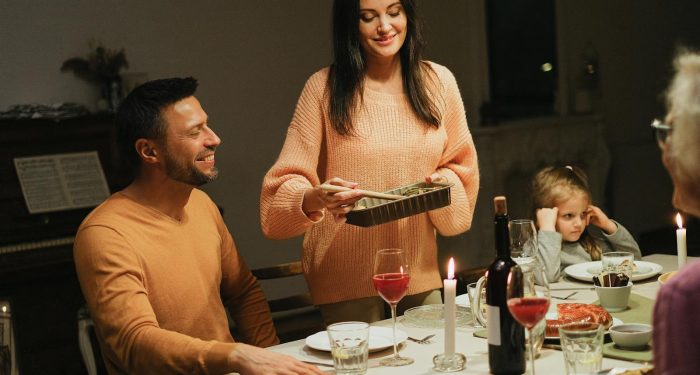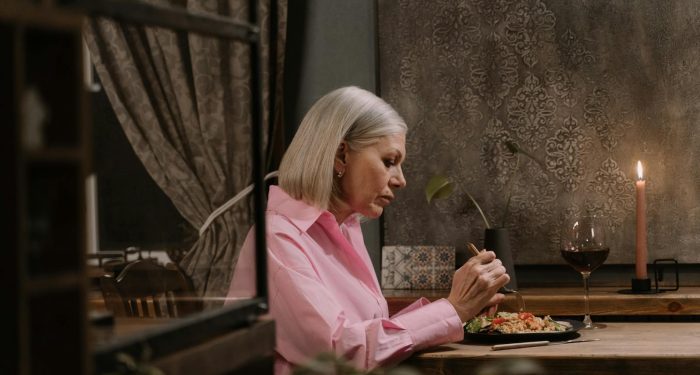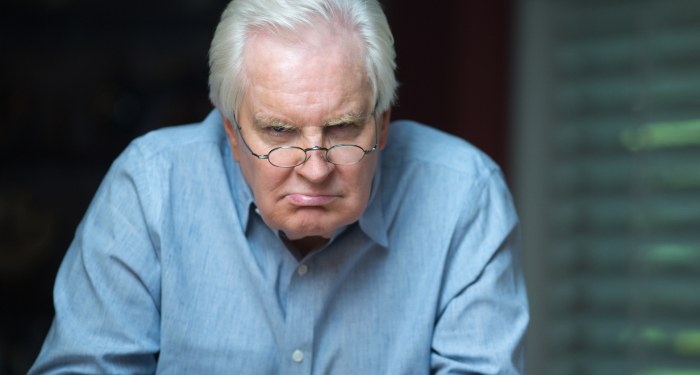
It’s the loneliness that comes from being the one everyone leans on, while quietly having no one to lean on yourself. When strength becomes your identity, people stop looking past it - and the support you gave so freely is the one thing you rarely receive.

Add VegOut to your Google News feed. 
There is a specific kind of loneliness that doesn't look like loneliness from the outside.
It belongs to the person who has always been the one others lean on. The one who showed up, held things together, managed the crisis, absorbed the grief, and then went home without anyone thinking to ask how they were doing. The one who has been called strong so many times, by so many people, that the word started to feel less like a compliment and more like a cage. The one whose inner life exists in a space that nobody has ever been particularly interested in visiting, because everyone always assumed it was fine in there.
It's not always fine in there. But the pattern ensures that nobody finds out.
What makes this particular loneliness so durable is that it is self-concealing. The competence that generates it also prevents it from being visible. The strong one keeps the surface functional. They answer the phone. They show up. They manage their own emotions in the presence of others so reliably that the others have calibrated around that reliability — they expect it, and in expecting it have stopped questioning it. The very thing that produces the loneliness is the thing that prevents anyone from noticing it's there.
How the role forms
For most people who occupy this position, the role wasn't chosen. It formed early, often out of genuine necessity. A parent who was unavailable. A family system that needed someone stable. A childhood or adolescence in which it became clear that the emotions of the people around you were your responsibility, and that the safest way to manage that responsibility was to make your own emotions as small and unobtrusive as possible.
The skill that develops from this is genuinely useful. The person who learned young to read a room, manage their own reactions, and hold space for other people's distress without being overwhelmed by it carries real capacity. In families, in workplaces, in friendships, this capacity is valued and relied upon. People are drawn to the strong one because the strong one makes them feel contained. The strong one is the person you call when something goes wrong.
What tends not to develop, alongside this capacity, is the complementary skill of being on the receiving end of care. Having needs without shame. Asking for something without a prior calculation about whether the request will be too much. The strong one often moves through decades of adult life without fully developing this side because it was never required, or because the few times they attempted vulnerability, the response was inadequate or absent and they registered the lesson and didn't try again.
What emotion suppression costs
The research on what habitually concealing emotional states does to a person is consistent and sobering. Studies examining the relationship between emotion suppression and loneliness have found a significant positive correlation between the two — people who habitually suppress their emotional expression report significantly greater loneliness. The mechanism is not complicated: intimacy requires the exchange of authentic emotional information, and suppression prevents that exchange. The strong one can be deeply embedded in a social network — surrounded by people who care about them, who would help if asked — and still be profoundly lonely, because the surface they present to that network is not the self that needs to be known.
This is the distinction that researchers have drawn between social loneliness and emotional loneliness. Robert Weiss, who first articulated this separation in his foundational work on the subject, identified emotional loneliness as the absence of a close, meaningful bond — distinct from social loneliness, which is the absence of social network. A person can be deeply embedded in community and still experience emotional loneliness if their actual inner life is not accessible to or acknowledged by the people around them. The strong one is often in exactly this position: socially present, emotionally invisible.
Expressive suppression — the ongoing management of how emotions are displayed — also has direct effects beyond loneliness. Research has linked habitual suppression to decreased positive affect, lower life satisfaction, poorer relationship quality, and reduced sense of authenticity. The strong one spends significant cognitive and emotional energy maintaining a performance of stability that, over time, consumes resources that might otherwise go toward genuine connection.
The self-reliance trap
The pattern that prevents the strong one from seeking help is well documented, particularly in research on men, though it operates across genders to varying degrees. A scoping review of masculinity norms and loneliness found that masculine ideals of self-reliance, strength, and emotional suppression directly limit social connectedness — and that being perceived as invulnerable made people reluctant to disclose feelings of loneliness in order to maintain their image, which in turn made it harder to form close social connections.
The trap has a specific structure. The strong one has been valued, over a lifetime, for their strength. Their relationships are organized around it. People come to them because they hold things together, not because they need holding. The social role they occupy — reliable, stable, capable — is genuine, but it is also a template that nobody has ever suggested deviating from. To say "I'm not okay" would require not just an admission of need, but a revision of the entire relational frame. It would require asking the people who rely on you to shift position and receive you in an unfamiliar way.
Many strong ones perform a quiet calculation here and decide it isn't worth attempting. They have tried, sometimes, in smaller ways, and found that the people around them didn't know how to respond — were awkward, or changed the subject, or pivoted quickly back to the strong one's usual role. The lesson learned is that the frame is load-bearing. Disrupting it would require everyone to accommodate a reorganization nobody signed up for. So the mask stays on, and the loneliness continues, and it compounds.
The cruelty underneath
There is something particularly hard about this specific loneliness because it is often surrounded by evidence of being loved. The strong one typically has people who care about them. They have relationships that are real. Nobody is malicious in this dynamic. The people who call on the strong one do so because they trust them, and the trust is earned. The family that has never checked whether the anchor is okay hasn't checked because they assume the anchor is always okay — because the anchor has always appeared to be okay.
This is not neglect in any conventional sense. It is, rather, an attunement failure that has calcified over time into a set of unexamined assumptions. The strong one's welfare has been deprioritized not because nobody cares, but because nobody noticed it needed to be prioritized. The performance of stability was too convincing. The strong one did their job too well.
What this creates is a loneliness that is hard to articulate or justify even to oneself. The strong one can't easily say "I am surrounded by people who love me and I am profoundly alone" without it feeling like ingratitude or melodrama. The loneliness exists in a space where there's no obvious external cause to point to, no crisis that would justify the need. It's the loneliness of having never been fully seen, which is different from not having been loved.
What it would require
What would actually help the strong one is also what is most difficult for them to permit. It would require allowing themselves to be the person in the room who doesn't have it together, at least occasionally and with at least one person. It would require tolerating the discomfort of being received in an unfamiliar mode. It would require trusting that the relationship can hold a different version of them than the one it was built around.
This is not a small ask. For someone who learned early that managing their own emotional presentation was a condition of the environment being safe, vulnerability is not simply uncomfortable — it carries historical weight. The nervous system that learned not to need things doesn't easily unlearn. The habit of turning inward at the moment when reaching outward would help is deeply grooved.
And yet the cost of not doing it accumulates. The research on chronic loneliness is clear on what prolonged social isolation — even of the invisible kind — does to physical and cognitive health over time. The body does not distinguish between loneliness that looks like isolation and loneliness that looks like being surrounded by people. It registers the absence of genuine emotional contact. It treats that absence as a chronic stressor. The performance of strength, held long enough, extracts a price that the strong one rarely sees coming, because they have spent their whole life not noticing what they need until it is well past the point of being easily addressed.
The specific loneliness of always being the strong one doesn't resolve through someone suddenly seeing through the performance. That is too passive a hope, and it places the work on people who have been trained, by decades of the strong one's own behavior, not to look. What it requires is the strong one themselves deciding, at some point, that the part of them that has never been known is worth the cost of letting someone know it. That the risk of being received badly is smaller than the cost of never trying. That strength, as a fixed identity rather than a capacity, has been serving the room and not the self for long enough.
That decision, for most strong ones, takes a very long time to arrive. The loneliness that precedes it is real, and it deserves to be named as what it is.
If You Were a Healing Herb, Which Would You Be?
Each herb holds a unique kind of magic — soothing, awakening, grounding, or clarifying.
This 9-question quiz reveals the healing plant that mirrors your energy right now and what it says about your natural rhythm.
✨ Instant results. Deeply insightful.
Lachlan Brown
Lachlan Brown is a psychology graduate, mindfulness enthusiast, and the bestselling author of Hidden Secrets of Buddhism: How to Live with Maximum Impact and Minimum Ego. Based between Vietnam and Singapore, Lachlan is passionate about blending Eastern wisdom with modern well-being practices.
As the founder of several digital publications, Lachlan has reached millions with his clear, compassionate writing on self-development, relationships, and conscious living. He believes that conscious choices in how we live and connect with others can create powerful ripple effects.
When he’s not writing or running his media business, you’ll find him riding his bike through the streets of Saigon, practicing Vietnamese with his wife, or enjoying a strong black coffee during his time in Singapore.
More Articles by Lachlan