The people who perform their discipline burn bright and flame out. The people who protect their discipline, who keep it small and private and intrinsically motivated, are still going five years later

Add VegOut to your Google News feed. 
I run about four times a week here in Saigon. Usually before 6am, before the heat turns the city into a steam room and the motorbikes take over every inch of pavement along the river.
Nobody knows I do this. I don't post about it. I don't track it publicly. I don't have a running group or a coach or an accountability partner. My wife knows because she hears the door close. That's about it.
And here's the thing I've realized after years of building habits this way: the moment I start doing something for other people's attention, it stops working. Not immediately. But slowly, quietly, the thing that used to feel like mine starts to feel like a performance. And performances require an audience. And audiences are unreliable.
The rarest discipline isn't the flashy stuff. It's not the cold plunge or the 4am alarm or the thirty-day challenge you document on Instagram. It's the ability to keep getting better at something when absolutely nobody is watching, clapping, or keeping score.
The science behind why public goals backfire
There's a well-documented phenomenon in psychology called the overjustification effect. The basic finding, first demonstrated by Edward Deci in the 1970s, is that when you introduce external rewards for an activity someone already enjoys, their internal motivation to do that activity decreases. The external reward replaces the internal drive. And once the reward disappears, so does the motivation.
A landmark meta-analysis by Deci, Koestner, and Ryan examining 128 studies confirmed this across multiple settings. Tangible rewards significantly undermined intrinsic motivation. The more controlling the reward felt, the bigger the damage. The only type of external input that actually enhanced motivation was positive feedback that supported a person's sense of competence without making them feel controlled.
Social media operates on exactly the mechanism this research warns about. Every like, every comment, every share is a tangible external reward. When you post about your run, your meditation, your clean eating, you're introducing a reward structure that your brain didn't need and didn't ask for. The activity stops being something you do for yourself and starts being something you do for the response.
This is why so many people can maintain a habit while they're publicly documenting it but fall apart the moment they stop posting. The habit was never really theirs. It belonged to the audience.
What self-determination theory tells us about lasting change
The most robust framework we have for understanding motivation is Self-Determination Theory, developed by psychologists Edward Deci and Richard Ryan over four decades of research. Their work identifies three basic psychological needs that drive sustained motivation: autonomy (feeling that you're choosing your own path), competence (feeling that you're getting better at something), and relatedness (feeling connected to others in a meaningful way).
The key insight for anyone trying to build discipline is this: autonomy and competence are the two needs most directly linked to intrinsic motivation. Relatedness matters, but it plays a more supporting role. What this means practically is that the most durable motivation comes from feeling like you chose the behavior and from experiencing yourself getting better at it. Not from being watched. Not from being praised. Not from being held accountable by strangers on the internet.
Research within this framework has consistently shown that intrinsic motivation predicts better learning, greater creativity, more persistence through difficulty, and higher psychological wellbeing than motivation driven by external pressure or rewards. A review from the Yale Center for Consumer Insights found that goals pursued out of personal enjoyment and curiosity were significantly more enduring than those driven by external incentives.
In other words, the research keeps pointing to the same conclusion: if you want a behavior to last, it has to feel like yours. Not like something you're performing for approval.
What this looks like in my actual life
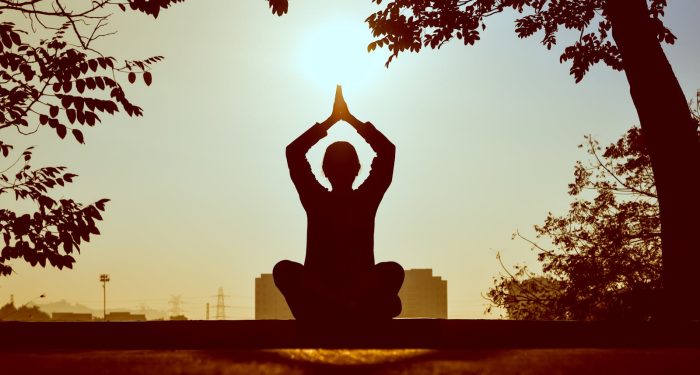
I meditate every morning. I've done it for years. It's become one of the anchoring practices of my life, and it's something I wrote about extensively in Hidden Secrets of Buddhism: How to Live With Maximum Impact and Minimum Ego. But I almost never talk about it with anyone except my wife.
This isn't because I'm secretive. It's because I've learned, through painful trial and error, that the moment I start talking about a practice too much, my relationship with it changes. It shifts from something internal to something social. And once it's social, my ego gets involved. I start evaluating the practice based on how it sounds when I describe it rather than how it feels when I do it.
Same with the business. I run a content network with my brothers that reaches tens of millions of readers a month. We've been building it quietly for years. No podcast tour. No personal brand play. No LinkedIn posts about our revenue milestones. We just show up every day, try to make the work better than it was yesterday, and let the results speak for themselves.
I'm not saying public accountability never works. For some people, in some contexts, it provides the initial push they need. But I've noticed that the people who sustain change over years, not weeks, are almost always the ones who eventually internalize the motivation. They stop needing the audience. The work becomes its own reward.
The quiet ones are the ones who last
Think about the most disciplined person you know. Not someone you follow online. Someone you actually know in real life.
I'd bet they're not loud about it. They probably don't tell you about their routine unless you ask. They don't moralize about their choices or evangelize their habits. They just do the thing, day after day, with a kind of steadiness that doesn't demand your attention.
That steadiness is the hardest thing to develop. Because our culture has trained us to associate progress with visibility. If you didn't post it, did it happen? If nobody saw the workout, does it count? If you lost twenty pounds and didn't share a transformation photo, what was the point?
The point is that you changed. For yourself. Not for the feed.
There's a concept in Buddhist philosophy that I keep coming back to, and it's the idea that the ego will attach itself to anything, including your spiritual practice, including your discipline, including your identity as someone who has their life together. The ego doesn't care what vehicle it rides in. It will happily turn your meditation practice into a status symbol if you let it.
The antidote is to keep doing the work without making it about you. Or more accurately, without making it about how others see you doing the work.
How to build the kind of discipline nobody sees
I'm not going to give you a twelve-step framework. But I'll share a few things that have worked for me over the past several years of building habits in relative silence.
First, I stopped announcing my intentions. When I decided to get serious about learning Vietnamese, I didn't tell anyone except my wife. I just started studying. No public commitment. No thirty-day challenge. Just quiet, daily work. Two years later, I'm having conversations in Southern Vietnamese that would have been impossible before. The lack of public pressure didn't slow me down. It freed me up to be bad at it for as long as I needed to be without feeling like I was failing in front of an audience.
Second, I started measuring progress internally. Not by metrics someone else could see, but by how the practice felt. Does my meditation feel deeper this month than last? Am I more patient with my daughter than I was six months ago? Is my writing clearer? These aren't things I can put in a post. They're things I notice in the quiet moments when nobody else is paying attention.
Third, I let go of the idea that discipline requires suffering. The performative version of discipline is almost always about pain: how early you woke up, how hard the workout was, how much you sacrificed. But the sustainable version, the one that actually sticks, is usually much quieter. It's just showing up. Again. Without fanfare. Because the thing itself is worth doing.
The real flex is that there's no flex
I know how this sounds. In a culture that rewards visibility, choosing to be invisible with your progress feels counterintuitive. Maybe even counterproductive.
But I've been doing this long enough to see the pattern clearly. The people who perform their discipline burn bright and flame out. The people who protect their discipline, who keep it small and private and intrinsically motivated, are still going five years later. Ten years later. They're not posting about it because they're too busy living it.
That's the rarest form of discipline. Not the ability to do hard things. The ability to do quiet things, consistently, without needing a single person to notice.
And if you can learn to find that satisfying, you'll never need external motivation again. Because the work itself will be enough.