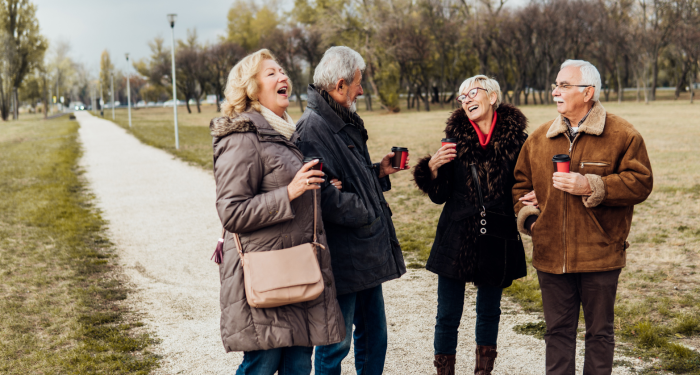
They didn’t become immune to sadness - they stopped fighting it, and in doing so, made space for something else to exist alongside it. Joy, for them, isn’t the absence of pain—it’s what naturally emerges when they no longer treat every difficult feeling as something that needs to be fixed.

Add VegOut to your Google News feed. 
For most of my twenties, I operated under a simple assumption: happiness was the goal, sadness was the obstacle, and the purpose of a well-lived life was to maximize the first and eliminate the second.
I wasn't unusual in this. Our entire culture is built on this arithmetic. Feel bad? Fix it. Sad? Cheer up. Anxious? Calm down. The message is relentless: negative emotions are malfunctions. They're evidence that something has gone wrong, and the correct response is to make them stop as quickly as possible.
So I tried. I read the books. I practiced gratitude. I reframed negative thoughts. I did everything the self-improvement world told me to do. And some of it helped, genuinely. But there was always this strange gap between the life I was building and how I actually felt. Because no matter how much I optimized for happiness, sadness kept showing up. And every time it did, I treated it like an intruder. Like proof that my system wasn't working.
It took me years to realize that the system itself was the problem.
The paradox the research uncovered
In 2018, a team of researchers led by Brett Ford at the University of Toronto published a study that fundamentally challenged how I understood emotional health.
Their research, published in the Journal of Personality and Social Psychology, examined what they called "habitual acceptance," the tendency to accept your emotions and thoughts without judging them. Across three studies involving over 1,000 participants, laboratory experiments, daily diary entries, and a six-month longitudinal follow-up, they found a consistent pattern.
People who habitually accepted their negative emotions, rather than fighting them, experienced better psychological health. Not because they felt fewer negative emotions in the abstract, but because when stressors arose, their negative emotional response was less intense. Acceptance didn't eliminate the sadness. It reduced the amplification.
Here's the mechanism the researchers identified. When you experience a negative emotion and then judge yourself for having it, you create a secondary layer of distress. You feel sad, and then you feel bad about feeling sad. You feel anxious, and then you feel anxious about being anxious. The original emotion is compounded by your reaction to it, and that compound effect is what actually damages well-being over time.
People who accepted their emotions skipped the second layer. They felt the sadness without the self-judgment. And paradoxically, this made the sadness less sticky. It moved through them faster and left less residue.
The researchers controlled for reappraisal, rumination, and other mindfulness facets. Acceptance predicted well-being independently of all of them. It wasn't about thinking differently about your emotions. It was about stopping the war against them.
Your emotional ecosystem needs diversity
There's a second line of research that takes this even further, and it's one that I find genuinely surprising.
Psychologist Jordi Quoidbach and colleagues, including researchers at Harvard Business School, published a landmark study in the Journal of Experimental Psychology introducing a concept they called "emodiversity." Drawing an analogy from ecology, where biodiversity indicates a healthy ecosystem, they proposed that emotional diversity, the variety and relative abundance of different emotions a person experiences, indicates a healthy psychological ecosystem.
Across two large studies involving more than 37,000 participants, they found that emodiversity independently predicted both mental and physical health, including lower depression and fewer doctor's visits, even after controlling for average levels of positive and negative emotion.
Here's the part that defies conventional wisdom: this held for negative emotions too. People who experienced a diverse range of negative emotions (not just sadness, but also appropriate amounts of anger, guilt, embarrassment, anxiety) had better health outcomes than people who experienced only one or two negative emotions intensely.
The researchers suggest that just as a single predator can devastate a monocultural ecosystem, a single dominant negative emotion like chronic sadness or persistent anxiety can dominate your inner life. But when negative emotions are diverse rather than concentrated, no single emotion gains enough power to take over. The ecosystem stays balanced.
This reframes the entire project of emotional well-being. The goal isn't to feel only positive things. The goal is to have a rich, varied emotional life where no single state, positive or negative, monopolizes your experience.
What happens when you stop fighting
I want to describe what this actually feels like in practice, because the research is clear but the lived experience is harder to articulate.
When I stopped treating sadness as a problem, something unexpected happened. The sadness didn't increase. If anything, it became quieter. Less dramatic. It stopped being a crisis and started being weather. Something that passed through, changed the quality of the light for a while, and moved on.
And in the space that opened up, something else became possible. Joy started arriving in places it hadn't been able to reach before. Not because I'd created more positive experiences. But because I'd stopped clenching against the negative ones, and the clenching, it turned out, had been blocking everything.
This is the thing that's hardest to explain to people who are still in the elimination phase. When you're at war with your negative emotions, you think you're selectively blocking the bad stuff. But emotions don't work like that. The mechanism you use to suppress sadness is the same mechanism that dampens joy. You can't numb selectively. When you close down to avoid pain, you close down to everything.
The people I know who experience the most genuine, least performative joy aren't relentlessly positive. They're emotionally permeable. They cry at funerals and they laugh at dinner and sometimes they do both in the same afternoon. They don't experience happiness as the absence of sadness. They experience it as the presence of aliveness, which includes the full range of what a human life contains.
What Buddhism has known for 2,500 years
When I first encountered Buddhist psychology, one of the things that struck me was how differently it treats negative emotions compared to Western self-help culture.
In the Western framework, negative emotions are problems to solve. In the Buddhist framework, they're phenomena to observe. The difference sounds subtle but it's actually enormous.
The Buddha's teaching on dukkha (often translated as suffering, but more accurately meaning unsatisfactoriness or the inherent stress of experience) doesn't prescribe the elimination of painful feelings. It prescribes a change in your relationship to them. You stop clinging to pleasant feelings and stop pushing away unpleasant ones. You observe both with equanimity, which literally means "even-mindedness."
This isn't passive resignation. It's a radical reorientation. You go from being someone who is controlled by their emotions (chasing the good ones, fleeing the bad ones) to someone who can be present with all of them without being consumed by any of them.
The Ford et al. research on acceptance and the Quoidbach et al. research on emodiversity are essentially validating what contemplative traditions have taught for millennia. The healthy emotional life isn't the one with the most happiness and the least sadness. It's the one with the most range, the least resistance, and the greatest capacity to be present with whatever is actually happening.
The accidental discovery
I called it "accidental" in the title because that's how it actually works for most people. Nobody sits down and decides to make room for sadness. What happens is that they get exhausted from fighting it. They run out of energy for the war. They stop suppressing, not as a strategy, but because they simply can't sustain it anymore.
And then they notice something strange. The sadness is still there, but it's not the monster they thought it was. It's smaller than they imagined. Less dangerous. More like a visitor than an invader.
And in the silence that follows the ceasefire, joy walks in through the same door that sadness uses. Because it was never a different door. There was only ever one door, and you were either open to what came through it or you weren't.
The people who experience genuine joy haven't solved an equation. They've surrendered a war. They've stopped trying to construct an emotional life that only includes the parts they want and started living in the one they actually have. And it turns out that the one they actually have, the one with sadness in it, is far more joyful than the sanitized version ever was.
I explored these ideas in depth in my book Hidden Secrets of Buddhism: How To Live With Maximum Impact and Minimum Ego. A central theme of the book is exactly this: the life you're looking for isn't on the other side of eliminating what you don't want. It's on the other side of accepting what's already here. That includes the sadness. Especially the sadness. Because the sadness was never the thing standing between you and joy. Your fight against it was.
What’s Your Plant-Powered Archetype?
Ever wonder what your everyday habits say about your deeper purpose—and how they ripple out to impact the planet?
This 90-second quiz reveals the plant-powered role you’re here to play, and the tiny shift that makes it even more powerful.
12 fun questions. Instant results. Surprisingly accurate.