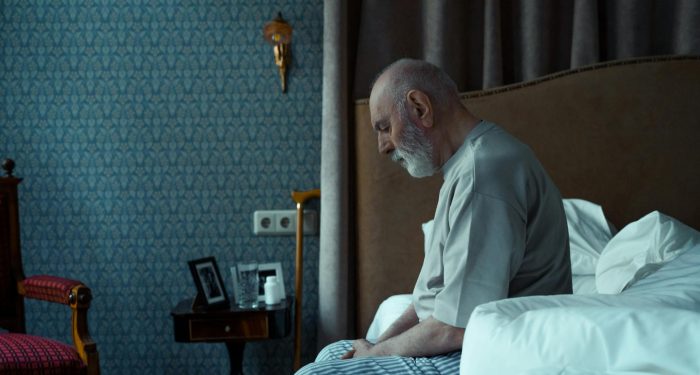
They’ve learned that happiness isn’t found in noise or crowds. It’s in the quiet moments where they finally feel most themselves.

Add VegOut to your Google News feed. 
For most of our lives, we’re told that happiness depends on connection — friends, family, community, love. And that’s true to a large extent. But what’s fascinating is that, according to psychological research, many people over 70 who genuinely enjoy solitude are actually among the happiest individuals in society.
This isn’t loneliness. It’s a quiet joy found in being alone — in the ability to be content with one’s own company, to live life on your own terms, and to draw fulfillment from simplicity, reflection, and peace.
Let’s explore why solitude becomes such a powerful source of happiness later in life, and what psychology says about those who thrive in it.
1. They’ve mastered emotional independence
Psychologists describe emotional independence as the ability to regulate one’s emotions without depending excessively on others for validation or support. It’s not about being detached — it’s about balance.
As we age, many external roles — career, parenting, social obligations — start to fade. Those who find happiness in solitude have learned that their sense of self isn’t tied to these roles. They no longer need constant reassurance or social activity to feel worthy.
This emotional independence brings a quiet confidence. People over 70 who enjoy solitude don’t chase approval. They simply rest in who they’ve become. That self-containment is a deep, sustaining form of happiness.
2. They’ve developed what psychologists call “self-concordant goals”
According to research, people who pursue “self-concordant goals” — goals that align with their core values rather than external expectations — experience more lasting happiness.
In earlier decades, our goals are often influenced by others: build a career, raise a family, gain respect. But by the time someone reaches their 70s, many of these external pressures fade. Those who enjoy solitude often shift toward deeply personal, value-driven activities: gardening, writing, meditation, walking, or spiritual practice.
These aren’t just hobbies. They’re expressions of alignment between inner values and daily life. That harmony between the inner and outer world produces an enduring sense of contentment that doesn’t depend on anyone else’s approval.
3. They’ve experienced enough life to appreciate simplicity
One of the great paradoxes of happiness is that it often grows when life becomes simpler. Those who find joy in solitude often talk about a profound sense of peace that comes from fewer possessions, fewer distractions, and fewer social expectations.
Psychologists link this to the concept of “hedonic adaptation” — the tendency for humans to quickly return to a baseline level of happiness after major life changes. Over time, older adults learn that new purchases, accolades, or experiences offer only temporary boosts. Real happiness comes from appreciating what already exists — a quiet morning, a cup of tea, a sunrise.
Solitude gives space for that appreciation. It allows the mind to slow down enough to see the beauty that was there all along.
4. They’ve let go of social comparison
Dr. Leon Festinger’s theory of social comparison explains how we constantly evaluate ourselves based on others — their achievements, relationships, and appearances. This can breed dissatisfaction at any age.
But those over 70 who are comfortable being alone have largely escaped that trap. They’re not scrolling through social media, comparing lives. They’re not competing for status or recognition.
Instead, they measure their lives by inner peace, health, and meaningful experiences. That shift away from external metrics — and toward self-acceptance — is one of the biggest predictors of long-term well-being.
In other words, they no longer play the game. And that’s liberating.
5. Solitude gives them a sense of control
One of the key components of psychological well-being, according to self-determination theory, is autonomy — the sense that you’re in control of your choices. For older adults, solitude can actually enhance that feeling of autonomy.
In solitude, there’s freedom: freedom to structure your day as you wish, to eat when you’re hungry, rest when you’re tired, and engage only in activities that feel meaningful. There’s no social pressure to please or perform.
That autonomy — after a lifetime of responsibility and compromise — feels like a return to one’s truest self. It’s a powerful form of psychological freedom.
6. They’ve cultivated mindfulness, even if they don’t call it that
Many older adults who enjoy solitude also naturally practice mindfulness — the art of being fully present in the moment. They may not describe it in trendy terms, but you’ll find it in their habits: sitting quietly with a cup of coffee, watching birds, or tending a small garden.
Mindfulness reduces anxiety and increases overall happiness, according to decades of psychological research. It trains the mind to focus on what is, rather than what could be or should have been.
Solitude gives space for mindfulness to arise naturally. When there’s no rush, no noise, no social demands, awareness deepens — and with it, peace.
7. They’ve redefined connection
Enjoying solitude doesn’t mean cutting off connection. It means experiencing it differently.
People over 70 who are happy in solitude often describe a quiet connection to life itself — to nature, art, or spiritual practice. They may have fewer relationships, but those they do maintain tend to be deeper, more intentional, and rooted in mutual respect.
Psychology calls this “selective social investment.” It’s when people, as they age, focus their time and energy on the relationships that truly matter, letting go of shallow ones. The result? Greater satisfaction and lower stress.
Solitude, then, isn’t isolation — it’s clarity. It helps filter what’s essential from what’s not.
8. They’ve accepted impermanence — and found peace in it
Many people over 70 who enjoy solitude have come to terms with one of life’s deepest truths: everything is temporary. Youth fades, relationships change, health fluctuates, and life itself eventually ends.
Rather than resist this truth, they accept it. And in that acceptance, they find freedom.
This echoes a central idea from Buddhist psychology — that peace arises not from clinging to permanence, but from understanding and accepting change. Those who make peace with impermanence stop fighting life. They start flowing with it.
And that makes them among the most serene people you’ll ever meet.
9. They no longer equate “alone” with “lonely”
Psychologists distinguish between solitude and loneliness. Loneliness is a sense of absence — a longing for connection. Solitude, on the other hand, is a state of presence — a fullness found in one’s own company.
People who are happy alone have made that shift. They’ve discovered that they can feel deeply connected without constant social interaction. They’ve befriended themselves — their thoughts, their past, their quiet moments.
This inner companionship is one of the most stable sources of happiness available to us. Unlike relationships or careers, it can’t be taken away. It only deepens with time.
10. They see solitude as sacred
Finally, those over 70 who enjoy solitude often describe it as something sacred — not a void to escape from, but a sanctuary to return to.
It’s in solitude that reflection happens, creativity blooms, and spiritual insight emerges. They use it to read, think, pray, or simply be. They understand that being alone doesn’t mean being empty — it means being full of awareness.
As author May Sarton once wrote, “Loneliness is the poverty of self; solitude is the richness of self.” That richness, cultivated over a lifetime, makes these individuals deeply content — even radiant.
Final reflections: The quiet joy of a self-sufficient soul
In a culture that prizes noise, productivity, and connection, solitude can look like withdrawal. But for many over 70, it’s the ultimate expression of inner strength and peace. They’ve lived enough life to know that joy doesn’t need an audience. It’s found in small rituals, gentle mornings, and quiet self-acceptance.
Perhaps that’s the secret: happiness, in the end, isn’t about doing more or being with more people — it’s about being at peace with yourself. And those who reach that stage, sitting quietly with a smile in their seventies and beyond, have achieved something few ever do.
They’ve found the rarest kind of happiness — the one that depends on nothing but the contentment of being alive.
If You Were a Healing Herb, Which Would You Be?
Each herb holds a unique kind of magic — soothing, awakening, grounding, or clarifying.
This 9-question quiz reveals the healing plant that mirrors your energy right now and what it says about your natural rhythm.
✨ Instant results. Deeply insightful.

Lachlan Brown
Lachlan Brown is a psychology graduate, mindfulness enthusiast, and the bestselling author of Hidden Secrets of Buddhism: How to Live with Maximum Impact and Minimum Ego. Based between Vietnam and Singapore, Lachlan is passionate about blending Eastern wisdom with modern well-being practices.
As the founder of several digital publications, Lachlan has reached millions with his clear, compassionate writing on self-development, relationships, and conscious living. He believes that conscious choices in how we live and connect with others can create powerful ripple effects.
When he’s not writing or running his media business, you’ll find him riding his bike through the streets of Saigon, practicing Vietnamese with his wife, or enjoying a strong black coffee during his time in Singapore.
More Articles by Lachlan