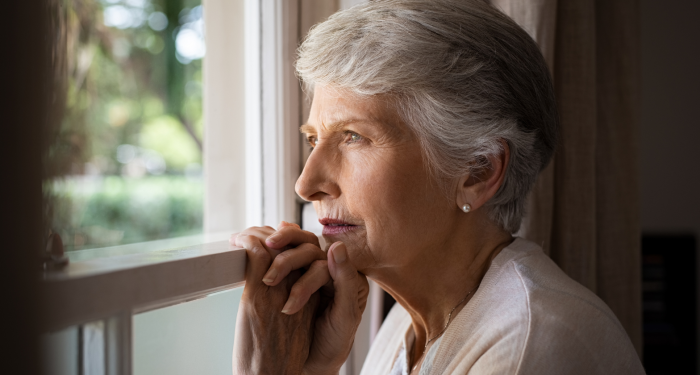
Not everyone who's alone is lonely. And not everyone who avoids partnership is avoiding love. Some of them are avoiding the version of love they were taught, which looked nothing like safety and everything like risk.
There's a question that gets thrown at single adults with almost alarming frequency: "Don't you get lonely?"
And most of the time, the person asking genuinely can't fathom how anyone could be okay without a partner. Without someone to come home to. Without that one person to lean on when everything falls apart.
But here's what that question misses entirely. For a lot of adults who are on their own, the absence of a partner isn't a gap in their life. It's a wall they built on purpose. Not because they don't want love. But because everything they saw growing up taught them that love is the most dangerous place to be vulnerable.
And once you understand that, the "don't you get lonely" question starts to feel almost cruel.
You learn about relationships by watching them
Before you ever go on your first date, you've already been studying relationships for years. You just didn't know it.
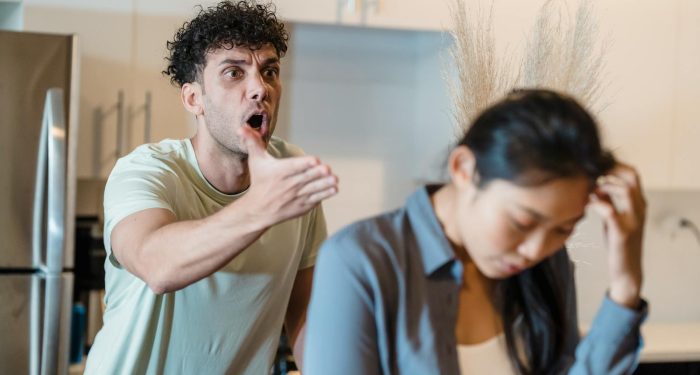
As a child, your parents' relationship was your first and most powerful classroom. You watched how they spoke to each other. You felt the tension when they didn't speak at all. You noticed whether disagreements ended in resolution or in someone slamming a door. You absorbed whether love looked like warmth or like walking on eggshells.
Research confirms this in ways that are hard to argue with. Studies show that children raised in volatile or emotionally hostile households have heightened difficulty managing emotions and that the distress caused by parental conflict can impair higher-order cognitive processing. Even marriages characterized by quiet hostility, where there's no yelling but also no real communication or respect, inflict their own kind of damage on children watching from the sidelines.
And here's the part that doesn't get talked about enough: it's not just openly dysfunctional homes that produce this pattern. Sometimes the parents stayed together. Sometimes there was no obvious abuse. But the child watched a relationship where feelings were never discussed, where vulnerability was treated as weakness, and where love looked less like safety and more like an arrangement nobody seemed happy with.
That child grows up and thinks: this is what relationships are. This is what happens when you let someone in.
Avoidance isn't a personality flaw. It's a survival strategy.
Attachment theory has been studied for decades, and the findings are remarkably consistent. When children grow up in environments where their emotional needs are dismissed or punished, they develop what psychologists call an avoidant attachment style. They learn to suppress their feelings, rely entirely on themselves, and treat emotional closeness as something to be managed rather than enjoyed.
This isn't a conscious choice. It's a survival adaptation. As one researcher described it, children in these environments learn that expressing distress leads to rejection or punishment, so they shut down the instinct to seek comfort altogether. That protective strategy works brilliantly in childhood. It keeps you safe in an emotionally unsafe environment.
But in adulthood, it becomes a trap.
Because now you're walking around with an internal operating system that says closeness equals danger. And every time someone tries to get genuinely close, your nervous system fires a warning. Not because this person is threatening, but because intimacy itself feels threatening. Because you've never known it to be safe.
Adults with dismissive attachment often appear confident and self-sufficient from the outside. They might have successful careers, active social lives, and seem perfectly content on their own. But underneath that independence is often a deep discomfort with vulnerability that they may not even fully recognize in themselves.
The fear isn't irrational. It's learned.
This is the part I want people to really understand, because it changes how you see someone who's "choosing" to be alone.
They're not afraid of some abstract concept of love. They're afraid of the specific version of love they watched play out during the most formative years of their life. They're afraid of the love that came with strings, conditions, silence, resentment, or chaos. They saw vulnerability get punished. They saw openness get used as a weapon. They saw the person who cared the most get hurt the most.
Research on childhood trauma and fear of intimacy shows that when early experiences of closeness become sources of pain, the resulting wound becomes a major barrier to adult intimacy. And this isn't just about dramatic trauma. Even growing up in a home where feelings were dismissed or where parental love felt conditional can create a deep association between vulnerability and danger.
So when someone says, "I'm fine on my own," they might mean exactly that. But they also might mean, "I can't afford to find out what happens when I let someone in again."
Being alone and being lonely are not the same thing
I think about this distinction a lot in my own life. I live in Saigon with my wife and daughter, and I'm genuinely happy in my relationship. But I know people, good people, deeply thoughtful people, who are on their own and are far more at peace than many couples I've watched implode over the years.
The assumption that being single equals being broken is one of the most damaging narratives in our culture. Some people are single because they haven't found the right person. Some are single because they've done the math on what relationships cost and decided the price is too high. And some are single because they're protecting a version of themselves that once got obliterated by trusting the wrong environment.
In Buddhism, there's a concept I write about in my book Hidden Secrets of Buddhism: How To Live With Maximum Impact and Minimum Ego: the idea that suffering arises not from what happens to us, but from the patterns we form in response to what happens to us. Those patterns can be rewired. But first they have to be recognized. And the first step in recognizing them is understanding that they were never a choice. They were a response to an environment that demanded them.
What this actually looks like in real life
It's the person who goes quiet every time a conversation gets emotionally deep. It's the one who always has an exit plan. The one who dates but never lets it get past a certain point. The one who seems perfectly happy alone and maybe is, but also hasn't let anyone past the surface in years.
From the outside, they look independent. Self-contained. Maybe even enviable. But if you could see the internal architecture, you'd see walls built by a child who decided a long time ago that the safest place to be is behind them.
Internalized beliefs from childhood, like "I can only rely on myself," carry into adult relationships and quietly shape every decision about who to let in and how close to let them get. These aren't philosophical positions. They're protective structures built by a nervous system that learned early what happens when you drop your guard.
The bottom line
Not everyone who's alone is lonely. And not everyone who avoids partnership is avoiding love. Some of them are avoiding the version of love they were taught, which looked nothing like safety and everything like risk.
That's not a flaw. That's a wound. And wounds, when they're finally understood for what they are, can heal. But the healing starts with seeing these people clearly: not as broken or cold or too picky, but as someone whose earliest education in love was written in a language that sounded a lot like danger.
If You Were a Healing Herb, Which Would You Be?
Each herb holds a unique kind of magic — soothing, awakening, grounding, or clarifying.
This 9-question quiz reveals the healing plant that mirrors your energy right now and what it says about your natural rhythm.
✨ Instant results. Deeply insightful.

Lachlan Brown
Lachlan Brown is a psychology graduate, mindfulness enthusiast, and the bestselling author of Hidden Secrets of Buddhism: How to Live with Maximum Impact and Minimum Ego. Based between Vietnam and Singapore, Lachlan is passionate about blending Eastern wisdom with modern well-being practices.
As the founder of several digital publications, Lachlan has reached millions with his clear, compassionate writing on self-development, relationships, and conscious living. He believes that conscious choices in how we live and connect with others can create powerful ripple effects.
When he’s not writing or running his media business, you’ll find him riding his bike through the streets of Saigon, practicing Vietnamese with his wife, or enjoying a strong black coffee during his time in Singapore.
More Articles by Lachlan