They’re simply choosing the type of communication that feels safest, clearest, and most authentic to them.

Add VegOut to your Google News feed. 
There’s a stereotype floating around that people who prefer texting over calling are avoiding effort, responsibility, or real connection.
I used to believe that too—until I realized I was one of those people. Not always, but often enough that I had to question myself.
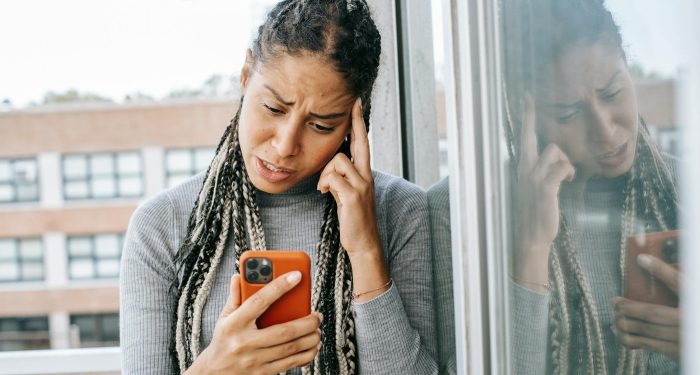
Back when I first moved to Singapore, I remember ignoring calls from friends in Australia because my brain would instantly tense up when the phone rang.
But if they texted me? I replied straight away.
It wasn’t laziness. It wasn’t avoidance. It was something deeper—and it turns out a lot of people feel the same way.
Over the years, through psychology research and countless conversations on the topic, I’ve found that people who prefer texting tend to think in particular ways that shape their communication style.
It’s not about being distant—it’s about being thoughtful, intentional, and sometimes self-protective.
Here are the seven patterns that explain why some people almost always reach for text over a call.
1. They need time to process their thoughts before responding
For many text-first communicators, a phone call feels like being put on stage without a script.
You’re expected to react immediately—to questions, ideas, emotions, and tone—whether you’re ready or not.
Texting changes that entirely. It gives them:
- A moment to think.
- Time to process emotions.
- Space to find the right words.
This isn’t about being slow or indecisive—it’s about being intentional.
I’ve always found that when I text, I can respond more thoughtfully, especially if the topic is sensitive or involves planning something important.
A phone call tends to pull you into emotional reactions before your brain catches up.
So when someone prefers texting, it’s often a sign they’re reflective, not lazy.
2. They’re emotionally sensitive to tone, pressure, and intensity
A phone call isn’t just words—it’s vocal tone, pace, pauses, and emotional energy.
For emotionally attuned people, that can be a lot to absorb all at once.
Psychologically speaking, people who prefer texting often score higher in emotional sensitivity or introversion.
They don’t dislike connection—they just prefer connection in a format that doesn’t overwhelm their nervous system.
Texting softens the emotional volume.
It gives them control over the pace.
And it reduces the fear of accidentally saying the wrong thing in the heat of the moment.
Texting lets them regulate emotions rather than getting swept up in them.
3. They dislike the social pressure that comes with real-time conversation
A phone call demands your presence. You have to stop what you’re doing and engage fully—no pausing, no multitasking, no stepping away without explanation.
For people who prefer texting, this level of social obligation feels heavy. It removes their sense of autonomy.
Texting gives them freedom:
- Freedom to respond on their own schedule.
- Freedom to think without pressure.
- Freedom to exit a conversation without awkwardness.
I’ve found this especially true among friends who work high-pressure jobs.
They’re connected to people all day long. The last thing they want after work is another forced moment of presence.
Calling feels like a “performance.” Texting feels like a breather.
4. They value clarity and record-keeping more than speed
Many people who text instead of call aren’t avoiding communication—they’re trying to avoid miscommunication.
A call is fast, messy, and prone to misunderstandings.
But texting gives you a written record:
- dates
- time details
- instructions
- agreements
You can reread things.
You can double-check details.
You can ensure nothing gets misheard or forgotten.
Some of the most organized people I know prefer texting for exactly this reason. They don’t trust their memory—or yours—to perfectly capture a voice conversation.
Texting makes communication cleaner, more structured, and less chaotic.
5. They have well-defined personal boundaries
People who prefer texting are often very aware of their mental and emotional limits.
They guard their energy fiercely—not because they don’t care about others, but because they’ve burned out before.
To them, receiving a phone call can feel like someone suddenly stepping into their personal space uninvited.
With texting, they can:
- control when to engage,
- avoid emotional ambushes,
- step back when needed,
- communicate at their own pace.
I’ve spoken to therapists who say this boundary-awareness is common among people who grew up with emotionally demanding parents or environments where they couldn’t say “no.”
As adults, they reclaim control—not by shutting people out, but by choosing communication that respects their space.
6. They communicate more clearly in writing than in speech
Some people simply express themselves better through text.
They organize thoughts differently. They articulate more calmly. They feel more confident.
Calling pressures them to respond without the chance to refine their words.
Texting gives them the space to communicate the way their brain naturally works.
This is especially true for:
- introverts,
- deep thinkers,
- people with social anxiety,
- those who fear being misunderstood,
- non-native speakers of the language being used.
Living in Vietnam and Singapore, I noticed this in myself too.
I’m someone who writes for a living—I think in sentences. When I text, I feel more articulate and less rushed.
People who prefer texting rarely struggle with communication—they just prefer to communicate in writing.
7. They prioritize efficiency and dislike unnecessary small talk
Let’s be honest: phone calls often come with fluff.
“How’s your day?”
“What are you up to?”
A five-minute question becomes a thirty-minute conversation.
But texting lets people cut to the essentials:
- “What time are we meeting?”
- “Send me your address.”
- “Can you grab milk on the way home?”
For task-oriented thinkers, texting is simply the more efficient tool.
No emotional buildup. No tangents. No extra commitment.
This doesn’t mean they hate conversation—they just save long, meaningful dialogue for when it matters, not for logistics or quick updates.
Final thoughts: It’s never been about laziness
It’s easy to misjudge people who prefer texting, especially if you’re someone who thrives on voice connection.
But the truth is, text-preferrers often think in ways that are introspective, emotionally aware, and deeply intentional.
They’re not avoiding effort.
They’re not pushing people away.
They’re not trying to be distant.
They’re simply choosing the type of communication that feels safest, clearest, and most authentic to them.
When you understand these seven psychological patterns, it becomes obvious that texting isn’t the “lazy” option—it’s the thoughtful one.
And if you are one of these people?
There’s nothing wrong with you.
You’re not difficult or detached.
You’re someone who values clarity, boundaries, and emotional balance—and that’s nothing to apologize for.