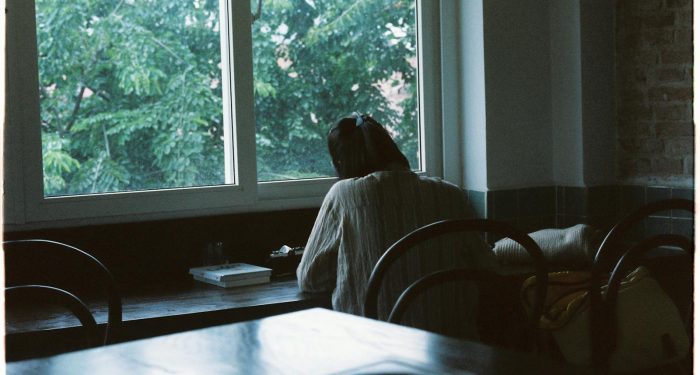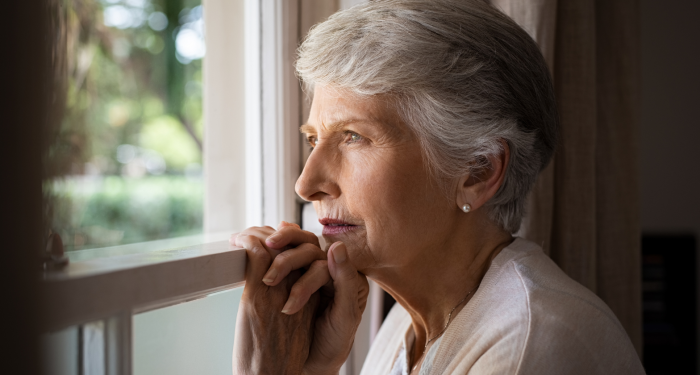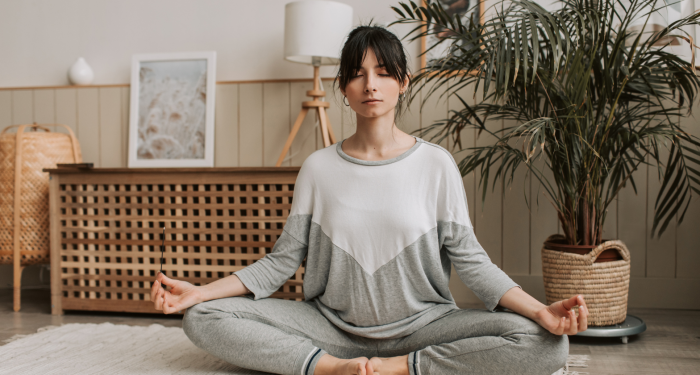
It’s not something to fix - it’s a genuine comfort in one’s own presence, where solitude feels restorative rather than lacking. What society often labels as a problem is, for them, a choice - a way of living that feels more honest and peaceful.

Add VegOut to your Google News feed. 
There is a particular social pressure applied to people who genuinely prefer to spend time alone. It shows up in the concerned questions from family, in the unsolicited advice to put yourself out there, in the cultural assumption that a well-adjusted adult should want, above all else, to be with other people. Someone who keeps declining invitations and seems happiest with a book and their own thoughts tends to attract a kind of low-grade diagnostic attention from the people around them. What is she hiding from? Is he depressed? Is something wrong with them?
Psychology has been building a careful answer to these questions over the past two decades, and the answer is considerably more nuanced than the cultural framing suggests.
How society frames solitude
The way being alone is represented in public discourse has received direct empirical attention. A content analysis of coverage about solitude and aloneness across major U.S. news outlets found that media coverage of being alone is predominantly negative in framing, concentrating on health risks and pathological consequences, while rarely discussing the documented benefits. Articles about social isolation vastly outnumber articles about healthy solitude. The language shifts accordingly: alone becomes isolated, preference becomes withdrawal, the person who enjoys their own company becomes someone who needs help.
This framing matters beyond its effect on how we talk about solitude, because there is evidence it shapes how people experience being alone. Research has found that how people think about time alone significantly influences how they feel during it. People exposed to information framing solitude as beneficial report more positive affect during periods of aloneness. The cultural story about what being alone means functions, for many people, as a lens through which they interpret their own experience. A society that consistently frames solitude as a symptom makes it harder for people to experience it as simply what it is: time with themselves.
The distinction solitude research keeps having to make
A recurring challenge in solitude research is the need to keep establishing that solitude is not the same thing as loneliness. These two phenomena are routinely conflated in public discourse, but they are experientially and functionally distinct. Loneliness is the distressing subjective experience of unmet social need, of wanting more or better connection than you currently have. Solitude is the state of being physically alone. Solitude is defined independently of its emotional tone and can be neutral, positive, or negative depending on various factors, including crucially whether it is chosen. A person who chooses to be alone because they find it restorative and genuinely enjoyable is not experiencing the same thing as a person who is alone against their will and feels the absence of others as a painful lack.
The American adult spends between 30 and 65 percent of their waking hours alone. This is not a fringe experience. It is simply how life distributes itself. For a substantial portion of those people, that time is not experienced as deprivation. It is experienced as necessary, pleasant, and sometimes the best part of the day. The research term for this is positive solitude, and it is increasingly understood as a distinct psychological phenomenon with its own characteristics and benefits, not simply a compensatory response to failed social connection.
What the research shows about affinity for aloneness
Some people have what researchers call an affinity for aloneness: a genuine preference for solitude that derives from finding it inherently valuable and enjoyable rather than merely tolerable. Research has been clarifying when and how this preference is adaptive. Children and adolescents with a higher affinity for solitude do not show psychological maladjustment if they have low or moderate levels of social anxiety; the preference for solitude is not inherently pathological. The difference between a preference for solitude that functions well and one that creates problems is less about the preference itself and more about whether social anxiety is driving it. Someone who chooses to be alone because they love being alone is in a different psychological position than someone who avoids social contact because they find it frightening.
This distinction is consistently collapsed in everyday assessments of people who prefer solitude. The person who turns down the invitation because they genuinely prefer an evening to themselves is treated as indistinguishable from the person who turns down the invitation because they are afraid to go. Both, from the outside, look like people who prefer to be alone. The experience, the underlying motivation, and the psychological function are entirely different.
What solitude actually does
For people who experience it positively, solitude serves several documented functions. It tends to reduce high-arousal emotional states, producing decreases in stress and anxiety and increases in low-arousal positive affect, the kind of calm, peaceful, settled feeling that is qualitatively different from excitement but no less positive. It creates conditions for self-reflection, for pursuing activities that require sustained concentration without the interruptions of social engagement, for the particular kind of creative thought that tends to be difficult when attention is being divided between one's own inner life and the social environment. It offers, in the language of the researchers, a space in which people can experience themselves as free from pressure and able to act in ways that are genuinely self-congruent.
These are not small or trivial benefits. The ability to regulate one's emotional state through deliberate time alone, to pursue meaning through activities that don't require the presence of others, to periodically escape the demands and stimulations of constant social engagement, is a genuine resource. That some people need more of this than others, and that some people find it not just useful but genuinely preferable to most social alternatives, does not indicate a failure of social development. It indicates a particular configuration of psychological need and preference that has been recognized across cultures and throughout history, even if contemporary Western culture has difficulty granting it legitimacy.
The pathologizing problem
The tendency to treat preference for solitude as a symptom that requires explanation has consequences for the people who have it. There is evidence that loneliness interventions that emphasize increasing social contact may perpetuate the idea that being alone is inherently pathological, increasing the tendency to appraise periods of aloneness as loneliness. In other words, the cultural and therapeutic emphasis on social connection as the solution to every problem involving time alone may actually make it harder for people who benefit from solitude to experience it as such. If you have been repeatedly told that preferring to be alone is a sign something is wrong, you are more likely to experience being alone as evidence that something is wrong. The belief shapes the experience.
There is also a simpler category error being made when preference for solitude is treated as a problem to be solved. The assumption is that people who enjoy their own company are enjoying a lesser substitute for what they really want, which is presumably the company of others. This assumption doesn't hold. For many people, time alone is not a consolation prize for the party they didn't attend. It is the thing they would have chosen regardless.
What good adjustment to solitude actually looks like
Psychology is beginning to describe what a healthy relationship with solitude involves, distinct from either avoidance-driven isolation or the socially mandated reluctance to enjoy one's own company. It involves choosing it: the key variable that distinguishes positive solitude from imposed aloneness is autonomy, whether the person being alone has entered that state voluntarily. It involves being able to inhabit it: to remain present with one's own thoughts and activities without experiencing the absence of others as a constant intrusion of unmet need. And it involves knowing why: people who can articulate what they value about their time alone, who seek it for its genuine rewards rather than simply to escape something, tend to experience it more positively.
None of this is broken. None of it requires the intervention of concerned others or the diagnostic gaze of a culture that has spent decades treating the human capacity to enjoy one's own company as an aberration in need of correction. The person who prefers a quiet evening to a crowded room isn't failing at sociality. They are succeeding at something else entirely: the undervalued skill of being, genuinely and without apology, at home with themselves.
What’s Your Plant-Powered Archetype?
Ever wonder what your everyday habits say about your deeper purpose—and how they ripple out to impact the planet?
This 90-second quiz reveals the plant-powered role you’re here to play, and the tiny shift that makes it even more powerful.
12 fun questions. Instant results. Surprisingly accurate.