Leaving home reshaped my understanding of the world. It helped me see my privilege for what it was—not something to be ashamed of, but something to be aware of.
When you grow up upper-class, your “normal” becomes invisible. You don’t question the routines, expectations, or comforts around you because you’ve never known anything different. Your environment shapes your worldview so subtly that it’s only when you step outside of it—into a different city, a different income bracket, a different social circle—that you finally see how unusual your upbringing really was.
For a long time, I assumed everyone lived the way my family did. It wasn’t arrogance; it was simply a lack of contrast. But once I moved out and began meeting people from every walk of life, reality hit me like a splash of cold water.
There were five things, in particular, that I didn’t realize were completely out of the ordinary until I left home. And understanding these differences reshaped how I see privilege, normalcy, and happiness today.
1. I thought “financial safety nets” were a universal human experience
Growing up upper-class meant there was always a cushion beneath me—a backup plan, a safety net, someone to call if life went sideways. Emergency bills? Covered. Unexpected expenses? Handled. Big opportunities? Funded. Even if I didn’t rely on these resources often, the knowledge that they were there gave me a kind of psychological freedom I didn’t recognize until much later.
Only when I started meeting people who didn’t have a fallback did I realize how rare—and life-changing—this sense of security was.
Most people live with a constant awareness of financial precarity:
- One medical bill away from debt
- One car breakdown away from crisis
- One missed paycheck away from eviction
This changes everything—how they plan, how they take risks, how they sleep at night.
I didn’t realize until adulthood that not everyone gets to make decisions free from financial fear. And to be honest, it made me rethink my entire definition of ambition. It’s easy to “take bold risks” when you know you’ll never truly fall.
2. I thought everyone hired help for things most people do themselves
Cleaning? Cooking? Major repairs? Paperwork? If something was broken, someone came to fix it. If something needed organizing, someone was hired. If life got busy, services filled the gaps.
I grew up thinking this was how the world operated. Not in a pampered way, but in a “well, doesn’t everyone do this?” way. It wasn’t until I lived in a small apartment with flatmates—scrubbing floors, fixing leaky taps, stretching groceries for the week—that it hit me:
Doing things yourself isn’t a chore for most people. It’s a necessity. It’s normal life.
There’s a humility that comes with learning to handle your own living space—cooking, cleaning, budgeting, repairing. And it’s a humility I’m grateful I was forced to develop.
3. I thought everyone traveled the world without thinking twice
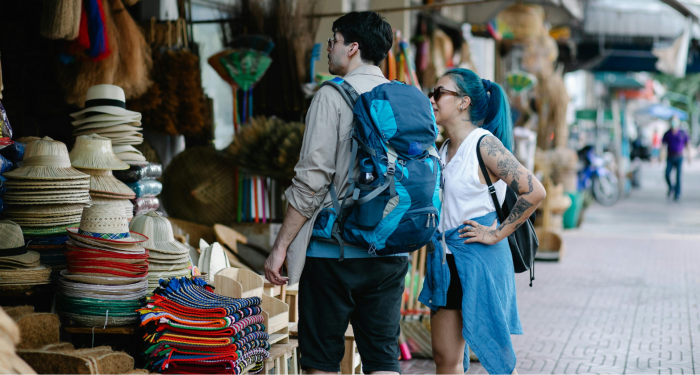
Growing up, international travel was routine. Holidays weren’t about “where can we afford to go?” but “where should we go this year?” I assumed everyone had a passport full of stamps. I thought flying was as unremarkable as taking a bus.
Then I met people in their 20s who had never been on a plane. People who had never left their state. People for whom travel was not a lifestyle but a long-term dream.
It changed me. It humbled me. It made me realize how easy it is to mistake privilege for normalcy.
Travel is one of the most enriching experiences you can give a child—but it’s also one of the most unequal. Seeing the world early gave me a global perspective, but it also blinded me to how exceptional that upbringing was.
4. I thought “networking” meant talking to people who already liked you
Upper-class families tend to have strong social circles—parents’ friends, extended relatives with influence, mentors, colleagues, and long-standing connections. As a kid, you don’t see this as networking. You see it as normal adult friendships.
But then I entered the workforce and realized something shocking:
Most people don’t have ready-made opportunities waiting in their social circles. Most people don’t walk into jobs because a family friend vouches for them. Most people don’t get introductions to people who can open doors.
What I grew up with wasn’t networking—it was inherited access. And the truth is, access creates confidence.
When you know someone will help you get your foot in the door, you approach life differently—more boldly, more comfortably, more assuredly.
I didn’t realize how rare that was until I met people who had to build everything from scratch.
5. I thought emotional privacy was something everyone could afford
This one took me the longest to understand.
Growing up, difficult emotions were handled behind closed doors. Arguments were quiet. Finances were private. Stress was contained. Nothing spilled into public because there was always enough space—physically, mentally, financially—to keep personal struggles hidden.
But once I left home, I saw the reality for countless families:
- Money stress spills into relationships
- Small houses mean no space to decompress
- Kids absorb tension they don’t understand
- Work hours, bills, and exhaustion shape emotional life
It wasn’t dysfunction—it was reality.
Most people don’t get the luxury of emotional privacy. Most people can’t hide their struggles behind big houses, stable income, or paid help.
And that’s when I realized: the emotional stability I experienced growing up wasn’t “normal.” It was the product of financial cushions, spacious living, and a lifestyle designed to minimize stress.
Stepping outside my background wasn’t just eye-opening—it was grounding
Leaving home reshaped my understanding of the world. It helped me see my privilege for what it was—not something to be ashamed of, but something to be aware of.
Awareness creates responsibility. Responsibility creates humility. Humility creates growth.
I stopped assuming my experiences were universal. I stopped believing comfort was the default. I stopped thinking my upbringing reflected the real world.
Instead, I gained gratitude—deep, quiet gratitude—for the ways my life was cushioned. And I gained immense respect for people who grew up without those cushions.
Because when you’ve had everything, it’s easy to overlook what others fight for daily.
And when you’ve had less, the wisdom you gain is often far richer than anything money can buy.
What’s Your Plant-Powered Archetype?
Ever wonder what your everyday habits say about your deeper purpose—and how they ripple out to impact the planet?
This 90-second quiz reveals the plant-powered role you’re here to play, and the tiny shift that makes it even more powerful.
12 fun questions. Instant results. Surprisingly accurate.