
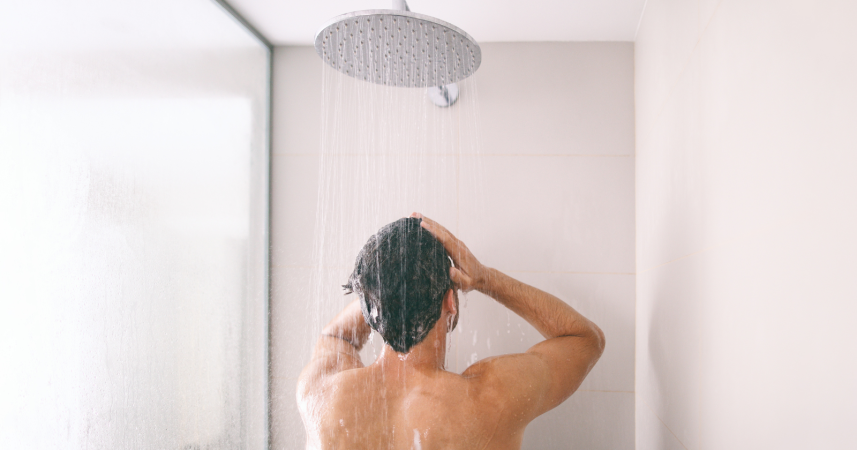
Science shows that a warm shower before bed improves sleep quality, helping you wake sharper and more prepared. That nightly rinse may be the quiet edge that sets successful people apart.
Confession: I used to be a die-hard morning-shower person. It felt productive—like flipping the “on” switch for my brain. But a few years ago I moved my shower to the evening as an experiment. The change was subtle at first: I fell asleep faster, woke up calmer, and started hitting my mornings with more intention instead of scrambling. Within a month, my schedule felt tighter, my focus deeper, and my days—ironically—more “morning-person” than ever.
Here’s the case for night showers, why they quietly stack the odds in your favor, and how to try it without turning your routine upside down.
The simple science: warm water, cooler core, better sleep
Sleep quality is the keystone habit behind so much of what we call “success”: energy, mood stability, impulse control, memory consolidation, and consistent follow-through. A warm shower in the evening is one of the easiest ways to improve the front door to that habit—drifting off quickly and sleeping efficiently.
A systematic review and meta-analysis in Sleep Medicine Reviews found that taking a warm shower or bath before bedtime can shorten the time it takes to fall asleep and improve overall sleep efficiency (how well you sleep once you’re in bed). The mechanism is beautifully simple: warm water draws heat to the skin; when you step out and cool down, your core body temperature drops—a powerful signal to the brain that it’s time to sleep. The authors concluded that timing a warm shower in the 1–2 hours before bed was especially effective for easing sleep onset and boosting efficiency.
That’s the one piece of research you really need for this habit. Everything else in this article builds on the practical consequences of better sleep: sharper mornings, steadier mood, and a routine that’s easier to keep.
Why this matters for “success” (in the real-world sense)
Let’s define success in a down-to-earth way: you do what you said you’d do—consistently—while protecting your health and relationships. Night showers help in five very practical ways:
-
You front-load recovery, not activation.
A morning shower “activates” you after a bad night’s sleep, but it doesn’t prevent the bad night in the first place. A night shower helps you get the sleep that makes activation almost automatic the next day. Sleep before power. -
You reduce morning friction.
Success is largely a function of removing micro-frictions from key hours. When your shower is done at night, your mornings shrink to the essentials: hydrate, dress, deep work. No waiting for hot water, no bathroom queue, no “I’ll just scroll while the water heats up” spiral. -
You create a reliable wind-down cue.
Our brains love routines. A warm evening shower becomes a conditioned signal that the day is ending. Over time, this one cue helps you detach from work, step away from screens, and slide into sleep without wrestling your mind. -
You start the day “already clean.”
It sounds silly, but waking up already showered changes the feel of your morning. You’re not “getting ready to start”—you’ve already started. That subtle identity shift—I’m the person who’s prepared—makes early wins (reading, planning, training) easier to claim. -
You stack small wins where they matter most.
If you do a 10-minute shower at night, you often tack on micro-habits that reinforce sleep: tidying the bedroom, laying out clothes, making tomorrow’s to-do list. Those small acts compound into a smoother next day—exactly where compound interest in habits pays out.
My switch, and what changed
When I moved my shower to evenings, I didn’t expect much. But three things happened quickly:
-
My sleep latency collapsed. I stopped doing the toss-turn-think routine. I’d read a few pages, lights off, and I was out. That meant an extra 20–30 minutes of real sleep—free energy.
-
Mornings stopped feeling like catch-up. I’d step into my desk time with less mental clutter. No dopamine spike from a phone in the bathroom. No “ugh, I still have to shower” resistance.
-
My planning got cleaner. I built a 5-minute “Tomorrow Setup” into the post-shower window: pick clothes, write the top three priorities, fill my water bottle, and place a book on the kitchen table. Easy to do when you’re already in a wind-down groove.
None of this is flashy. But that’s the point. Success is built from repeatable, boring things that make the hard stuff easier.
“But I train in the mornings / have oily skin / live in a hot climate…”
Totally fair. A night-shower routine doesn’t forbid morning water. Think of it as decoupling your “sleep cue” from your “day cue.”
-
If you work out in the morning: Keep a quick rinse after training (1–3 minutes) to feel fresh. Your sleep-optimized shower still belongs at night.
-
If your skin is oily: Dermatologists often suggest your main cleansing step at night to remove sunscreen, sweat, urban dust, and the day’s residue. If morning oil bothers you, splash with cool water or use a gentle, non-stripping cleanser then.
-
If mornings are sweaty where you live: Do a 30-second cool rinse or wash face/neck/underarms. You’ll still preserve the sleep benefits of a warm, deliberate evening shower.
The key is function, not dogma: keep the warm, longer shower as your nightly wind-down cue; use quick, targeted morning water as needed.
How to set it up (in 10 minutes or less)
-
Pick a consistent target: Start your shower 60–120 minutes before lights-out. If you aim for 10:30 p.m. bedtime, try a 9:15–9:30 p.m. shower. (That window aligns with the cooling curve that helps you drift off.)
-
Keep it warm, not scalding: Comfortable warmth is enough to trigger skin blood flow; you don’t need “spa-hot.”
-
Make it sensory and simple: Turn off overhead lights; use a lamp or dimmer in the bathroom. A few deep breaths while the water runs. Let your body register “we’re closing the day.”
-
Finish with low light and no phone: After you towel off, switch to lamps at home. Put your phone to charge outside the bedroom.
-
Add a 5-minute “Tomorrow Setup”: Lay out clothes, fill your water, pick the first task for the morning.
-
Keep mornings minimal: Wake, hydrate, move (a short walk or stretch), and get into your first focus block while your willpower is high.
Why evening showers quietly improve productivity
Let’s connect the dots. When you sleep more efficiently, you get:
-
More stable mood. You’re less reactive to email pings and micro-annoyances.
-
Cleaner attention. Deep work becomes easier to enter (and re-enter after interruptions).
-
Better self-control. You snack less impulsively and procrastinate less often.
-
Faster decision-making. You burn fewer cycles on trivial choices because you pre-decided the night before.
Even without quoting ten papers on sleep and executive function, you’ve probably felt this: after a great night’s sleep, you don’t need heroic motivation; the day flows. The evening shower is a reliable lever that buys you more of those days.
What about morning shower superpowers?
Morning showers can be great for activation—especially if you finish with a blast of cool water. If that’s your thing, keep it. But think of it this way:
-
If you rely on a morning shower to recover from poor sleep, you’re using a crutch.
-
If you rely on a night shower to create good sleep, you’re building a system.
Systems trump crutches over the long run.
Tiny tweaks that take this from “nice” to “unfair advantage”
-
Pair it with a “closing question.” Ask: What’s the one thing that would make tomorrow a win if I did it before noon? Write that on a sticky note after your shower.
-
Use scent as a context cue. Keep one soap or essential-oil blend only for evenings. Your brain will associate that scent with winding down, strengthening the habit loop.
-
Put friction in the right place. If you must keep the phone in your bedroom, plug it in across the room after your shower. Make doom-scrolling physically annoying.
-
Treat it like brushing your teeth. Not a debate, not a moral victory—just hygiene for your nervous system.
A weeklong experiment (no life overhaul required)
Try this for seven nights:
-
Night 1–2: Warm shower 90 minutes before bed; 5-minute “Tomorrow Setup.”
-
Night 3–4: Add low light after the shower and charge your phone outside the bedroom.
-
Night 5–7: Keep the routine and track two things each morning: (1) time you started your first deep-work block and (2) how long you stayed in it before your first distraction.
By the end of the week, most people notice at least one of the following: falling asleep faster, less morning dithering, or a cleaner first hour at the desk. That’s momentum you can bank.
A note on hair, skin, and logistics
-
Hair: If wet hair at night is a deal-breaker, towel-dry thoroughly and finish with a cool minute under the dryer. (Cool air reduces sweat and frizz and won’t heat you back up.)
-
Skin: If you have very dry or sensitive skin, keep showers brief and moisturize right after while the skin is damp.
-
Partners / shared bathrooms: Agree on a window and stick to it. Routines are easier when they’re synced.
-
Parents of babies or small kids: Night showers can double as a personal “boundary ritual” after bedtime duties—five to ten minutes to reset your nervous system.
The mindset shift that makes this stick
Don’t treat the night shower as a luxury. Treat it as infrastructure: the plumbing of your performance. You’re not pampering yourself; you’re building a nightly bridge from “wired and scrolling” to “asleep and recovering.”
Success, at least the sustainable kind, is mostly boring: clear priorities, solid sleep, low-friction mornings, and enough energy to follow through. Moving your shower to the evening is one of those humble switches that—compounded over months—pays out in calmer nights and stronger days.
If you try only one environmental tweak this month, make it this one. It’s pleasant, inexpensive, and backed by real sleep science—and you’ll feel the benefits as soon as tomorrow morning.
What’s Your Plant-Powered Archetype?
Ever wonder what your everyday habits say about your deeper purpose—and how they ripple out to impact the planet?
This 90-second quiz reveals the plant-powered role you’re here to play, and the tiny shift that makes it even more powerful.
12 fun questions. Instant results. Surprisingly accurate.












