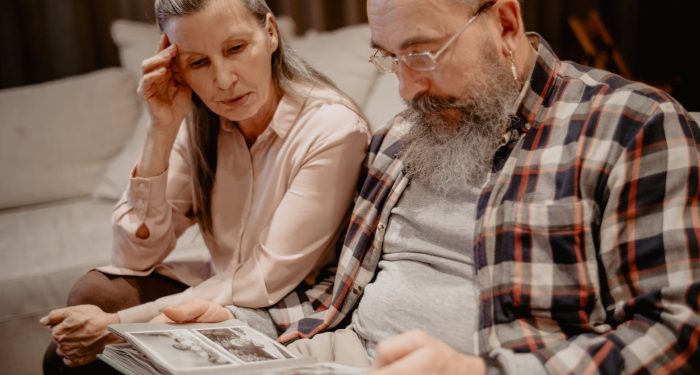
For years, it looked like discipline - quiet consistency, no excuses, just getting up and getting on with it. But beneath that routine was something deeper: a single hour of autonomy in a life that otherwise belonged to everyone else.

Add VegOut to your Google News feed. 
My father woke up at 5am every day for forty-two years.
I grew up watching it. The quiet creak of the hallway. The kitchen light clicking on while the rest of the house was still dark. The kettle. The chair by the window. Whatever he did in that hour, he did it alone, and he did it before any of us were awake to ask anything of him.
For most of my life, I filed this under discipline. My father was a disciplined man. That was the story. He got up early because that's what hard-working men did. It was part of the machinery of providing. An extension of the same engine that drove him to work five days a week, manage a household, show up for everything, and never once complain about any of it.
Then, when he was 68, he told me something that reframed every morning I'd ever witnessed.
"That was the only hour of my life that belonged to me."
Not discipline. Survival.
The hour nobody noticed
He didn't say it with bitterness. That's the thing. He said it the way you'd describe the weather. Matter-of-fact. Like it was obvious. Like anyone in his position would have done the same thing.
And maybe they would have. Because when I think about the men of my father's generation, the ones who built their entire identity around what they provided rather than who they were, I suspect a lot of them had their own version of 5am. Some private ritual, some thin slice of the day where the weight of everyone else's needs wasn't sitting on their shoulders.
Not because they didn't want to carry it. But because carrying it for forty-two years without a single hour of relief would have broken them.
What the research says about why this matters
There's a growing body of research on the psychology of solitude that helps explain why that one hour meant so much to my father, even if he couldn't have articulated it at the time.
A 2023 study published in Scientific Reports found that on days when people spent more time alone, they experienced less stress and greater autonomy satisfaction, defined as feeling volitional, authentic, and free from pressure. The benefits were cumulative. People who spent more time in solitude across the study period were less stressed overall.
But here's the nuance. The research also found that solitude only benefits wellbeing when it's autonomously motivated, meaning the person is choosing to be alone because they value the experience, not because they've been forced into isolation. The distinction is critical. Solitude that's chosen feels restorative. Solitude that's imposed feels like loneliness.
My father's 5am was chosen. It was the one decision in his day that nobody else influenced. And in a life structured almost entirely around other people's needs, that made it the most important hour he had.
The provider trap
I don't think we talk enough about what happens to a person's sense of self when their entire identity is organised around a role.
My father was a provider. That was the word. Not a creative, not an adventurer, not a man with interests and passions and inner conflicts worth exploring. A provider. The role consumed everything. It defined how he spent his time, how he measured his worth, and what he allowed himself to want.
Research on Erikson's stages of psychosocial development describes midlife as a period dominated by the tension between generativity and stagnation, the drive to contribute something meaningful to the next generation versus the risk of feeling stuck and purposeless. Parenthood is at the centre of this stage. But what Erikson's model doesn't fully capture is the cost of generativity that's never balanced by anything else.
When a man spends thirty or forty years being generative, in the Eriksonian sense, being productive, being responsible, being needed, but never makes room for his own inner life, he doesn't arrive at later life with the sense of integrity Erikson described. He arrives depleted. The generativity wasn't balanced by self-nourishment. It was an extraction.
And the only thing standing between him and total depletion was 5am.
A generation that didn't have the language
What strikes me most about my father's confession, if you can even call it that, is how little vocabulary he had for what he was describing.
He didn't say "I needed autonomy." He didn't say "my psychological needs weren't being met." He didn't frame it in terms of self-care or boundaries or emotional labour. He just said it was the only hour that belonged to him, and he left it at that.
Because the men of his generation weren't given the language for this. They were given a script: work hard, provide, don't complain, and if you need something for yourself, figure it out quietly and don't burden anyone with it. The emotional vocabulary that younger generations take for granted simply didn't exist in the households these men grew up in.
Research on the experience of solitude across the lifespan found that autonomy, defined as self-connection and freedom from pressure, was the most consistently valued quality of time spent alone, and its importance increased with age. Older adults reported feeling most peaceful during solitude. They weren't lonely. They were, for perhaps the first time in decades, in possession of their own attention.
My father had been accessing that feeling every morning for forty-two years. He just didn't know there was a word for it.
What I misunderstood
When I was younger, I thought 5am was about ambition. I thought my father got up early because he was wired for productivity, and I modelled my own habits around that assumption. I became an early riser. I told myself it was about getting ahead. About discipline. About being the kind of person who doesn't waste time.
I was wrong about all of it.
What I was actually doing, without knowing it, was building the same protective structure my father had built. A quiet pocket of time where nobody needed anything from me. Where I could sit with my own thoughts before the day started asking questions I had to answer for other people.
Now I live in Ho Chi Minh City with my wife and daughter. I run a business. I have a team. I have responsibilities that start the moment the house wakes up and don't stop until everyone is asleep. And I wake up early. Every single day.
Not because I'm disciplined. Because that hour is mine.
The quiet cost of selflessness
There's a narrative in our culture that selflessness is inherently noble. That the parent who gives everything to their children and keeps nothing for themselves is the gold standard. That sacrifice without limit is what love looks like.
But self-determination theory, developed by psychologists Richard Ryan and Edward Deci, argues that human beings have three basic psychological needs: autonomy, competence, and relatedness. All three must be satisfied for a person to function well. Not two out of three. All three.
A person who has relatedness and competence but no autonomy, someone who is deeply connected to their family and highly effective in their role but has no sense of personal agency, isn't thriving. They're enduring. And endurance looks a lot like discipline from the outside.
That's what I was watching every morning. Not a disciplined man. A man who had found the absolute minimum amount of autonomy required to keep going. One hour. Before sunrise. While nobody was looking.
What I want to do differently
I'm 37. My daughter is young. The years of heavy providing and constant availability are just getting started. And I already feel the pull toward the same pattern my father fell into, organising my entire identity around what I produce and what I provide, and treating my own needs as an afterthought that can be squeezed into the margins.
The difference, I hope, is that I have the language for it now. I can name what's happening when I feel the walls closing in. I can recognise the early signs of a life that's becoming entirely other-directed. And I can make choices about it, not just at 5am, but throughout the day.
My father couldn't. Or at least, he felt he couldn't. The culture he grew up in didn't give him permission to prioritise himself during waking hours when other people might notice. So he did it in the dark, in silence, in the only hour nobody was watching.
I don't want to romanticise that. It's not a charming quirk of a bygone generation. It's a man who spent forty-two years with exactly one hour of psychological freedom per day and thought that was normal.
I love my father for what he gave us. But I also grieve a little for what he never allowed himself to keep.
And every morning when I sit down in the quiet before my family wakes up, I think about him in that chair by the window. I understand it now. I didn't for most of my life, but I do now.
It was never about discipline. It was the only way he knew how to stay whole.
What’s Your Plant-Powered Archetype?
Ever wonder what your everyday habits say about your deeper purpose—and how they ripple out to impact the planet?
This 90-second quiz reveals the plant-powered role you’re here to play, and the tiny shift that makes it even more powerful.
12 fun questions. Instant results. Surprisingly accurate.