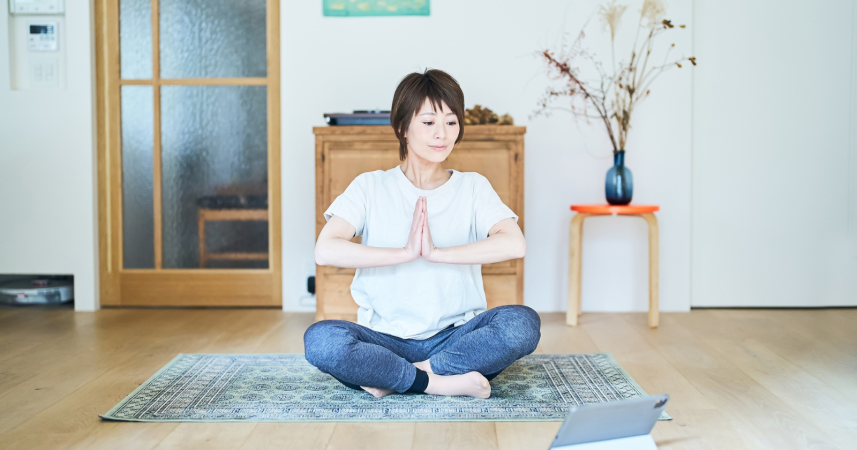
Japan doesn’t chase balance—it embodies it. Here’s what happened when I tried to live the same way.

Add VegOut to your Google News feed. 
When I first visited Japan, something subtle yet profound struck me.
It wasn’t just the quiet efficiency, the politeness, or the meticulous attention to detail. It was a deeper sense of harmony—a way of moving through life that felt peaceful, deliberate, and meaningful.
Back then, my life was the opposite. I was running an online business, juggling deadlines, and constantly thinking about the next milestone. Even when I took breaks, my mind didn’t. I thought mindfulness meant meditating for ten minutes a day—but in Japan, I discovered mindfulness was woven into everything.
So, over the past year, I’ve tried to adopt eight Japanese lifestyle principles—and to my surprise, they’ve changed how I see success, happiness, and even time itself.
1. Ikigai — finding purpose in the small things
Most people think ikigai means “life purpose,” but in Japan, it’s simpler: it’s what makes you want to get up in the morning.
For some, it’s family. For others, a garden, a craft, a morning ritual. It’s not grand or dramatic—it’s the quiet joy that keeps life meaningful.
When I first learned about ikigai, I realized I’d spent years chasing big goals—traffic numbers, revenue, recognition—while neglecting the small joys that gave my days texture.
So I started noticing the things that genuinely made me feel alive: morning runs in the humid Saigon air, a good flat white at my local café, my wife’s laugh, the first smile from my baby daughter.
Psychologists say that meaning, not pleasure, is what sustains happiness long term.
Ikigai reminded me that purpose doesn’t have to be grand—it just has to be real.
2. Wabi-sabi — embracing imperfection
In Western culture, we’re conditioned to chase flawlessness—perfect skin, perfect homes, perfect lives.
Wabi-sabi turns that upside down. It’s the Japanese art of finding beauty in imperfection.
It’s a cracked teacup mended with gold (known as kintsugi).
It’s the wrinkles on an aging face, or the simplicity of a bare wooden table.
It’s an acceptance that nothing lasts, nothing is finished, and nothing is perfect.
When I applied this to my own life, I noticed how much energy I’d wasted resisting reality—getting frustrated when things didn’t go according to plan, or when I wasn’t performing at my best.
But once I began to see imperfection as part of the story, not a flaw in it, everything softened.
My home felt more peaceful. My work became freer. Even parenting—chaotic and unpredictable—felt more sacred somehow.
Wabi-sabi teaches a truth that Buddhism echoes: happiness begins the moment you stop trying to control life and start appreciating it as it is.
3. Shinrin-yoku — forest bathing for the soul
I used to think “forest bathing” meant hiking or exercising in nature. But in Japan, shinrin-yoku is about soaking in the atmosphere of the forest—using all your senses to reconnect with the natural world.
When I tried it for the first time, I left my phone at home and walked slowly through a park near our apartment in Saigon.
I noticed things I’d never seen before: the sound of the wind in the trees, the humidity against my skin, the rhythm of my own breathing. For the first time in weeks, I felt present.
There’s a psychological reason this works. Studies show that time in nature lowers cortisol and activates the parasympathetic nervous system—the “rest and digest” mode that restores balance.
But beyond science, shinrin-yoku reminded me of something simpler: when you stop rushing, life reveals itself.
4. Kaizen — small, continuous improvement
When we think of change, we often think of radical transformation—quitting our job, moving countries, starting from scratch.
But kaizen, a philosophy used in Japanese businesses and homes alike, means improving by 1% each day.
At first, it felt almost too simple. But when I started applying it—whether to language learning, fitness, or my mental habits—I realized how powerful it was.
Instead of trying to meditate for an hour, I started with five minutes. Instead of aiming for a perfect workweek, I asked: What’s one small thing I could do better tomorrow?
Gradual progress doesn’t trigger resistance the way big goals do. It builds momentum, confidence, and quiet discipline.
It’s like mindfulness in motion—change without the chaos.
Now, when I look back over a few months, I’m amazed at how much has shifted. Not because of giant leaps, but because of consistent small steps.
5. Omoiyari — empathy in action
In Japan, omoiyari means considering others’ feelings before they even express them.
It’s a kind of anticipatory kindness: moving your umbrella slightly so rain doesn’t splash a passerby, lowering your voice in public, noticing what might make someone else’s day a little easier.
At first, I thought this level of awareness must be exhausting—but it’s the opposite. It pulls you out of your own head.
I started practicing omoiyari consciously—listening more deeply, being more patient with my wife, saying thank you more often to the people who help us raise our daughter.
And something shifted: my days felt lighter, more connected, more human.
Psychologists say empathy is one of the strongest predictors of lasting happiness.
When we stop obsessing over our own well-being and contribute to others’, we ironically end up feeling better ourselves.
6. Gaman — enduring with grace
Life in Japan, like anywhere, isn’t easy. But there’s a quiet resilience built into the culture—gaman—which roughly means “perseverance with dignity.”
It’s the calm endurance you see in people who face challenges without complaint.
Not suppression, but strength through acceptance.
When my wife and I went through a tough period of IVF treatments and loss, this principle resonated deeply.
Gaman doesn’t mean pretending everything’s fine—it means acknowledging pain, yet choosing to meet it with composure and compassion.
In Buddhism, this echoes the teaching of dukkha—the inevitability of suffering, and the freedom that comes from facing it consciously rather than denying it.
When you stop resisting pain, it loses its power to define you.
7. Mottainai — gratitude for what you have
Mottainai is a beautiful Japanese word that expresses regret over waste—but it’s really about reverence for resources, time, and life itself.
In daily life, it might mean finishing all your food, repurposing what you already own, or simply appreciating what’s in front of you instead of chasing more.
When I started applying this idea, I noticed how much I’d been unconsciously consuming—scrolling, buying, eating, even working—without awareness.
I began using what I already had: old notebooks, clothes, skills, even memories.
It’s amazing how gratitude changes your mental landscape.
When you stop treating life as disposable, everything starts to feel sacred.
8. Ma — the beauty of empty space
Western culture tends to fear emptiness—we fill silence with words, walls with art, and schedules with obligations.
But in Japan, ma—the space between things—is seen as essential. It’s the pause that gives meaning to sound, the breath between actions, the stillness that lets beauty emerge.
In design, it’s minimalist space. In music, it’s the silence between notes. In life, it’s rest.
When I started creating more ma in my days—turning off my phone for an hour, eating without distraction, allowing quiet after work—I felt something shift.
My thoughts became clearer. My emotions more stable. Even my creativity deepened.
In mindfulness terms, ma is presence. It’s not “doing nothing”—it’s being fully here.
What changed when I began living this way
At first, I thought these principles were just cultural curiosities. But as I practiced them, I realized they all pointed to one universal truth: happiness isn’t about adding more to life—it’s about subtracting what doesn’t matter.
I started slowing down. Paying attention. Doing things for their own sake, not because they led somewhere else.
My business didn’t collapse when I stopped checking analytics daily. My productivity didn’t fall when I took longer breaks.
If anything, I became more focused, grounded, and creative.
And maybe most importantly, I began feeling grateful not just for the good moments, but for the ordinary ones.
The sound of rain against the window. The smell of coffee brewing. The tiny laugh of my daughter as she fell asleep.
That’s when I realized: the Japanese aren’t “happier” because their lives are easier. They’re happier because they live deliberately—turning ordinary routines into rituals of awareness and respect.
Bringing it all together
When you look at these principles—ikigai, wabi-sabi, shinrin-yoku, kaizen, omoiyari, gaman, mottainai, and ma—you begin to see a pattern.
Each one cultivates mindfulness in a different form: purpose, acceptance, connection, patience, and simplicity.
Together, they create a life that feels balanced not because everything’s perfect, but because you’re present for it.
That, I think, is what shifted everything for me.
I stopped trying to fix life and started to inhabit it.
And somewhere in the middle of those small, ordinary moments—I found something extraordinary: peace.