The protein question follows every vegan athlete, but the science tells a different story than the skeptics expect.
When I started running trails seriously at 38, a well-meaning colleague pulled me aside. "You're vegan, right? You should really think about adding some chicken back in.
You can't build real endurance without animal protein." I smiled, thanked him, and went on to complete my first ultramarathon two years later. My legs, built entirely on plants, carried me 50 kilometers through mountain terrain.
The muscle-building question is perhaps the most persistent myth vegans face. Whether you're lifting weights, training for a sport, or simply wanting to feel stronger in your body, the assumption is that plants can't deliver.
But here's what I've learned from five years of building strength without animal products: the question isn't whether you can build muscle on a vegan diet. It's whether you're willing to be intentional about how you fuel your body.
Understanding what muscles actually need
Let's start with the basics. Muscles grow through a process called muscle protein synthesis, which happens when you stress your muscles through exercise and then provide them with adequate protein and rest to repair and rebuild. The key word here is protein, not animal protein specifically.
Research published in the Journal of the International Society of Sports Nutrition has shown that plant-based diets can support muscle mass and strength when protein intake is sufficient. The amino acids your muscles need exist in plants. They're just distributed differently than in animal sources, which means you need to think a bit more strategically about your meals.
What does your current relationship with protein look like? Are you eating intentionally, or just hoping it works out?
The protein puzzle isn't as complicated as it seems
For years, we heard about "complete" versus "incomplete" proteins, creating the impression that plant proteins were somehow inferior. The reality is more nuanced. While individual plant foods may be lower in certain amino acids, eating a variety of protein sources throughout the day gives your body everything it needs.
Think of it like a financial portfolio. You wouldn't put all your money in one stock.
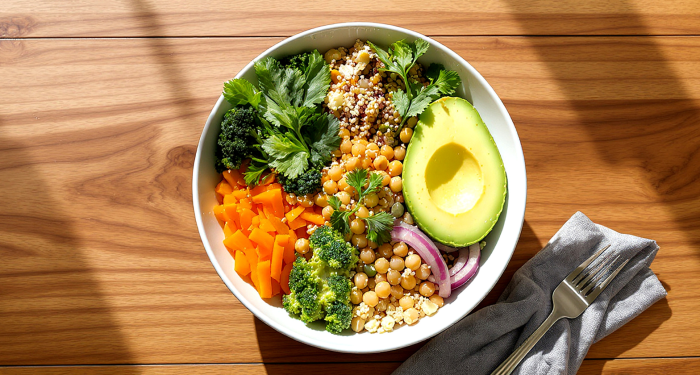
Similarly, combining legumes, whole grains, nuts, seeds, and soy products creates a complete amino acid profile. Lentils with rice. Hummus with whole grain pita. Tofu stir-fry with quinoa. These combinations have sustained strong bodies across cultures for centuries.
The general recommendation for muscle building is approximately 1.6 to 2.2 grams of protein per kilogram of body weight daily, according to sports nutrition guidelines. That's absolutely achievable on plants, though it does require attention.
Building your plate with intention
When I transitioned to veganism at 35, I made the mistake many people make. I simply removed animal products without thinking about what would replace them nutritionally. My energy tanked. My recovery from runs suffered. I felt like I was proving the skeptics right.
Then I got intentional. I started each meal by asking: where's my protein anchor? Tempeh, seitan, legumes, tofu, or edamame became the foundation. From there, I built outward with vegetables, healthy fats, and complex carbohydrates. I also learned to embrace protein-rich snacks between meals, like roasted chickpeas or a smoothie with hemp seeds and peanut butter.
The shift wasn't about restriction. It was about construction. What would it look like to approach your meals as an architect rather than someone just trying to avoid certain foods?
Beyond protein: the nutrients that support strength
Muscle building isn't only about protein. Several nutrients play supporting roles that deserve attention on a vegan diet. Iron helps deliver oxygen to working muscles. Zinc supports protein synthesis and recovery.
Vitamin B12, which must be supplemented on a vegan diet, is essential for energy metabolism and nervous system function.
Creatine is another consideration. While your body produces it naturally, vegans tend to have lower baseline levels since it's found primarily in animal tissue. Some plant-based athletes choose to supplement, and research suggests this can enhance strength and power output during high-intensity training.
I'm not suggesting you need a cabinet full of supplements. But understanding where the gaps might be allows you to address them thoughtfully, whether through food choices or targeted supplementation.
The mental game of building strength differently
Here's something I don't see discussed enough: the psychological aspect of being a vegan athlete. You will face doubt, both from others and from yourself. When progress feels slow, that voice creeps in. Maybe they're right. Maybe I need meat.
I've been there. After a particularly frustrating plateau in my training, I questioned everything. But I returned to the evidence, adjusted my nutrition, and pushed through. The plateau broke. My body adapted and grew stronger.
Building muscle on a vegan diet requires the same patience and consistency it requires on any diet. There's no magic in animal protein, just as there's no magic in plants. There's only the steady work of showing up, eating well, resting adequately, and trusting the process.
Final thoughts
Five years into this journey, I'm stronger than I was in my thirties. My recovery has improved. My energy is steady. And yes, I have visible muscle definition that surprises people who assume vegans are frail. The body doesn't care about ideology. It cares about nutrients, stimulus, and rest.
If you're considering building muscle on a vegan diet, or if you're already on this path and feeling uncertain, know that it's not only possible but deeply rewarding. It asks you to be more conscious about your food, which spills over into being more conscious about your body generally. And that awareness? It's a gift that extends far beyond the gym.
What would it mean for you to trust your body's ability to thrive on plants?
Just launched: Laughing in the Face of Chaos by Rudá Iandê
Exhausted from trying to hold it all together?
You show up. You smile. You say the right things. But under the surface, something’s tightening. Maybe you don’t want to “stay positive” anymore. Maybe you’re done pretending everything’s fine.
This book is your permission slip to stop performing. To understand chaos at its root and all of your emotional layers.
In Laughing in the Face of Chaos, Brazilian shaman Rudá Iandê brings over 30 years of deep, one-on-one work helping people untangle from the roles they’ve been stuck in—so they can return to something real. He exposes the quiet pressure to be good, be successful, be spiritual—and shows how freedom often lives on the other side of that pressure.
This isn’t a book about becoming your best self. It’s about becoming your real self.