
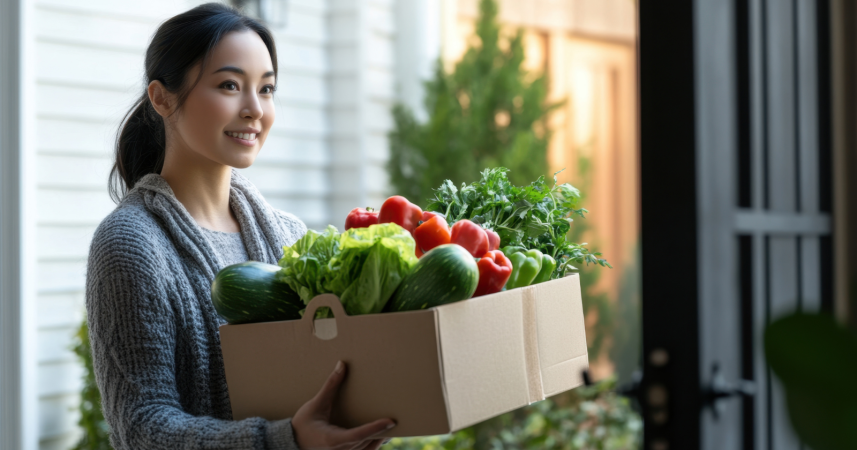
Understanding the real difference between these two approaches can help you choose a path that actually sticks.

Add VegOut to your Google News feed. 
When I first started exploring life without animal products, I thought "vegan" and "plant-based" were just two ways of saying the same thing.
I'd use them interchangeably in conversation, not realizing I was conflating two distinct philosophies. It wasn't until a friend gently corrected me at a dinner party that I understood the nuance, and honestly, that clarity changed how I approached my own journey.
If you've been curious about either path, or you're already on one and wondering if it truly fits, you're not alone. These terms get tossed around so often that the lines blur. But understanding what each one actually means can help you make a choice that aligns with your values, your health goals, and the life you're building.
What veganism really means
Veganism is, at its core, an ethical stance. It's a commitment to avoiding animal exploitation in all its forms, not just on your plate, but in your closet, your bathroom cabinet, and your entertainment choices.
The Vegan Society, which coined the term in 1944, defines veganism as a way of living that seeks to exclude all forms of cruelty to animals.
This means no leather shoes, no wool sweaters, no products tested on animals. It means skipping the zoo and choosing cruelty-free cosmetics. For many vegans, the food is almost secondary to the broader philosophy of reducing harm.
When I made the switch at 35, it started with food but quickly expanded. I found myself questioning things I'd never considered before. Why was I comfortable with a down jacket? What was actually in my shampoo? These questions felt uncomfortable at first, but they led me somewhere meaningful.
The plant-based approach
Plant-based eating, on the other hand, is primarily about diet. It focuses on consuming whole foods derived from plants: vegetables, fruits, legumes, grains, nuts, and seeds. The motivation is often health-driven rather than ethics-driven, though the two can certainly overlap.
Someone eating plant-based might still wear leather or use conventional cosmetics. They might not identify with the vegan label at all. Their focus is on what goes into their body and how it affects their wellbeing.
Research from institutions like Harvard's School of Public Health supports the health benefits of plant-centered diets, which is often what draws people to this approach.
I've met trail runners and athletes who eat plant-based purely for performance. They're not making a statement about animal rights. They just feel better, recover faster, and have more energy when plants dominate their plates.
Where the paths diverge
Here's where it gets interesting. A vegan might eat processed foods, sugary snacks, and refined carbs all day long, as long as no animals were harmed. Technically, Oreos are vegan. A plant-based eater, meanwhile, might avoid those processed options entirely but not think twice about a wool blanket.
Neither approach is superior. They're just different. One centers ethics, the other centers health. And honestly? Many of us land somewhere in between, borrowing from both philosophies as we figure out what works.
Ask yourself: What's driving your curiosity? Is it concern for animals, a desire to feel better physically, environmental reasons, or something else entirely? Your answer will point you toward the path that makes sense for you.
Finding your own version
When I left finance at 36, burned out and searching for meaning, I realized I'd spent years living by other people's definitions of success. Choosing veganism was one of the first decisions I made purely for myself. But I didn't get there overnight, and I didn't do it perfectly.
Maybe you're not ready to overhaul your entire wardrobe. Maybe you just want to eat more vegetables and see how you feel. That's valid. Progress doesn't require perfection, and labels don't require rigidity.
What matters is that you're moving in a direction that feels true to you. Are you someone who needs a clear framework with defined boundaries? Veganism might give you that structure. Do you prefer flexibility and a focus on physical health? Plant-based eating offers more room to adapt.
Living with intention
Both paths share something important: they ask you to pay attention. To read labels, to ask questions, to consider the impact of your choices. In a world that often encourages mindless consumption, that awareness is powerful.
I think about my years in finance, watching people make fear-driven decisions without pausing to reflect. Choosing how you eat, and why, is a small but meaningful act of intention. It's a daily practice of aligning your actions with your values.
Whether you call yourself vegan, plant-based, or something else entirely, the real question is this: Does the way you're living reflect who you want to be?
Final thoughts
There's no quiz that will tell you which label fits best. And honestly, you don't need a label at all. What you need is honesty with yourself about what matters to you and why.
Start where you are. Experiment. Notice how different choices make you feel, physically and emotionally. Talk to people who've walked both paths. And give yourself permission to evolve. The version of me who started this journey at 35 looks different from who I am now, and I expect I'll keep changing.
What's one small shift you could make this week that aligns with the life you're trying to build? That's where your answer lives.












