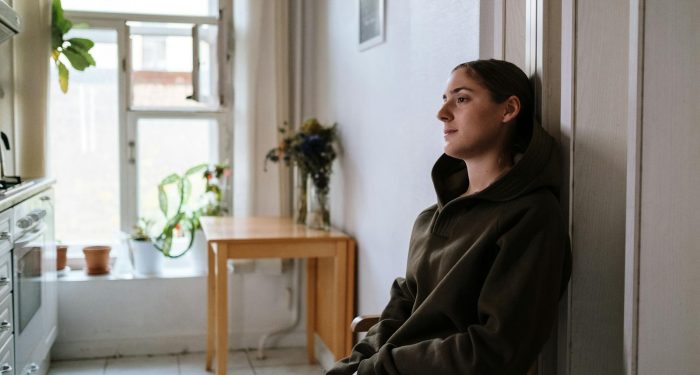
This quiet competence shows up in how they handle crises — not with panic or proclamations, but with the same steady problem-solving they've been doing since they were too young to know any other way.
You know that feeling when you're standing in the middle of a crisis and suddenly realize nobody's coming? No cavalry, no rescue team, no last-minute save. Just you, the problem, and whatever you can figure out with what you've got.
I was in my mid-twenties when that realization truly hit me. Working a warehouse job shifting TVs despite my psychology degree, watching my bank account dwindle, and feeling like I'd somehow missed the instruction manual everyone else seemed to have gotten. My parents had their own struggles — they'd taught me plenty about stretching a dollar and keeping your head up, but they couldn't fix this for me.
That moment of clarity was terrifying. But it was also the beginning of something I couldn't have developed any other way.
There's this particular brand of inner strength that forms when you realize, usually way too young, that you're essentially on your own. It's not the loud, chest-beating kind of confidence. It's not the hard shell that keeps everyone at arm's length. It's something else entirely — a quiet certainty that comes from having navigated through chaos with nothing but your own wits and whatever scraps of wisdom you could gather along the way.
The difference between armor and actual strength
Most people confuse this type of resilience with being tough or closed off. But that's like confusing a scar with a wound — they're related, but fundamentally different things.
When you've had to figure things out alone from an early age, you develop what I call "quiet competence." You don't announce your struggles or your solutions. You just handle things. Not because you're trying to prove anything, but because that's simply what you've always done.
I see this in people who grew up in chaotic households, who lost parents young, who faced adult problems as kids. They move through the world differently. While others might panic at the first sign of trouble, these folks are already three steps into solving the problem. They've been in the deep end before. They know they can swim.
As Gever Tulley puts it: "Persistence and resilience only come from having been given the chance to work though difficult problems."
The key word there? "Through." Not around, not over — through.
Why this can't be taught in a workshop
Here's what nobody tells you about developing real resilience: you can't learn it from a book or a weekend seminar. Trust me, I've written a book myself — Hidden Secrets of Buddhism: How To Live With Maximum Impact and Minimum Ego — and while I share plenty of wisdom there, I can't give you the experience of having survived on your own ingenuity.
You know what's fascinating? Research on young adults aging out of foster care found that while self-reliance can be a source of resilience, it may also hinder the development of supportive relationships essential for positive adult outcomes.
That's the double-edged sword of early independence. You become incredibly capable, but you also struggle to let others in. You've learned that depending on yourself is safer than depending on others. And unlearning that? That takes its own kind of courage.
The paradox of self-reliance
The weird thing about developing this kind of strength young is that it becomes both your superpower and your kryptonite.
On one hand, you're unshakeable in ways that baffle people who grew up with safety nets. Economic crisis? You've been broke before. Relationship ending? You've rebuilt from scratch. Job loss? Just another problem to solve.
But here's what research on rural communities reveals: while cultural narratives of self-reliance and endurance foster psychological stability and social cohesion, they can also limit resilience by fostering skepticism toward external interventions.
In other words, when you're too good at handling things alone, you might miss out on the strength that comes from genuine connection and support.
What actually develops when nobody saves you
So what exactly is this quiet strength I'm talking about?
First, it's an almost supernatural ability to stay calm when everything's falling apart. Not because you don't feel the stress, but because panic has never been a luxury you could afford. When you're the only one who can fix things, freaking out just wastes time.
Second, it's a deep well of resourcefulness. You see solutions where others see dead ends. That broken thing? You'll figure out how to fix it or work around it. That impossible situation? You'll find the crack in the wall.
"Resilience is not what happens to you. It's how you react to, respond to, and recover from what happens to you," notes Jeffrey Gitomer.
Third, and this is the big one — it's an unshakeable knowledge that you'll figure it out. Whatever "it" is. Because you always have.
The cost of early independence
Let's be real though. This kind of strength comes at a price.
Those of us who developed it young often struggle with asking for help, even when we desperately need it. We've trained ourselves to be islands, and islands don't call for backup.
We also tend to attract people who need saving, because we give off this vibe of having our shit together. But here's the thing — we're often just better at hiding our struggles. That competence you see? It's real, but it's also exhausting.
During my warehouse days, I remember being the one everyone came to with problems, even though I was barely keeping my own head above water. It's like being the designated driver of life — reliable, responsible, and secretly wondering when it's your turn to let loose.
Why it's harder to develop after forty
Alain de Botton said, "A good half of the art of living is resilience."
But here's what he doesn't mention — the kind of resilience that comes from early self-reliance is nearly impossible to develop later in life. Not because older people can't be resilient, but because it requires a specific cocktail of vulnerability, neuroplasticity, and sheer necessity that's hard to replicate once you've already built your life structures.
When you're young and have no choice but to figure things out, your brain literally wires itself for problem-solving and emotional regulation under pressure. Try developing that same wiring at forty-five, when you've got established coping mechanisms, support systems, and probably a therapist on speed dial? Different game entirely.
Finding balance without losing your edge
So how do you keep this strength while learning to let others in?
A study with displaced women in Colombia found that an integrated livelihoods and psychosocial program improved self-reliance and resilience, highlighting the importance of self-directed efforts in overcoming adversity.
The key word there is "integrated." It's not about choosing between self-reliance and connection — it's about weaving them together.
Start small. Let someone help you with something minor. Notice how the world doesn't end. Share a struggle before you've already solved it. Watch how people don't run away.
The strength you developed from having no one to save you? That's yours forever. Nobody can take it away. But maybe, just maybe, you can add to it by learning that sometimes, letting someone else help isn't weakness — it's just a different kind of strength.
Final words
That quiet strength I'm talking about — the kind that develops when you realize early that no one's coming to save you — it's both a blessing and a burden. It makes you capable of things that amaze people who've never had to be their own hero. But it also makes you forget that you don't always have to be.
If you recognize yourself in these words, know this: the strength you built in those lonely, difficult moments is real. It's valuable. It's part of who you are. But it doesn't have to be all of who you are.
And if you're reading this thinking you wish you had that kind of strength? Trust me, you probably don't want the experiences that create it. But you can still build resilience in your own way, at your own pace.
Because in the end, whether we developed it at fifteen or fifty, whether it came from necessity or choice, resilience is really just the art of keeping going when stopping feels easier. And that's something we're all capable of, no matter when we start.