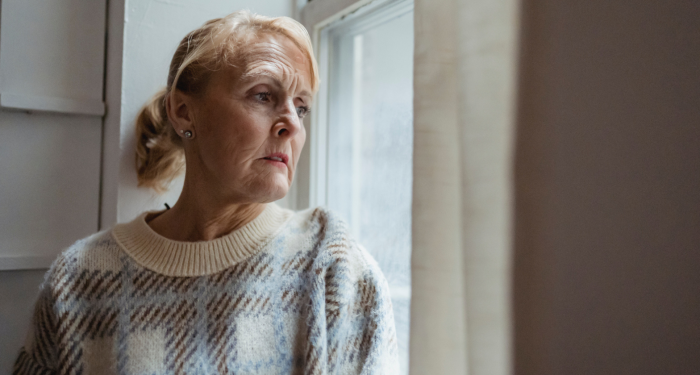
The moment you realize that sitting alone with a book feels less isolating than being surrounded by people making small talk is the moment everything changes—and it took me years of exhausting myself in crowded rooms to understand why choosing solitude saved my life.

Add VegOut to your Google News feed. 
I used to think being surrounded by people meant I'd never feel lonely. Friday nights at packed bars, weekend brunches with acquaintances, networking events where everyone talked but nobody really listened. Yet somehow, in rooms full of people, I felt more isolated than ever.
It wasn't until I started choosing to be alone that I discovered something profound: there's a massive difference between loneliness and solitude. One drains you, the other restores you. One happens to you, the other you choose for yourself.
The crowded room paradox
Have you ever sat at a dinner table, surrounded by conversation, yet felt completely disconnected from everyone around you? Like you're watching life happen through a window rather than actually living it?
During my warehouse days, I'd spend lunch breaks in the cafeteria with dozens of coworkers. Everyone chatting about sports, weather, weekend plans. Surface-level stuff that never went deeper. I'd smile, nod, contribute when expected, but inside I felt hollow. Those thirty minutes of forced social interaction left me more exhausted than eight hours of physical labor.
That's when I started taking my breaks outside, sitting alone with a book about Buddhism on my phone. My coworkers thought I was antisocial. But for the first time in years, I didn't feel lonely.
Sudha Murty puts it perfectly: "There is a difference between loneliness and solitude. Loneliness is boring, whereas in solitude you can inspect and examine your deeds and your thoughts."
When connection becomes performance
Most of us have become masters at performing connection without actually connecting. We collect LinkedIn contacts like baseball cards, accumulate Instagram followers we'll never meet, and maintain text threads that never go beyond "how's it going?"
I spent my mid-twenties doing everything "right" by conventional standards. I showed up to every social event, maintained a respectable number of friendships, never spent a weekend alone. Yet I felt more lost and anxious than ever. The constant effort to maintain these shallow connections was draining my energy for the relationships that actually mattered.
Research published in the journal Heart found that loneliness is linked to a 29% higher risk of coronary heart disease and a 32% higher risk of stroke, suggesting that being around others without real connection can be more detrimental than solitude.
Think about that for a second. The fake connections we maintain to avoid being alone might literally be killing us.
The art of choosing yourself
The shift happened gradually for me. I started saying no to invitations that felt obligatory. Started spending Saturday mornings writing instead of at brunch. Started taking solo trips where I could explore cities at my own pace, finding quiet corners in bustling places.
People asked if I was okay, if something was wrong. But nothing was wrong. For the first time, things were finally right.
Deepak Chopra captures this distinction beautifully: "I like to make a distinction between solitude and being alone. Alone signifies loneliness, whereas solitude means really connecting with yourself."
When you choose solitude, you're not running from others. You're running toward yourself. You're creating space to hear your own thoughts, understand your own desires, process your own experiences without the constant static of other people's expectations.
In my book, Hidden Secrets of Buddhism: How To Live With Maximum Impact and Minimum Ego, I explore how Buddhist teachings emphasize the importance of self-reflection and inner stillness. These aren't concepts that require isolation from society, but they do require intentional moments of solitude.
Solitude as a skill, not a circumstance
Here's what nobody tells you: solitude is a skill you develop, not just a situation you find yourself in. It takes practice to sit with yourself without immediately reaching for distraction. To be comfortable in silence. To enjoy your own company.
I still remember my first solo trip. Three days in a new city with no agenda, no companions, no safety net of familiar faces. The first day was uncomfortable. By the third day, I didn't want it to end.
Recent research indicates that individuals who choose solitude for self-determined reasons experience more meaningful solitude and less loneliness, highlighting the importance of personal choice in the experience of solitude.
The key word there? Choice. When you choose to be alone, you're exercising agency over your life. When loneliness is forced upon you, either by circumstance or by being surrounded by people who don't really see you, that's when it becomes destructive.
Finding real connection through disconnection
Ironically, choosing solitude often leads to deeper connections with others. When you're comfortable being alone, you stop clinging to relationships out of fear. You stop accepting surface-level interactions just to avoid silence. You become more selective, more intentional about who you spend time with.
Tom Hanks once said: "There's a difference between solitude and loneliness. I can understand the concept of being a monk for a while."
You don't need to become a monk to understand this. But taking temporary retreats into solitude, whether it's a morning walk without podcasts, an evening without screens, or a weekend without plans, can transform how you show up in relationships.
When you're no longer desperate to fill silence, conversations become richer. When you're not afraid of being alone, you can walk away from relationships that drain you. When you know yourself deeply, you can share yourself authentically.
Redefining presence
Parker J. Palmer offers perhaps the most profound insight: "Solitude does not necessarily mean living apart from others; rather, it means never living apart from one's self. It is not about the absence of other people – it is about being fully present to ourselves, whether or not we are with others."
This changed everything for me. Solitude isn't about physical isolation. It's about maintaining connection with yourself even in a crowd. It's about not losing yourself in the noise of others' expectations, opinions, and energies.
These days, I write in the early morning before the world wakes up. Not because I hate people, but because in that quiet space, I can hear my own voice clearly. The insights that emerge in those solitary hours enrich every interaction I have later in the day.
Final words
The journey from loneliness to solitude isn't about becoming antisocial or pushing people away. It's about recognizing that being physically surrounded by people doesn't guarantee connection, and being alone doesn't guarantee loneliness.
If you're reading this from a crowded place where you feel invisible, or from a room full of people who don't really know you, remember this: the loneliest place isn't an empty room. It's a full room where nobody sees the real you.
Choosing solitude means choosing yourself. It means believing that your own company is worth keeping. It means understanding that real connection starts with connecting to yourself.
The people who judge you for choosing time alone? They're often the ones most afraid of their own company. The ones who understand? They're usually the ones worth keeping around when you do choose company.
Start small. Take a walk without your phone. Eat a meal alone without distraction. Spend an hour doing something you love without documenting it or sharing it. Learn to be comfortable with yourself, and watch how it transforms every other relationship in your life.
Because once you learn to choose solitude over false connection, you'll never settle for being lonely in a crowd again.