
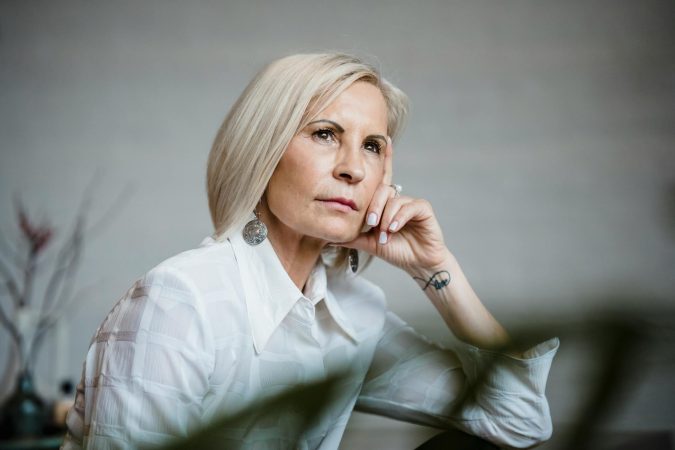
These seemingly selfless habits that come so naturally to compassionate women—from moderating emotions to volunteering for thankless tasks—might actually be the very behaviors keeping their true worth hidden in plain sight.

Add VegOut to your Google News feed. 
Have you ever noticed how the kindest women in your life often seem to get the least recognition?
I've been thinking about this a lot lately, especially after watching a colleague of mine spend her lunch break helping another department with their project crisis, only to have her own contributions glossed over in the afternoon meeting. She's one of those genuinely good-hearted people who makes everyone's day better, yet somehow she's consistently overlooked when opportunities arise.
This got me digging into the psychology behind it, and what I found was both validating and frustrating. Research shows that genuinely kind women often display certain behaviors that, while coming from a place of authentic caring, can inadvertently lead to being undervalued. The kicker? Most of us don't even realize we're doing these things.
After nearly two decades in the corporate world before I switched to writing, I've seen this pattern play out countless times. Let me share what psychology tells us about these behaviors, because recognizing them is the first step to changing how we're perceived and valued.
1. They downplay their emotions to avoid being labeled "too emotional"
Ever catch yourself swallowing your frustration in a meeting or forcing a smile when you're actually upset? You're not alone.
Catherine Aponte, Psy.D., a clinical psychologist, points out that "Women have been labeled emotional since the 19th century." This historical baggage means many of us have learned to suppress our genuine emotional responses to avoid confirming stereotypes.
The problem is, when we constantly moderate our emotions, we end up seeming less authentic. People might appreciate our steadiness, but they miss out on our full humanity. Our valid concerns get buried under this performance of emotional neutrality, and our passionate ideas lose their fire.
I learned this the hard way when I was passed over for promotion twice in my analyst days. Looking back, I realized I'd been so focused on appearing rational and level-headed that I never showed the genuine enthusiasm and conviction that my male colleagues freely displayed.
2. They ask fewer questions in group settings
Research involving over 600 academics across 20 countries revealed something striking: women ask fewer questions than men during academic seminars. The reasons include both internal factors like lack of confidence and structural factors like receiving fewer opportunities to speak.
Think about your last work meeting or social gathering. Did you hold back a question because you worried it might sound stupid? Did you wait for the "perfect" moment that never came?
Kind women often prioritize not disrupting the flow or taking up too much space. We tell ourselves we're being considerate, but what we're really doing is making ourselves invisible. Our curiosity and insights stay locked away, and others miss the chance to see our engagement and intelligence.
3. They take on emotional labor without being asked
Who organizes the office birthday cards? Who notices when someone seems down and checks in? Who smooths over tensions after a heated discussion?
Ekua Hagan, a psychologist, observes that "Women are often expected—without being told—to regulate the room's emotions." This invisible work takes tremendous energy and skill, yet it rarely shows up in performance reviews or promotion considerations.
The tricky part is that this comes so naturally to many genuinely kind women that we don't even recognize it as labor. We just think we're being good colleagues or friends. Meanwhile, we're exhausting ourselves managing everyone else's emotional landscape while our actual job responsibilities compete for whatever energy is left.
4. They volunteer for tasks that won't advance their careers
Research indicates that women are more likely to volunteer for low-promotability tasks, and that positive social recognition can help close the gender gap in volunteering for such tasks. But here's the catch: that social recognition rarely translates to career advancement.
You know these tasks. Planning the office party. Taking meeting notes. Onboarding new team members. Training the intern. All important work that keeps things running smoothly, but none of it showcases your strategic thinking or leadership potential.
I used to be the first to raise my hand for these things, thinking I was being helpful and showing initiative. What I was actually doing was filling my plate with work that kept me too busy to pursue high-visibility projects that could have showcased my real capabilities.
5. They prioritize collaborative success over individual recognition
Lawrence Pfaff, a human resource consultant, notes that "Women are considered better managers than men, thanks to their collaborative skills on the job." Yet this strength can become a weakness when it comes to being valued.
When you consistently use "we" instead of "I" when discussing achievements, people might appreciate your team spirit, but they won't remember your individual contributions. Your kindness in sharing credit means others might not realize you were the driving force behind successful projects.
6. They avoid necessary confrontations
Ron Ashkenas and Gali Cooks put it perfectly: "Kindness builds trust. But confusing kindness with avoiding discomfort can erode performance, drain morale, and stall your organization."
Genuinely kind women often mistake confrontation for cruelty. We let small issues slide, thinking we're being understanding, until they snowball into bigger problems. We accept less than we deserve because we don't want to seem demanding. We tolerate behavior we shouldn't because we're trying to keep the peace.
This avoidance doesn't just hurt us individually. It prevents necessary changes from happening and allows problematic patterns to continue unchecked.
7. They instinctively put others' needs first
A meta-analysis of 22 studies found that women are intuitively more altruistic than men, even when they identify with traditionally masculine traits such as power and independence. This instinctive generosity is beautiful, but it can lead to chronic self-neglect.
Do you eat lunch at your desk so you can help a colleague? Stay late to fix someone else's mistake? Say yes to favors when you're already overwhelmed?
Vanessa Lancaster, a psychologist, reminds us that "Kindness has positive, pro-social benefits for givers and receivers." But when the giving becomes unbalanced, the giver gets depleted while everyone else thrives.
8. They struggle to advocate for themselves with the same passion they advocate for others
Have you ever noticed how much easier it is to fight for a friend's raise than your own? Or how clearly you can see when someone else is being mistreated, but you rationalize away your own similar experiences?
Devon Frye, a psychologist, explains that "Women have less power in the workplace because they must first gain status." But gaining status requires self-advocacy, something that feels uncomfortable for women conditioned to be selfless.
I spent years in finance being able to spot undervalued assets in seconds, yet I couldn't see my own undervaluation until much later. My analytical mind could rationalize away every slight, every passed-over promotion, every unequal treatment. It wasn't until I started treating my career with the same fierce protection I gave my friends that things began to change.
Final thoughts
Recognizing these behaviors in yourself isn't about becoming less kind. Your genuine kindness is a strength, not a weakness. What needs to change is how you channel that kindness to include yourself in its circle of care.
Start small. Ask one question in your next meeting. Take credit for one thing you did well today. Say no to one low-value task. Set one boundary that honors your needs.
The world needs genuinely kind women who are also genuinely valued. That starts with us valuing ourselves enough to ensure our kindness doesn't come at the cost of our own recognition and advancement. Because when kind women are properly valued, everyone benefits from the compassion, insight, and collaborative spirit we bring to the table.
If You Were a Healing Herb, Which Would You Be?
Each herb holds a unique kind of magic — soothing, awakening, grounding, or clarifying.
This 9-question quiz reveals the healing plant that mirrors your energy right now and what it says about your natural rhythm.
✨ Instant results. Deeply insightful.

Avery White
Formerly a financial analyst, Avery translates complex research into clear, informative narratives. Her evidence-based approach provides readers with reliable insights, presented with clarity and warmth. Outside of work, Avery enjoys trail running, gardening, and volunteering at local farmers’ markets.
More Articles by Avery










