In a world where we reflexively reach for our phones the moment discomfort strikes, a growing body of research reveals that our obsession with instant answers and constant validation has robbed us of humanity's most essential survival skill.

Add VegOut to your Google News feed. 
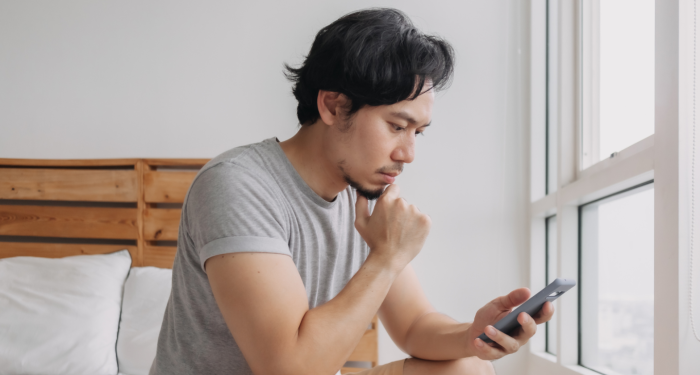
When I was scrolling through my phone last night, waiting for my daughter to fall back asleep, I caught myself doing something I've done a thousand times before. The moment I felt that familiar twinge of anxiety about a work deadline, I immediately opened three different apps, texted a friend for advice, and started Googling "how to handle work stress" at 2 AM.
Sound familiar?
We've become masters at avoiding uncertainty. The second we feel that uncomfortable sensation of not knowing, we reach for our phones, seek reassurance from others, or frantically search for answers that might not even exist.
But here's what I've been learning: Dr. Michael Lee, a psychiatrist, puts it perfectly: "The rarest mental strength today isn't resilience or grit — it's the ability to sit with uncertainty without immediately seeking distraction, explanation, or someone else's opinion."
Think about that for a second. We celebrate grit. We admire resilience. But when was the last time someone praised you for simply sitting with not knowing?
Why we're terrible at handling uncertainty
Back in my warehouse days, shifting TVs in Melbourne, I had plenty of time to think. And what struck me was how desperately I needed to know what came next. Was this temporary? Should I be doing something else? The uncertainty was killing me.
Dr. Sarah Chen, a clinical psychologist specializing in anxiety disorders, explains why: "Our brains are wired to seek certainty as a survival mechanism, but modern technology has hijacked this instinct. Instead of learning to tolerate uncertainty, we've created endless ways to avoid it."
We've built a world where answers are always at our fingertips. Don't know something? Google it. Feeling anxious? Text someone. Uncertain about a decision? Poll your Instagram followers.
Research backs this up. A study found that individuals with higher intolerance of uncertainty tend to engage in excessive information-seeking behaviors to reduce uncertainty, which can be maladaptive and associated with anxiety disorders.
The problem? Life is inherently uncertain. And the more we avoid sitting with that truth, the weaker this mental muscle becomes.
The hidden cost of constant certainty-seeking
Remember when we used to just wonder about things? When a random question would pop into your head and you'd actually let it marinate for a while?
Now, the moment uncertainty strikes, we're conditioned to eliminate it immediately. But this constant need for answers comes with a price.
Research demonstrated that individuals with higher intolerance of uncertainty are more susceptible to social influence in risky choices, suggesting that internal uncertainty can increase susceptibility to external opinions.
In other words, when we can't sit with uncertainty, we become more likely to let others think for us. We outsource our decision-making to the crowd, to experts, to anyone who seems more certain than we feel.
I see this everywhere. People asking social media what they should eat for dinner. Crowdsourcing relationship advice from strangers. Needing constant validation that they're making the "right" choice.
Learning to sit in the unknown
Pema Chödrön, a Buddhist nun and author, offers this wisdom: "Letting there be room for not knowing is the most important thing of all. We try to do what we think is going to work rather than what actually might work. Without giving up hope—that there's somewhere better to be, that there's someone better to be—we will never relax with where we are or who we are."
This hit me hard when I first read it in my book Hidden Secrets of Buddhism: How To Live With Maximum Impact and Minimum Ego. The constant search for certainty is actually a rejection of the present moment.
So how do we develop this rare mental strength?
Start small. Next time you feel uncertain about something, try this: Set a timer for five minutes. Just five. Sit with the feeling without reaching for your phone, without asking someone's opinion, without Googling the answer.
Notice what happens. The discomfort will rise, peak, and then... it'll pass. You'll realize that uncertainty won't kill you. In fact, you might even find a strange peace in not knowing.
The mindfulness connection
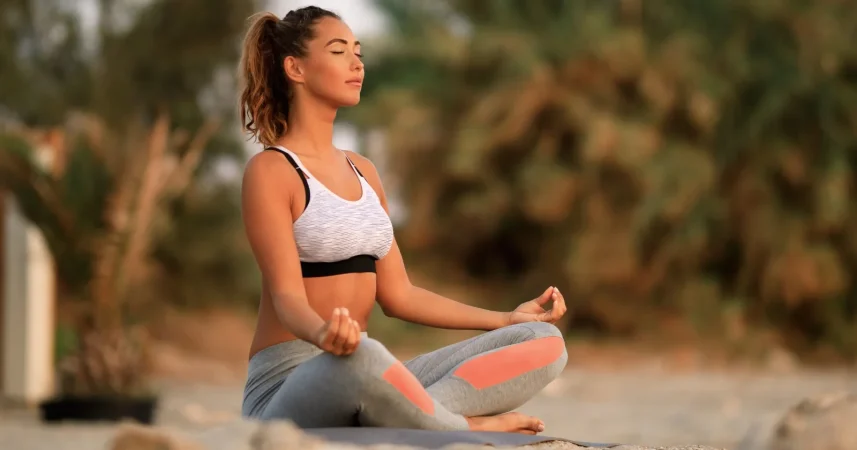
During my anxious twenties, when my mind was constantly racing between past regrets and future worries, I discovered something that changed everything: mindfulness meditation.
Dr. Emily Johnson, a mindfulness expert, notes that "Mindfulness practices can help individuals develop the ability to sit with uncertainty without immediately seeking distraction, explanation, or someone else's opinion."
What does this look like in practice? It's simpler than you might think.
When uncertainty arises — maybe you're waiting for test results, or wondering if you made the right career move — instead of immediately seeking distraction, you pause. You notice the physical sensations in your body. The tightness in your chest. The restlessness in your legs.
You don't try to fix it or explain it away. You just observe it, like watching clouds pass in the sky.
Some days, I meditate for 30 minutes. Other days, just five. But the practice has taught me something crucial: uncertainty is just another sensation, another experience to witness rather than immediately escape.
Building your uncertainty tolerance
Research indicates that greater tolerance of uncertainty enables individuals to appraise uncertain situations as challenges rather than threats, leading to better stress management and overall well-being.
This shift in perspective changes everything. When you can see uncertainty as a challenge rather than a threat, you stop running from it. You start to get curious about it.
Here's what's been working for me:
Practice deliberate uncertainty. Leave some questions unanswered for a day. Wonder about something without immediately satisfying your curiosity.
When someone asks for your opinion, pause before answering. Sit with "I don't know" for a moment before forming a response.
Notice your impulse to fill silence in conversations. What if you just let the pause hang there?
Create phone-free uncertainty zones. When you're waiting in line, sitting in traffic, or lying awake at night, resist the urge to grab your device. Let your mind wander without a destination.
Final words
Voltaire, the French philosopher, once said: "Uncertainty is an uncomfortable position. But certainty is an absurd one."
The truth is, we're living in an uncertain world while pretending we have control. We scroll through curated feeds, seek constant validation, and Google our way through life, all to avoid the simple fact that we don't know what comes next.
But maybe that's okay. Maybe the real strength isn't in having all the answers, but in being okay with having questions.
Since becoming a father, I've realized how much of parenting is sitting with uncertainty. Will she sleep tonight? Is this normal? Am I doing this right? There's no app that can tell me if I'm being a good dad. No amount of Googling will guarantee I'm making the right choices.
And that's taught me something profound: The ability to sit with uncertainty isn't just a nice-to-have skill. It's essential for living a real, authentic life.
So here's my challenge to you: Pick one moment today where you feel uncertain. Just one. And instead of immediately reaching for distraction, explanation, or someone else's opinion, just sit with it. Feel it. Let it be there.
You might discover that in the space between question and answer, between knowing and not knowing, there's a strange kind of freedom.
After all, isn't that where life actually happens? In the uncertain spaces between what was and what might be?