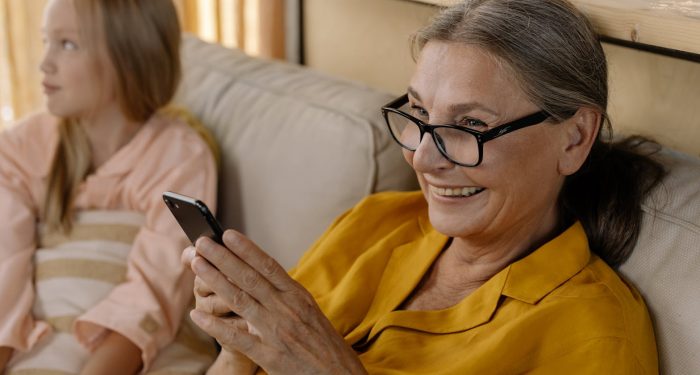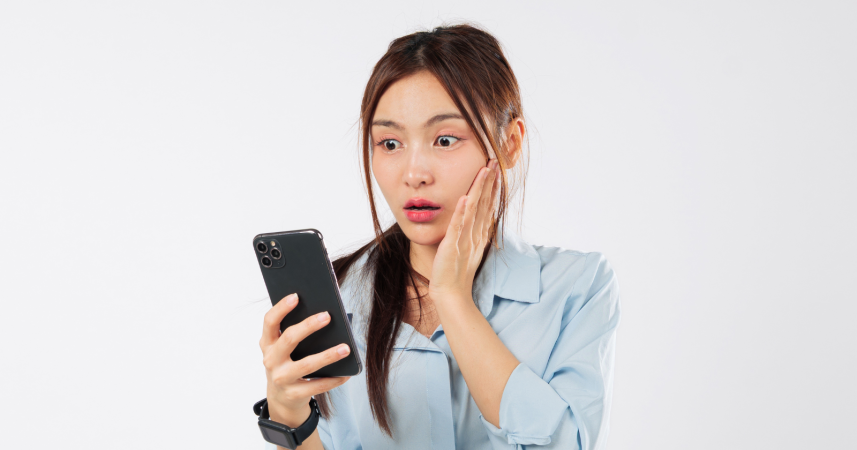
While extroverts flood feeds with daily updates, psychology reveals that silent scrollers—those who watch everyone's lives but share nothing of their own—possess a fascinating mix of traits from analytical brilliance to deep-seated fears that shape their entire approach to human connection.

Add VegOut to your Google News feed. 
Ever notice how some people are always scrolling through Instagram stories, double-tapping every post, but their own profile is practically a ghost town?
I've been fascinated by this behavior for years. These digital observers consume everyone else's highlight reels while keeping their own lives under wraps. And after diving into the psychology behind it, I've discovered there's actually a lot going on beneath the surface.
Growing up as the quieter brother, I was always more comfortable observing than being the center of attention. Maybe that's why I relate to these social media lurkers. But my psychology background has taught me that this behavior often reveals deeper personality traits that shape how we interact with the world.
Let's explore what psychology tells us about people who watch but don't share.
1. They tend to be more introverted
This one might seem obvious, but there's more to it than you'd think.
Dr. Jennifer Golbeck, Professor of Computer Science at the University of Maryland, notes that "People who are more passive on social media may be more introverted or have lower self-esteem."
But here's what I find interesting: being introverted doesn't mean they're not interested in others' lives. They're just processing social information differently. While extroverts might share their morning coffee routine, introverts are quietly taking in everyone else's experiences, learning and observing without feeling the need to contribute to the noise.
Think about it. When you're introverted, social media becomes the perfect observation deck. You get all the social information without the draining interaction.
2. They display higher neuroticism
Here's something that surprised me when I first came across it.
A meta-analysis published in Current Psychology found that higher levels of neuroticism and lower levels of conscientiousness, openness, and agreeableness are associated with problematic social media use.
What does this mean for our silent scrollers? They might be more prone to anxiety and emotional instability. Watching others' lives provides a safe distance from potential judgment or criticism that comes with sharing your own content.
In my book "Hidden Secrets of Buddhism: How To Live With Maximum Impact and Minimum Ego", I explore how fear often keeps us from authentic expression. These digital wallflowers might be protecting themselves from the vulnerability that comes with putting yourself out there.
3. They struggle with self-disclosure
You know that friend who knows everything about everyone but rarely shares anything personal? They're probably the same on social media.
An International Journal of Communication study found that passive social media use, or 'lurking,' is negatively associated with self-disclosure, suggesting that individuals who observe others' posts without sharing their own may be less likely to reveal personal information online.
This isn't just about being private. It's about a fundamental discomfort with vulnerability. Sharing your life online requires a certain level of trust in your audience, and these individuals might not have developed that trust.
4. They avoid intimate connections
This trait really resonated with me when I discovered it.
Gwendolyn Seidman, Ph.D., Associate Professor of Psychology at Michigan State University, found that "People high in intimacy avoidance were more likely to interact with celebrities on social media, thus choosing a social situation where intimate connections are impossible."
Think about what this means. By only observing and not sharing, they're creating a one-way mirror. They can feel connected to others without the risk of real intimacy. It's like being at a party but standing in the corner, listening to conversations without joining in.
5. They experience increased loneliness
Here's the paradox that breaks my heart a little.
Research from Baylor University indicates that both passive and active social media use are linked to increased feelings of loneliness over time, implying that individuals who frequently observe others' lives without sharing their own may experience heightened loneliness.
They're seeking connection through observation, but the very act of staying silent keeps them disconnected. It's like pressing your face against the window of a warm house while standing in the cold.
I've been there myself. Scrolling through friends' adventures while sitting alone, feeling more isolated with each swipe.
6. They're highly analytical
Not all traits are negative though. Silent observers often possess incredible analytical skills.
They're the ones who notice patterns in people's behavior, remember details others forget, and can read between the lines of every post. Without the distraction of crafting their own content, they become expert people-watchers.
In Buddhism, there's value in being the observer. My book "Hidden Secrets of Buddhism" explores how stepping back from ego-driven sharing can actually lead to deeper understanding. These quiet scrollers might be onto something.
7. They crave control
Davia Sills, a psychologist, points out that "Social media has profoundly altered the relationship between individuals and media by making media consumption a dynamic process rather than a passive one."
But for our silent observers, they're choosing to keep it passive. By not sharing, they maintain complete control over their narrative. No awkward photos tagged by friends, no posts that might be misinterpreted, no digital footprint they might regret later.
It's the ultimate form of image management: having no image at all.
8. They show narcissistic tendencies
This might sound contradictory, but hear me out.
W. Keith Campbell, Psychologist at the University of Georgia, notes that "Social media platforms are perfect hotbeds for the self-absorbed."
Some silent observers might actually be so concerned with their image that they'd rather share nothing than risk sharing something imperfect. They're protecting their ego by never putting it on the line.
It's narcissism through absence. They believe their standards are so high that nothing they could share would meet them.
9. They're influenced by neurobiological triggers
Finally, there's something deeper at play here.
Pamela Cantor, M.D., a child and adolescent psychiatrist, explains that "Social media triggers biological circuits in the brain, and the people who invented it know this neurobiology well."
Silent scrollers are still getting dopamine hits from observing others, but they've found a way to get the reward without the risk. Their brains are wired to seek social information, and passive consumption satisfies this need without triggering the anxiety that comes with sharing.
Final words
Understanding these traits isn't about judging the silent scrollers among us. We all have our own ways of navigating the digital world, and there's no right or wrong approach.
What matters is awareness. If you recognize yourself in these traits, ask yourself whether your social media habits are serving you or holding you back. Are you protecting yourself, or are you missing out on genuine connections?
Sometimes the most profound growth comes from stepping out of the shadows, even if it's just sharing a simple photo or thought. After all, relationship quality is the single biggest predictor of life satisfaction, and relationships require some level of mutual sharing.
The digital world is here to stay. How we choose to exist within it shapes not just our online presence, but our real-world connections too.