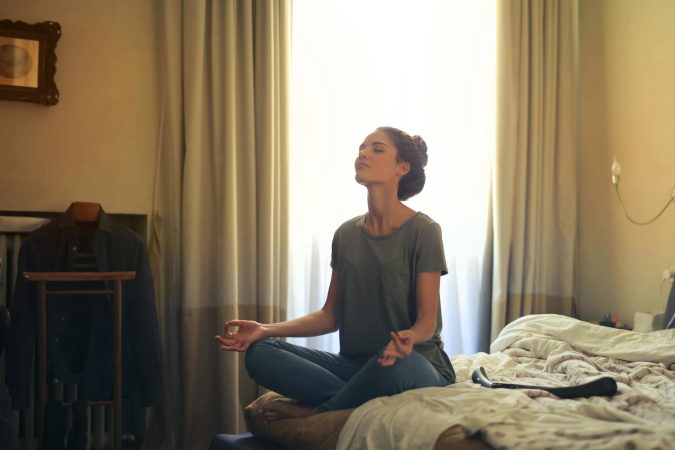
After a decade of morning meditation, I discovered that beneath my "driven personality" was just anxiety masquerading as ambition, and the real terror wasn't slowing down — it was realizing I'd built my entire identity around running from myself.

Add VegOut to your Google News feed. 
Ten years ago, I couldn't sit still for five minutes without feeling like I was wasting time. Every quiet moment felt like a missed opportunity to check something off my endless to-do list.
Now, after a decade of morning meditation, I've discovered something that most mindfulness gurus don't mention. Sure, meditation makes you calmer. That's the promise everyone sells. But here's what they don't tell you: it also strips away the comforting illusions you've built about yourself.
The most uncomfortable revelation? Realizing that what I called my "driven personality" was mostly just anxiety wearing a three-piece suit.
The productivity mask starts to slip
For years, I wore my constant busyness like a badge of honor. Fourteen-hour workdays? Just part of being ambitious. Never taking breaks? That's what successful people do, right?
When I started meditating in my late twenties, I expected to become this zen master who could handle even more work with less stress. Instead, something stranger happened. I started noticing the physical sensations that came with my "productivity" – the tight chest, the clenched jaw, the racing thoughts disguised as planning.
Jason N. Linder, Psy.D., LMFT, puts it perfectly: "Mindfulness is the practice of observing, discovering, and letting things be as they are; it's actually doing less than this all-too-usual default mode of being busy and constantly productive."
That hit me like a ton of bricks. My default mode wasn't productivity – it was anxiety pretending to be productivity.
When stillness becomes a mirror
Here's what happens when you sit quietly every morning for years: you can't hide from yourself anymore. In the silence, without the distraction of constant doing, you start to see the machinery behind your thoughts.
I discovered that my perfectionism wasn't a virtue – it was a prison. Every task had to be done immediately and flawlessly because somewhere deep down, I believed that if I stopped moving, stopped achieving, I'd somehow cease to exist. Or worse, people would realize I wasn't as capable as I pretended to be.
The meditation cushion became like a truth serum. All those moments I thought I was being strategic and thoughtful? Often just anxiety spiraling into overthinking. The times I prided myself on anticipating problems? Usually just worry dressed up as preparation.
The uncomfortable awakening
Research published in Consciousness and Cognition found that just 10 minutes of daily meditation can help reduce episodes of mind wandering, especially for individuals with high levels of emotional stress.
But here's what that research doesn't capture: when your mind stops wandering, you're left face-to-face with what's actually there. And sometimes, what's there is the realization that you've been running from yourself for decades.
I remember one morning, about three years into my practice, when it really hit me. I was sitting there, watching my breath, when a thought popped up about a work project. Instead of following the thought like usual, I just observed it. And I noticed something fascinating – the thought came with this whole package of physical tension, like my body was preparing for battle over an email that didn't even exist yet.
That's when I understood: my anxiety had been cosplaying as ambition for so long that I couldn't tell them apart anymore.
Rebuilding from awareness
Once you see it, you can't unsee it. Every time I'd feel that familiar surge of "motivation," I'd recognize the anxiety underneath. Every urgent task that "had to be done right now" revealed itself as fear wearing a productivity costume.
This awareness is deeply uncomfortable at first. It's like finding out your best friend has been lying to you – except the friend is your own mind.
But here's where it gets interesting. Michael Stein, Psy.D., notes that "Mindfulness meditation can be extremely helpful for anxiety." What he doesn't mention is that it helps by first making you excruciatingly aware of just how anxious you actually are.
The real work begins
After the uncomfortable revelations come the real changes. Not the dramatic, overnight transformations that make for good social media posts, but the slow, sometimes painful process of untangling anxiety from identity.
I started noticing patterns. The Sunday night dread wasn't about Monday – it was anxiety. The need to respond to emails immediately wasn't efficiency – it was anxiety. Even my morning routine, which I'd optimized down to the minute, was less about productivity and more about controlling the uncontrollable.
A study using Headspace showed that after three weeks, participants increased their focus by 14% and significantly decreased mind wandering. But what fascinated me more was what happened to my relationship with productivity itself.
I started working less but accomplishing more. Not because meditation gave me superpowers, but because I stopped doing all the anxiety-driven busy work that masqueraded as productivity.
Living with the truth
These days, my meditation practice varies. Sometimes it's five minutes, sometimes thirty. I've learned that consistency matters more than duration. But regardless of how long I sit, I'm always aware of that fundamental truth meditation revealed: so much of what I thought was me was just anxiety in disguise.
Does this mean I've eliminated anxiety from my life? Hardly. But I can see it now. I can feel it arising, recognize it for what it is, and choose whether to act from that place or not.
James Lake, MD, observes that "Regular meditation and mindfulness reduces symptoms of generalized anxiety." True. But it also does something more profound – it shows you who you are when the anxiety quiets down.
And sometimes, that person is quite different from who you thought you were.
Final words
Ten years of morning meditation hasn't made me a productivity guru or an anxiety-free zone of zen. Instead, it's given me something more valuable: the ability to see myself clearly, even when what I see makes me uncomfortable.
The truth is, many of us are walking around with anxiety so deeply woven into our identities that we can't imagine ourselves without it. We mistake our coping mechanisms for personality traits and our fears for ambition.
Meditation doesn't fix this overnight. It's not a magic pill that transforms anxiety into calm. It's more like slowly cleaning a mirror that's been fogged up for years. At first, you might not like what you see. But at least you're finally seeing what's actually there.
And that's when real change becomes possible. Not the kind where you become a different person, but the kind where you finally meet who you've been all along, underneath all that anxious productivity.
If You Were a Healing Herb, Which Would You Be?
Each herb holds a unique kind of magic — soothing, awakening, grounding, or clarifying.
This 9-question quiz reveals the healing plant that mirrors your energy right now and what it says about your natural rhythm.
✨ Instant results. Deeply insightful.

Lachlan Brown
Lachlan Brown is a psychology graduate, mindfulness enthusiast, and the bestselling author of Hidden Secrets of Buddhism: How to Live with Maximum Impact and Minimum Ego. Based between Vietnam and Singapore, Lachlan is passionate about blending Eastern wisdom with modern well-being practices.
As the founder of several digital publications, Lachlan has reached millions with his clear, compassionate writing on self-development, relationships, and conscious living. He believes that conscious choices in how we live and connect with others can create powerful ripple effects.
When he’s not writing or running his media business, you’ll find him riding his bike through the streets of Saigon, practicing Vietnamese with his wife, or enjoying a strong black coffee during his time in Singapore.
More Articles by Lachlan