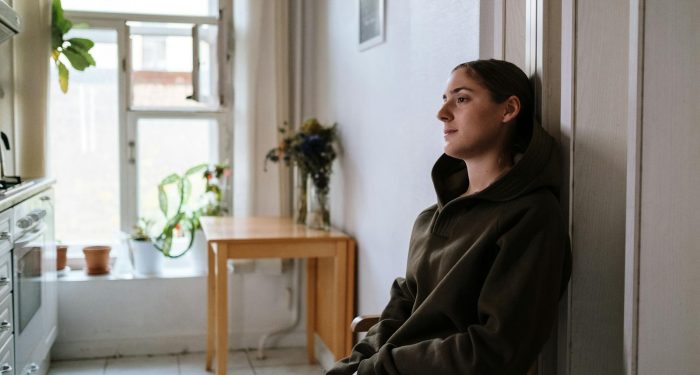
The day my therapist watched me sob uncontrollably over a simple childhood memory, she smiled and said "There you are" — and I realized I hadn't actually felt anything real in ten years.
I spent years believing I'd simply grown up. That the woman who once teared up during insurance commercials had evolved into someone more composed, more rational. Someone better.
The truth? I'd built a fortress so sturdy that even I couldn't recognize it as a prison.
If you've ever caught yourself thinking "I used to be so emotional" with a hint of pride, this might resonate with you. Because sometimes what we call maturity is actually just numbness in disguise.
When feeling less became the goal
Think back to your younger self. Remember how easily moved you were? A sad song on the radio could wreck you. A stranger helping another stranger cross the street could make your chest tight with unexpected joy.
For me, those reactions started fading somewhere in my late twenties. Work got busier. Life got more complicated. And crying at a movie trailer seemed, well, childish.
I wore my emotional distance like a badge of honor. While friends sobbed through romantic comedies, I sat there analyzing plot holes. When colleagues got worked up about office politics, I remained coolly analytical. My background in financial analysis served me well here. Numbers don't make you cry. Spreadsheets don't hurt your feelings.
What I didn't realize was that I'd turned my intellect into armor. Every feeling got filtered through logic first, processed and sanitized until it barely registered as emotion at all.
The stories we tell ourselves
Here's what I told myself: Strong people don't fall apart at Pixar movies. Successful people don't get emotional over small setbacks. Professional women definitely don't cry in meetings.
Sound familiar?
We create these narratives about who we should be, and then we contort ourselves to fit them. I became an expert at this. Achievement after achievement, I climbed higher, worked harder, proved myself again and again. But no amount of external validation ever felt like enough because I wasn't actually feeling any of it.
Psychologist Susan David writes about this phenomenon in her work on emotional agility. She notes that when we judge our emotions as good or bad, we often end up suppressing the "bad" ones entirely. But those emotions don't disappear. They just go underground.
That's exactly what happened to me. For years, I congratulated myself on being above it all. Rational. Steady. Unflappable.
Until I wasn't.
The breakdown that became a breakthrough
At 36, my body decided to override my carefully constructed emotional firewall. What started as exhaustion turned into complete burnout. I couldn't focus. Couldn't sleep. Couldn't even pretend to care about the things that used to drive me.
A friend suggested therapy. I agreed, mostly because I wanted strategies to get back to peak performance. I walked into that first session with a mental list of goals and timelines.
About three sessions in, my therapist asked me a simple question about my childhood. Nothing dramatic, just a gentle inquiry about early memories of joy.
And I broke.
Not a delicate tear or two. I'm talking about the kind of crying that makes your whole body shake, the kind you can't stop even when you try. Years of unfelt feelings came pouring out in that beige office with its too-soft tissues and that universal therapy couch.
My therapist didn't look surprised. She simply said, "There you are."
What emotional numbness actually costs us
When we stop feeling the difficult emotions, we don't just lose the pain. We lose access to the full spectrum of human experience. Joy becomes satisfaction. Love becomes appreciation. Wonder becomes mild interest.
I discovered this the hard way. Once I started letting feelings back in through therapy and, surprisingly, through journaling, everything intensified. Colors seemed brighter. Food tasted better. Connections with people felt deeper and more real.
But it wasn't just about feeling more. It was about understanding that emotions are data, not directives. They tell us what matters to us, what we value, what needs attention. When we shut them down, we're essentially flying blind through our own lives.
Research from neuroscientist Antonio Damasio shows that people with damage to emotional processing centers in the brain struggle to make even simple decisions. Turns out, those pesky feelings we try so hard to avoid are actually essential for navigating life effectively.
The practice of feeling again
Learning to feel again after years of numbness isn't like flipping a switch. It's more like physical therapy after an injury. Slow, sometimes painful, often frustrating.
I started with journaling. At 36, I bought my first notebook, and now, several years later, I've filled 47 of them. Not with profound insights or beautiful prose. Just honest observations about what I was actually experiencing.
"Angry at the grocery store clerk."
"Sad about the rain."
"Inexplicably happy about my morning coffee."
Small stuff. But naming these feelings, acknowledging them without judgment, started to crack open that fortress I'd built.
I also had to learn the difference between feeling emotions and being controlled by them. This is where so many of us get stuck. We think emotional maturity means not having big feelings. Actually, it means having them, acknowledging them, and then choosing how to respond.
Finding your way back
If any of this sounds familiar, know that you're not broken. You're probably just really good at protecting yourself. The same intelligence and strength that helped you build those walls can help you carefully take them down.
Start small. Notice one feeling a day without trying to fix or change it. Watch a movie that used to make you cry and see what happens. Listen to music from your teenage years. Pay attention to those small moments of human kindness that happen everywhere if we're looking.
And consider talking to someone. That gentle suggestion from my friend changed everything because my therapist created a space where feeling wasn't just safe, it was necessary.
The goal isn't to become an emotional mess. It's to become a whole person who can experience the full range of what it means to be human. Because those tears at movies, at songs, at strangers being kind to each other? They're not weakness. They're proof that you're alive, that you're connected, that you care.
These days, I cry at commercials again. Not all of them, but enough. And instead of seeing it as regression, I recognize it as reclamation. Of my humanity. Of my wholeness. Of the parts of myself I thought I'd outgrown but had actually just abandoned.
Turns out, I hadn't matured at all. I'd just gotten really good at hiding. From my feelings, from vulnerability, from the messy, beautiful experience of being fully alive.
And honestly? The real maturity was admitting that.