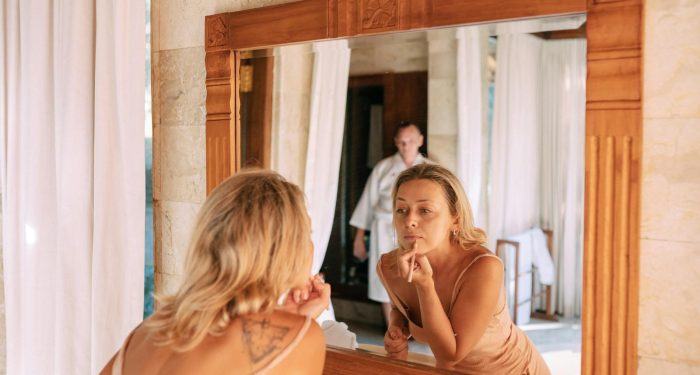
Scientists discovered that magnetic people aren't trying to impress you — they're the ones who stopped rehearsing their words, filtering their reactions, and performing for approval, creating an unexpected pull that carefully curated personalities can never match.
Have you ever wondered why some people just seem to draw others in effortlessly, while the rest of us feel like we're constantly performing?
Last fall, I watched two people introduce themselves at a dinner party within minutes of each other. The first was polished — warm smile, firm handshake, a well-timed joke about the parking situation. The second fumbled her wine glass, laughed at herself, and said something unexpectedly honest about not knowing anyone in the room. By the end of the night, nearly everyone had gravitated toward the second woman. She wasn't more confident or funnier. She just wasn't performing.
Behavioral research backs this up. The quality people most associate with a magnetic personality isn't confidence, humor, or even kindness. It's the sense that the person isn't editing themselves for your approval. They're simply being. And that realization, when I first encountered it, rearranged something in me. For years, I'd been carefully curating my responses, measuring my words, trying to be what I thought others wanted. No wonder genuine connection felt so elusive.
The exhausting art of self-editing
Think about the last conversation you had with someone new. Were you fully present, or were you running a mental checklist? Say something interesting. Don't overshare. Laugh at their jokes. Don't talk too much about yourself.
I spent most of my thirties doing this dance. In meetings at my investment firm job, I'd rehearse my comments three times before speaking. At social gatherings, I'd analyze every interaction afterward, critiquing my performance like a harsh theater reviewer.
The Psychology Today Staff puts it simply: "Authenticity is a bedrock of well-being." Yet most of us are so busy editing ourselves that we've forgotten what authenticity even feels like.
Here's what I've learned: when we constantly filter ourselves through the lens of others' approval, we create a barrier. People sense it. They feel the calculation, the performance, the effort. And while they might appreciate the politeness, they rarely feel truly connected.
Why authenticity feels so risky
If being unedited is so magnetic, why don't we all just do it?
Because it's terrifying.
When I finally left my six-figure salary at 37 to pursue writing, the hardest part wasn't the financial uncertainty. It was explaining my decision without crafting a socially acceptable narrative. "I'm miserable" felt too vulnerable. "I want to follow my passion" sounded cliché. So I created elaborate explanations that sounded reasonable but felt hollow.
Brené Brown captures this perfectly: "The truth is: Belonging starts with self-acceptance." But self-acceptance means owning the messy, imperfect, sometimes illogical parts of ourselves. The parts we've been taught to hide.
Growing up as a "gifted child," I learned early that certain parts of me earned praise while others earned concern. So I amplified the acceptable parts and buried the rest. By my thirties, I was a master editor of my own personality.
The paradox of trying to be likeable
According to research on self-disclosure and self-presentation, sharing personal information actually enhances interpersonal relationships and helps us achieve our social goals. But there's a catch: it has to be genuine.
You know that feeling when someone's trying too hard? When every story seems calculated to impress, every laugh feels forced? We can sense the performance, and it creates distance rather than connection.
I remember sitting in a therapy session at 36 where, for the first time in years, I actually cried. Not the controlled, single-tear crying I'd perfected, but ugly, messy sobbing. My therapist didn't comfort me or try to fix it. She just said, "There you are."
That moment taught me something profound about emotional suppression. All those years of editing my reactions hadn't made me more likeable. They'd made me less real.
Breaking free from the approval trap
Ralph Waldo Emerson wrote, "To be yourself in a world that is constantly trying to make you something else is the greatest accomplishment."
But how do we actually do this in practice?
Start small. Pick one conversation today where you'll resist the urge to edit. Maybe share that weird hobby you usually keep quiet. Express that unpopular opinion you typically swallow. Admit you don't understand something instead of nodding along.
When I started trail running at 28, I was embarrassed to tell people. It seemed too intense, too solitary, not social enough. So I'd say I "exercised" or "went to the gym sometimes." Now I tell people I run 20-30 miles a week through muddy trails, and their genuine curiosity or shared enthusiasm creates connections I never expected.
The vulnerability-intimacy connection
David B. Wexler, Ph.D., explains: "Authenticity breeds the capacity for intimacy. Without the first, the second is almost impossible. And intimacy, in turn, generates authenticity."
This creates a beautiful cycle. The more we show up as ourselves, the deeper our connections become. And the deeper our connections, the safer we feel being ourselves.
I learned that vulnerability isn't the same as being vulnerable to harm. There's a difference between oversharing with strangers and being genuinely open with people who've earned our trust. The key is discernment, not performance.
When being yourself becomes magnetic
A recent study found that self-disclosure, particularly sharing personal information, positively affects how others perceive us in both personal and professional contexts. But here's the crucial part: it works when it's authentic, not strategic.
Psychology Today South Africa notes that "Charisma may get treated as a fixed personality trait, but often people become magnetic through specific, learnable conversational behaviors."
The most powerful of these behaviors? Simply being present and unfiltered.
When you stop editing, something remarkable happens. Your energy shifts. Instead of spending mental bandwidth on self-monitoring, you can actually listen. Instead of crafting responses, you can genuinely respond. People feel the difference immediately.
The unexpected freedom of not performing
Psychology Today Canada observes that "Authenticity is an antidote to feeling invisible and not knowing who you are."
This resonates deeply. All those years of editing myself for others' approval, I'd lost track of who I actually was. What did I really think? What did I genuinely enjoy? What made me laugh when no one was watching?
Unlearning the habit of self-editing is like rebuilding a muscle that's atrophied. It feels awkward at first. You'll overshare sometimes, say the wrong thing occasionally, reveal too much or too little. But gradually, you find your authentic rhythm.
Finding real connection
Here's what nobody tells you about being unedited: it's not about being unfiltered in a reckless way. It's about being thoughtful without being calculated, considerate without performing.
Psychology Today confirms: "People are attracted to authenticity. Finding real love requires emphasizing one's true self."
This applies to all relationships, not just romantic ones. The friends who stick around when you stop performing are the ones worth keeping. The professional connections that deepen when you drop the corporate mask become your real network.
The practice of being unedited
So how do we cultivate this magnetic quality of being unedited?
First, notice when you're performing. Feel the tension in your body when you're crafting a response. Recognize the exhaustion that follows a heavily edited interaction.
Second, experiment with small moments of authenticity. Share a genuine reaction. Express uncertainty. Admit when you're struggling.
Third, pay attention to how people respond. You might be surprised to find that your unedited self is far more magnetic than your polished performance ever was.
Conclusion
The research is clear: people are drawn to those who aren't constantly editing themselves for approval. But knowing this and living it are two different things.
After years of careful curation, I'm still learning to show up unedited. Some days I nail it. Other days I catch myself mid-performance and have to consciously drop the act.
What stays with me, though, is how rarely those magnetic moments arrive on schedule. They don't happen when I'm trying to be authentic. They happen when I've forgotten to try — when something slips out unmonitored and the other person's expression shifts, just slightly, into recognition. It's a small thing. Most of the time, neither person remarks on it. But the conversation changes after that, in ways that are hard to name and impossible to manufacture.
What’s Your Plant-Powered Archetype?
Ever wonder what your everyday habits say about your deeper purpose—and how they ripple out to impact the planet?
This 90-second quiz reveals the plant-powered role you’re here to play, and the tiny shift that makes it even more powerful.
12 fun questions. Instant results. Surprisingly accurate.