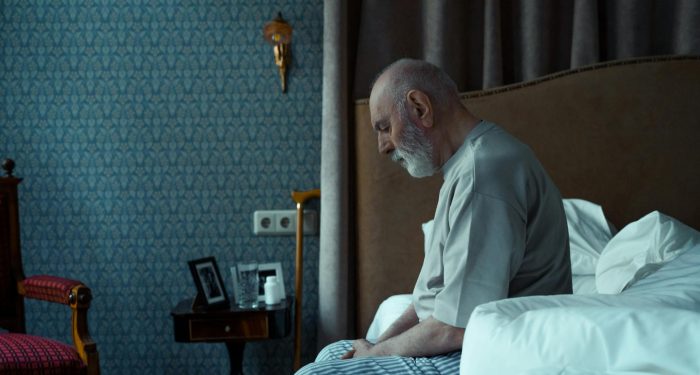
Those who've survived their darkest moments carry secrets that can't be learned from books - truths about strength, suffering, and the surprising freedom found at rock bottom that only reveal themselves after you've been completely broken and somehow pieced yourself back together.

Add VegOut to your Google News feed. 
Life has a way of bringing you to your knees when you least expect it.
I remember sitting on the floor of my tiny apartment in my mid-20s, staring at rejection emails while anxiety gnawed at my chest. Despite doing everything "right" by conventional standards, I felt completely lost. The warehouse job I'd taken to pay bills felt like proof that my education meant nothing, that I'd already peaked and was sliding backward.
If you've ever been through your own version of hell - whether it's loss, failure, trauma, or that soul-crushing feeling of being utterly stuck - you know there are certain truths that only become visible from rock bottom.
Psychology backs this up. Post-traumatic growth is real, and those who've weathered life's worst storms often emerge with insights that can't be taught in any classroom or self-help book.
Here are nine things that only make sense once you've walked through the fire and somehow found your way out the other side.
1. Rock bottom has a strange kind of freedom
When everything falls apart, something unexpected happens. You stop caring about the stuff that used to keep you up at night.
During my warehouse days, I watched my college friends land impressive jobs while I loaded boxes. The shame was crushing at first. But once I accepted where I was, something shifted. When you've already failed by society's standards, you've got nothing left to lose.
Psychologists call this "hitting bottom" phenomenon a form of cognitive liberation. Without the weight of maintaining appearances or meeting expectations, you're finally free to rebuild on your own terms.
The weird part? You might actually miss that clarity once life gets comfortable again.
2. Your mind can be your worst enemy or greatest ally
Here's what nobody tells you about going through hell: your thoughts become louder than ever.
I spent months trapped in mental loops, replaying every mistake, catastrophizing about the future. The anxiety was relentless. But eventually, I learned something crucial - the same mind that can torture you can also save you.
This is where practices from my book "Hidden Secrets of Buddhism: How To Live With Maximum Impact and Minimum Ego" became lifesavers. Meditation wasn't just some wellness trend; it was the difference between drowning and learning to swim in the chaos.
Research shows that people who've experienced significant adversity often develop enhanced metacognition - the ability to observe and regulate their own thinking. You learn to spot destructive thought patterns before they spiral.
3. Most people can't handle your truth
Want to clear a room fast? Start talking honestly about your darkest moments.
After climbing out of my hole, I noticed something strange. Friends who hadn't been through similar experiences would get uncomfortable when I shared what really happened. They'd offer platitudes, change the subject, or worse - try to minimize it with toxic positivity.
Psychologists note that this discomfort stems from people's need to maintain their "just world" beliefs. Hearing about real suffering threatens their sense that bad things only happen for reasons.
You learn to be selective about vulnerability. Not everyone deserves your whole story.
4. Happiness and sadness can exist simultaneously
Before my rough patch, I thought emotions were binary. You were either happy or sad, grateful or bitter, moving forward or stuck.
But trauma teaches you that humans are walking contradictions. You can laugh at a funeral. You can feel profound gratitude while grieving. You can be excited about the future while still carrying scars from the past.
This emotional complexity, what researchers call "mixed emotions" or "emotional granularity," is actually a sign of psychological maturity. People who've been through intense experiences develop a richer emotional vocabulary and greater tolerance for paradox.
5. Small pleasures become profound
Remember when a good cup of coffee was just... coffee?
After you've been through hell, ordinary moments hit different. The morning sun through your window. A text from a friend. A night of decent sleep. These aren't just nice anymore - they're miracles.
Studies on hedonic adaptation show that people who've experienced significant lows develop what's called "gratitude recalibration." Your baseline for what constitutes "good" fundamentally shifts.
The breakfast you can afford, the roof that doesn't leak, the body that still works despite everything you've put it through - these become sources of genuine joy.
6. Strength isn't what you thought it was
Growing up, I thought strength meant never breaking, never asking for help, pushing through no matter what.
Then life knocked me flat, and I learned that real strength looks completely different. Sometimes it's admitting you can't do this alone. Sometimes it's crying in your car before walking into work. Sometimes it's choosing to rest instead of pushing harder.
The concepts I explore in "Hidden Secrets of Buddhism: How To Live With Maximum Impact and Minimum Ego" taught me that true strength often means surrendering control, accepting what is, and moving forward anyway.
Psychology research on resilience confirms this. The strongest people aren't those who never fall - they're those who've learned how to get back up, even if it takes time.
7. You stop fearing the worst-case scenario
Here's a secret that only makes sense after you've survived your worst nightmare: the anticipation is usually worse than the reality.
Before my world fell apart, I was paralyzed by "what-ifs." What if I fail? What if I lose everything? What if people judge me?
Then those things actually happened. And guess what? I survived.
Psychologists call this "anxiety inoculation." Once you've lived through a worst-case scenario, your brain recalibrates its threat detection. You still feel fear, but it doesn't paralyze you the same way.
You know from experience that you can handle more than you think.
8. Time becomes both precious and irrelevant
Going through intense hardship warps your relationship with time in the strangest ways.
On one hand, you become acutely aware of how short life is. You stop putting off important conversations, stop waiting for "someday" to chase what matters.
But simultaneously, you learn that healing doesn't follow any schedule. That rebuilding takes as long as it takes. That some days, just making it to tomorrow is enough.
This dual awareness - urgency paired with patience - is what psychologists observe in many trauma survivors. You learn to move with intention while accepting that some processes can't be rushed.
9. You wouldn't trade it for anything
This might be the hardest truth for people to understand: given the choice, many of us wouldn't erase our darkest chapters.
Don't get me wrong - I wouldn't wish that warehouse period on anyone. The anxiety, the sense of failure, the feeling that I'd wasted my potential... it was brutal.
But that experience forged something in me that comfort never could have. It taught me compassion for others who are struggling. It showed me what actually matters. It gave me the material and insights that I now share with millions of readers.
Post-traumatic growth research confirms this paradox. Many people who've endured significant hardship report that while they wouldn't choose to go through it again, they're grateful for who they became because of it.
Final words
If you're reading this from your own version of hell, know this: the pain you're feeling is real, and it's okay to not be okay. The confusion and darkness aren't signs that you're broken - they're proof that you're human.
And if you've already walked through the fire and come out the other side, you carry a wisdom that can't be taught, only earned. Use it well.
The truth is, we're all walking around with invisible scars and hard-won insights. The people who've been through hell and back aren't special or chosen - we're just humans who got knocked down and somehow found a way to stand back up.
And that possibility exists in all of us, waiting to be discovered when we need it most.
If You Were a Healing Herb, Which Would You Be?
Each herb holds a unique kind of magic — soothing, awakening, grounding, or clarifying.
This 9-question quiz reveals the healing plant that mirrors your energy right now and what it says about your natural rhythm.
✨ Instant results. Deeply insightful.

Lachlan Brown
Lachlan Brown is a psychology graduate, mindfulness enthusiast, and the bestselling author of Hidden Secrets of Buddhism: How to Live with Maximum Impact and Minimum Ego. Based between Vietnam and Singapore, Lachlan is passionate about blending Eastern wisdom with modern well-being practices.
As the founder of several digital publications, Lachlan has reached millions with his clear, compassionate writing on self-development, relationships, and conscious living. He believes that conscious choices in how we live and connect with others can create powerful ripple effects.
When he’s not writing or running his media business, you’ll find him riding his bike through the streets of Saigon, practicing Vietnamese with his wife, or enjoying a strong black coffee during his time in Singapore.
More Articles by Lachlan