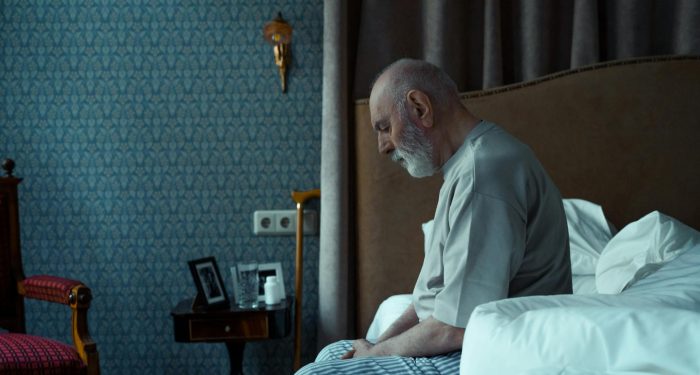
Happiness, it turns out, is often less about what you acquire and more about what you’re willing to release.

Add VegOut to your Google News feed. 
There’s a strange shift that happens as people get older—at least among the ones who age well. I’m not talking about the people who are simply “getting through life.” I’m talking about the older adults who radiate calm, grounded happiness. The kind who seem lighter, freer, and somehow more themselves with every passing year.
Spend time with people like this and you’ll notice something:
Their happiness has far less to do with what they pursue and far more to do with what they’ve stopped chasing.
Younger people often believe the secret to happiness lies in doing more, achieving more, accumulating more. But older people who are genuinely content have quietly let go of many of those obsessions—usually because life taught them that the things they once believed would matter… simply don’t.
Here are nine of those things.
1. They stopped chasing validation from others
Younger people live in an era where everything is rated, commented on, liked, shared, judged. And because of that, the desire for external validation has never been stronger.
But genuinely happy older people have let that entire game go.
They no longer need approval to feel worthy. They no longer shape their lives around what others might think. They’re not performing for friends, colleagues, or strangers on the internet.
They’ve learned—sometimes painfully—that validation evaporates as quickly as it arrives.
Real confidence comes from self-respect, not applause.
Younger generations chase visibility.
Older happy people chase authenticity.
And authenticity wins every single time.
2. They stopped obsessing over what everyone else is doing
Comparison is a kind of emotional poison.
Younger people are exposed to it constantly—on social media, in career paths, in lifestyle expectations. Someone else is always doing better, earning more, traveling more, or achieving milestones faster.
But older people who have found peace no longer measure their lives against anyone else’s.
They aren’t competing.
They aren’t comparing.
They aren’t keeping score.
They’ve lived long enough to understand that every life unfolds at its own pace, and most of what looks impressive from the outside doesn’t feel that impressive from the inside anyway.
Their happiness comes from staying in their lane—something many younger people deeply struggle with.
3. They stopped chasing the idea of “being impressive”
For younger adults, there’s huge pressure to be someone—to appear successful, extraordinary, admirable. Titles matter. Achievements matter. Lifestyle presentation matters.
Older people who are genuinely happy have let this go completely.
They’re not trying to be exceptional anymore.
They’re trying to be real.
The pressure to impress is exhausting, and at some point you realize no one is paying as much attention as you think. Life becomes infinitely lighter when you stop living to impress people who aren’t thinking about you in the first place.
Happy older adults choose peace over performance.
Substance over presentation.
Fulfillment over image.
4. They stopped chasing endless productivity
Younger generations were raised in the era of “grind culture”—where your worth is silently measured by how busy you are and how hard you hustle.
But older people who feel genuinely content have learned that constant productivity is not a path to happiness. In fact, it often steals happiness.
They’ve replaced:
-
multitasking, with presence
-
rushing, with pacing
-
burnout, with boundaries
They’re no longer impressed by busyness.
They’re impressed by a life that feels lived—slow mornings, meaningful conversations, small rituals, hobbies that aren’t monetized.
They know something younger people often miss:
You can be productive and empty at the same time.
5. They stopped chasing “more”—more money, more stuff, more status
Younger people often believe happiness lies in accumulating more—more income, more assets, more lifestyle upgrades. And there’s nothing wrong with ambition.
But older people who are genuinely happy have discovered that “more” eventually stops adding value.
They’re not chasing the next purchase or the next upgrade.
They know that material things provide ease, not joy. Comfort, not meaning.
They’ve simplified, pared down, and focused on what they actually use and love.
And in that simplicity, they became freer.
Happiness expands when your needs shrink.
6. They stopped trying to control everything
Younger adults often feel they need to manage every outcome:
-
relationships
-
careers
-
health
-
timing
-
other people’s opinions
-
future plans
But older people who have made peace with life know control is mostly an illusion.
They’ve lived long enough to experience the unpredictability of illness, loss, unexpected opportunities, and unexpected joys. They’ve learned that life does not follow a script—and trying to force it to only creates anxiety.
So instead of control, they choose flexibility.
Instead of rigidity, they choose acceptance.
Instead of clinging, they choose adjusting.
And this shift releases a massive amount of mental tension.
Happiness often begins where control ends.
7. They stopped chasing relationships that drain them
Younger people often stay in friendships, partnerships, or social circles out of fear—fear of loneliness, fear of missing out, fear of conflict, fear of disappointing others.
Older people who are truly content have no time for that anymore.
They’re done with:
-
one-sided relationships
-
drama
-
people who never reciprocate
-
friendships based on convenience, not connection
-
partners who drain instead of uplift
They don’t chase people.
They don’t beg for closeness.
They don’t feel guilty about stepping back from relationships that no longer fit.
They prioritize peace over proximity.
And their emotional world becomes healthier because of it.
8. They stopped obsessing over youth and appearance
Younger generations live in a hyper-visual culture where looking young is treated like an achievement and aging is something to fight.
But the happiest older adults know a secret younger people haven’t figured out yet:
Aging is not the enemy.
Insecurity is.
Instead of obsessing over wrinkles, weight, or physical “decline,” they embrace the freedom that comes with aging:
-
less pressure to be perfect
-
less comparison
-
more self-acceptance
-
more appreciation for health and mobility
-
a deeper relationship with who they are, not how they look
Younger people chase beauty.
Older happy people chase vitality, presence, and gratitude.
And it shows.
9. They stopped chasing life according to a timeline
Many younger people torture themselves with imaginary timelines:
“I should be married by now.”
“I should own a house by now.”
“I should be more successful by this age.”
“I should have my life figured out.”
Older happy people laugh at this idea—they know life rarely unfolds the way you think it will.
They’ve seen jobs lost, careers changed, relationships end and begin, financial ups and downs, unexpected luck, unexpected challenges, and paths that shifted completely.
They no longer believe life is a race.
Or a checklist.
Or a straight line.
They live by cycles, not schedules.
By seasons, not deadlines.
And that mindset—loose, flexible, forgiving—is the root of their calm.
Final Thoughts
Genuinely happy older people aren’t floating through life in some enlightened state. They’ve simply learned, through decades of trial and error, to let go of the things that make life heavier.
They’ve stopped chasing:
-
validation
-
comparison
-
impressiveness
-
constant productivity
-
material excess
-
control
-
draining relationships
-
youth
-
rigid life timelines
And in that letting go, they made room for things younger generations often overlook:
Peace.
Presence.
Gratitude.
Depth.
Connection.
Self-respect.
And a life that feels like their own.
Happiness, it turns out, is often less about what you acquire and more about what you’re willing to release.
If younger people learned these lessons earlier, their lives might feel a lot lighter. But the beauty is: it’s never too early—or too late—to stop chasing the wrong things.
What’s Your Plant-Powered Archetype?
Ever wonder what your everyday habits say about your deeper purpose—and how they ripple out to impact the planet?
This 90-second quiz reveals the plant-powered role you’re here to play, and the tiny shift that makes it even more powerful.
12 fun questions. Instant results. Surprisingly accurate.