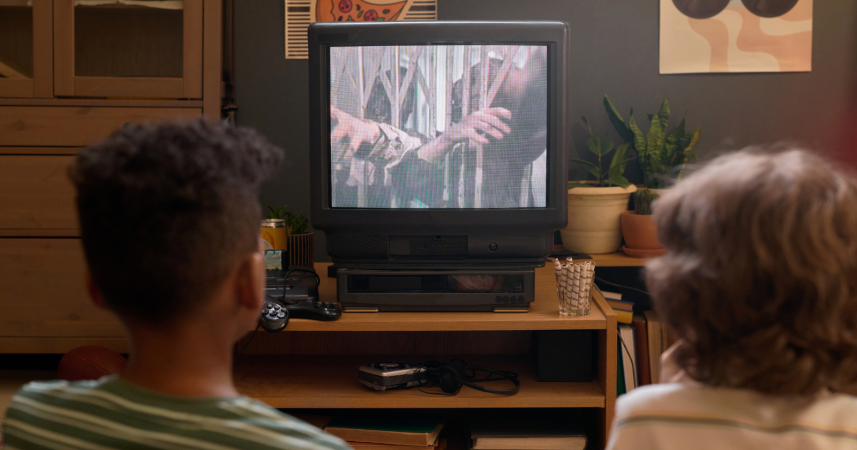
These eight shows didn’t just entertain—they planted seeds of curiosity, empathy, and wonder. They blurred the line between fun and education in ways schools rarely did.

Add VegOut to your Google News feed. 
School gave us multiplication tables, history dates, and the occasional frog dissection. But if you were a kid in the 80s, 90s, or even early 2000s, television sometimes snuck in lessons that stuck with you longer than anything you learned at a chalkboard.
These weren’t “educational programs” in the strict PBS sense (though a few of those are here too). They were shows you watched for fun, only to realize years later that you actually learned something—about science, problem-solving, empathy, or even just how to survive middle school.
Here are eight TV shows that accidentally taught kids more than school did.
1) Sesame Street – The ABCs of Life
Yes, it was technically designed as an educational show, but no classroom could compete with the charm of Big Bird, Grover, and Cookie Monster. Kids didn’t just learn letters and numbers—they learned how to share, how to name their feelings, and how to make friends across differences.
While school focused on worksheets, Sesame Street made learning joyful. Even math problems felt different when The Count was laughing maniacally about them.
Many adults admit that the first time they grasped concepts like empathy or diversity wasn’t from a teacher but from watching friends like Elmo and Oscar the Grouch navigate life on the same block.
2) The Magic School Bus – Science Without the Boredom
No disrespect to your 5th-grade science teacher, but Ms. Frizzle made photosynthesis, space travel, and the human digestive system look a thousand times cooler.
With her wild outfits and the shape-shifting school bus, she taught kids to embrace curiosity and never be afraid of “taking chances, making mistakes, and getting messy.”
School gave you diagrams of the solar system. The Magic School Bus let you ride through it. That kind of experiential learning—though animated—left more of an impression than any textbook ever could.
3) Reading Rainbow – The Show That Made Books Magical
If your school library smelled like dust and obligation, Reading Rainbow was the antidote. Hosted by the endlessly warm LeVar Burton, it didn’t just recommend books—it opened a portal into them.
Kids learned that reading wasn’t about homework assignments; it was about imagination, travel, and adventure. And Burton’s gentle encouragement (“But you don’t have to take my word for it…”) taught kids the power of curiosity and choice.
Ask any millennial who grew up with it: this show probably did more to nurture lifelong readers than any mandatory book report.
4) Captain Planet and the Planeteers – Environmental Science 101
Long before “climate change” was a household phrase, Captain Planet was teaching kids about pollution, conservation, and teamwork.
It was a little heavy-handed (those villains really loved dumping sludge into rivers), but the message stuck. Recycling, protecting endangered species, and caring for the earth weren’t just abstract ideas—they were heroic missions.
Plenty of kids learned more about ecosystems, clean energy, and global responsibility from this cartoon than they ever did in science class. And honestly, who didn’t secretly wish they had the “heart” ring?
5) Boy Meets World – Philosophy in a Sitcom
On the surface, Boy Meets World was just another TGIF sitcom. But if you watched closely, it was a masterclass in ethics, relationships, and personal growth.
Mr. Feeny, the wise teacher/neighbor/mentor, gave lessons that went way beyond homework. From integrity to perseverance to navigating heartbreak, his speeches were practically philosophical essays disguised as sitcom monologues.
Kids learned what it meant to wrestle with identity, family, and the messy process of becoming an adult. You probably don’t remember a single line from your middle-school math teacher, but you definitely remember Feeny’s advice.
6) Animaniacs – History, Geography, and Everything in Between
It looked like chaos. Three wacky cartoon characters running around Warner Bros. studios, singing songs and cracking slapstick jokes. But beneath the mayhem, Animaniacs was dropping knowledge.
The infamous “Nations of the World” song taught more geography than some social studies classes. “Yakko’s Universe” was a crash course in astronomy. And countless sketches gave kids sly introductions to politics, art, and literature.
You didn’t always realize you were learning—but years later, when you remembered the lyrics to a song about U.S. presidents, it hit you: this cartoon was smarter than it looked.
7) Bill Nye the Science Guy – Lab Class With a Laugh Track
Bill Nye didn’t just teach science—he performed it. Explosions, goofy sound effects, fast-cut montages: it felt more like MTV than a lecture.
Kids learned about chemistry, physics, and biology without even realizing they were watching “education.” He had a knack for making scientific principles unforgettable, whether it was inertia, static electricity, or climate change.
Plenty of kids walked into high school already armed with a Bill Nye knowledge base—and sometimes knew more than their teachers gave them credit for.
8) Mister Rogers’ Neighborhood – Emotional Intelligence Before It Had a Name
Long before “emotional intelligence” became a corporate buzzword, Fred Rogers was quietly teaching kids how to understand themselves and others.
His calm voice and gentle manner modeled empathy, patience, and kindness. He wasn’t afraid to tackle tough topics—death, divorce, fear—yet always made kids feel safe.
Schools might have taught math and grammar, but Mister Rogers taught kids how to be human. And that lesson was priceless.
Why TV Lessons Stuck More Than School Lessons
Part of what made these shows so effective was their delivery. School often framed learning as obligation; TV framed it as play. A kid who zoned out during geography class could suddenly memorize the capitals of 50 states if it came in the form of a catchy song or cartoon skit.
Television also made lessons emotional. Whether it was Mister Rogers validating feelings, Ms. Frizzle turning science into an adventure, or Captain Planet showing kids the stakes of pollution, emotions anchored the knowledge. Studies show we retain information better when it’s tied to strong feelings—and these shows nailed that formula.
The Unexpected Legacy
Ask adults today, and many will admit they learned core values, problem-solving skills, or basic knowledge from these shows. A surprising number of scientists, writers, and teachers point to Bill Nye or Reading Rainbow as sparks for their careers.
And while critics often claimed TV was “rotting kids’ brains,” these programs prove the opposite. Sometimes, what we learned on the couch was more impactful than what we learned at a desk.
Final Word
These eight shows didn’t just entertain—they planted seeds of curiosity, empathy, and wonder. They blurred the line between fun and education in ways schools rarely did.
So the next time someone tells you kids can’t learn from television, remind them: without Sesame Street, The Magic School Bus, or Reading Rainbow, a whole generation might not have learned to read, love science, or care about the planet.
Turns out, Saturday morning cartoons weren’t just cartoons—they were classrooms with better theme songs.