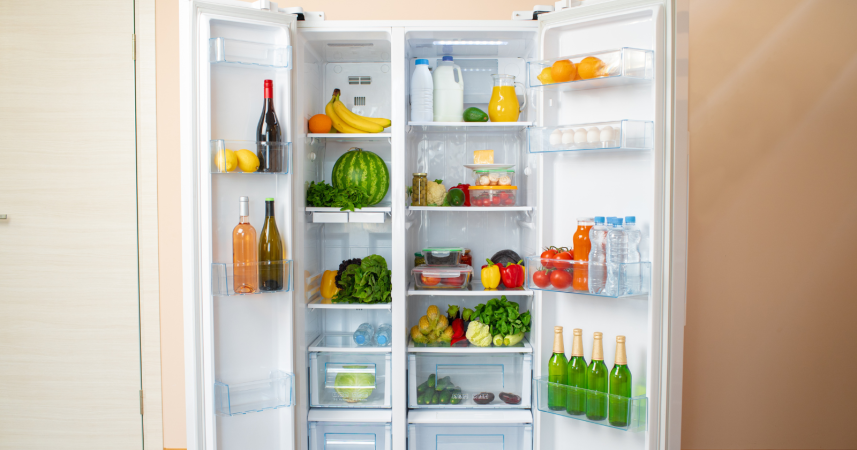
You could tell everything about a family by what was in their fridge — practicality, thrift, and a quiet kind of love that didn’t need fancy packaging.
There’s something deeply nostalgic about opening a fridge from a lower middle class home — not the spotless, influencer-approved fridges of today with color-coded jars and $8 oat milk, but the real ones.
The kind with sauce stains on the door, leftovers in takeaway containers that have lost their labels, and a freezer packed tighter than a suitcase before a family trip.
These fridges weren’t about aesthetics. They were about survival, routine, and the small comforts that made ordinary life feel full.
Growing up, you could learn a lot about a family just by peeking inside their fridge. You’d see what mattered to them, what they could afford, what they stretched, and what they refused to waste.
Here are eight things that seemed to be in every lower middle class fridge — the quiet staples that told the story of working-class life in the most authentic way possible.
1. A half-used bottle of ketchup — and at least one other sauce nearly empty
There was always a bottle of ketchup sitting upside down in the fridge door, balanced precariously so that every last drop could slide toward the cap.
Next to it? A bottle of BBQ sauce, soy sauce, or that mysterious “chilli” sauce someone brought home five years ago and never finished.
Sauces were the great equalizer in lower middle class homes. They made leftovers taste new again, dressed up overcooked meat, and rescued dry sandwiches from despair.
In our house, ketchup wasn’t just a condiment — it was a food group. It went on eggs, sausages, toast, and sometimes, yes, even pasta.
And it wasn’t the fancy kind either. It was the big supermarket brand that came in bulk. Because when you’re feeding a family on a budget, you buy what lasts.
Those half-used bottles weren’t just signs of thrift — they were symbols of resourcefulness. They told you a family knew how to stretch a dollar, one squeeze at a time.
2. Leftovers in mismatched containers
Every lower middle class fridge was a museum of leftovers.
Plastic takeaway containers from two years ago? Check.
Random Tupperware with missing lids? Check.
A casserole dish covered in foil that’s definitely been in there too long? Check.
Nothing went to waste — not last night’s spaghetti, not half a chicken breast, not even the tiniest bit of gravy.
It wasn’t just frugality; it was culture. It was the unspoken rule: “We don’t throw good food away.”
Some nights, “dinner” meant combining whatever was left into a mystery meal. Fried rice with Sunday roast veggies. Toasted sandwiches with yesterday’s mince. My mum used to call it “creative cooking.”
You never complained — because that fridge, messy as it was, represented something precious: effort. Every container meant someone had cooked, planned, saved.
You could feel love in those leftovers — even if sometimes you had to scrape a bit of it off the lid first.
3. Cheap margarine — not butter
In wealthier homes, there was butter. In lower middle class homes, there was margarine.
Usually a bright yellow tub, always half-empty, with a butter knife permanently lodged in it. It went on toast, sandwiches, pancakes, and occasionally, in the frying pan when oil ran out.
It wasn’t about preference. It was about price — and spreadability. Margarine didn’t need to soften. It was ready for action straight from the fridge, even at 6 a.m. on a school morning.
The fancy stuff — the kind wrapped in foil with “salted” embossed on it — was reserved for holidays or when a relative brought it over as part of a cheese platter.
But the margarine tub? That was an everyday staple.
Sometimes, if money was tight, it wasn’t even margarine — it was “table spread,” the unbranded cousin that looked and tasted the same, but cost 40% less.
To this day, I can’t smell that faintly oily, salty scent without thinking of the sound of a kettle boiling and toast popping in a crowded kitchen.
4. Milk that always ran out one day before payday
Milk was a constant. You needed it for tea, cereal, coffee, and kids who still drank it by the glass.
But somehow, it always ran out a day or two before the next grocery trip. There’d be just enough left to make someone angry — not enough for a full bowl of cereal, but too much to justify buying another carton midweek.
You’d tilt the bottle at impossible angles, hoping for one more splash. You’d add water if you were desperate (we all did it once).
For families watching every dollar, milk wasn’t just a drink — it was an economic balancing act.
There was often debate over what kind to buy. Full cream lasted longer, but skim was “healthier.” Long-life milk was a backup, usually tucked away behind the pickles, just in case.
That single bottle sitting on the fridge door represented the rhythm of a household — the small calculations that kept everything running, week to week.
5. Home-brand cheese slices in plastic
If you grew up lower middle class, you know the exact cheese I’m talking about — those perfectly square, bright yellow slices that came individually wrapped in thin plastic.
They weren’t fancy, they weren’t “mature cheddar,” and they definitely weren’t artisanal. But they were everywhere.
Cheese slices went into sandwiches, toasties, burgers, and sometimes straight into a kid’s mouth on the way to school.
You didn’t think about where the cheese came from — or if it was even cheese at all. It just did the job.
The fancier blocks — Colby, Tasty, or (God forbid) Swiss — were special-occasion cheeses. For most families, the pre-sliced kind was quicker, cheaper, and perfect for busy mornings.
And when they melted under the grill, they became something almost luxurious — gooey, golden, and full of nostalgia.
6. A big bottle of orange cordial or off-brand juice
Before cold-pressed juice or green smoothies, there was cordial — the fluorescent, sugary elixir of working-class childhoods.
There was always a giant bottle of orange (or sometimes lime) cordial sitting in the fridge, often half-filled with water because someone had forgotten to screw the lid on tight.
It wasn’t just a drink — it was a budget strategy. A single bottle could last weeks, diluted to stretch every cent.
Some families upgraded to “fruit drink” or “5% juice” versions when they could afford it, but rarely to actual juice. That was reserved for guests or Christmas morning.
I can still remember the sticky rings it left on the fridge shelf, the way it tasted slightly metallic from the tap water, and how it somehow made every hot day feel survivable.
Cordial was comfort — cheap, cheerful, and perfectly working-class.
7. Eggs — the emergency meal that saved the week
Eggs were the ultimate backup plan. When there wasn’t enough money for takeout or enough leftovers to stretch, you could always count on eggs.
Scrambled, fried, or boiled — they were fast, filling, and cheap.
There was always a carton tucked into a corner of the fridge, sometimes with one cracked shell and a little dried yolk underneath.
For lower middle class families, eggs weren’t just breakfast — they were dinner in disguise.
You’d have “breakfast for dinner” nights where everyone pretended it was fun, but deep down knew it was because payday hadn’t arrived yet.
And yet, no one complained. Because eggs meant you were still eating together. They represented resilience — the quiet, everyday kind that keeps families going through tight weeks and unexpected bills.
8. Something sweet, slightly old, but loved anyway
It might’ve been a half-eaten tub of Neapolitan ice cream, a jelly bowl covered in cling wrap, or a forgotten slice of birthday cake — but there was always something sweet in there.
Not fresh-bakery desserts or imported chocolates, but homemade or store-brand treats that carried sentimental weight.
Maybe mum made custard on Sunday and it lasted till Thursday. Maybe dad bought a pack of cream biscuits “for the kids” and ate half himself.
Dessert wasn’t about indulgence. It was about reward — a small joy after a long day.
Those sweets weren’t perfect. The ice cream might’ve been icy, the jelly rubbery, the cream long past its prime. But it didn’t matter. It was love in a bowl.
And somehow, there was always just enough for everyone.
Final reflection: the fridge as a family story
Looking back, those fridges told you everything you needed to know about lower middle class life — the balance between scarcity and abundance, thrift and care.
They weren’t aspirational; they were honest. They held meals made from what was left, not what was ideal.
But they also held warmth. The fridge was where family life converged — kids sneaking cheese slices, parents stretching leftovers, everyone searching for something sweet at night.
You didn’t need brand names to feel rich. You just needed enough — enough food, enough laughter, enough love to fill the spaces between paydays.
And somehow, those humble fridges, cluttered and chaotic as they were, always seemed to have it.
What’s Your Plant-Powered Archetype?
Ever wonder what your everyday habits say about your deeper purpose—and how they ripple out to impact the planet?
This 90-second quiz reveals the plant-powered role you’re here to play, and the tiny shift that makes it even more powerful.
12 fun questions. Instant results. Surprisingly accurate.