As someone who’s spent years observing human behavior through the lens of psychology and mindfulness, I’ve learned that true class isn’t about money or social status. It’s about respect — for yourself, for others, and for the shared space you’re in.
There’s a certain kind of discomfort that comes from sitting near “that table” in a restaurant — the one that turns an otherwise pleasant dining experience into a quiet lesson in how not to behave in public.
We’ve all been there. The loud voices. The snapping fingers. The disregard for the staff or the other guests. What’s fascinating, though, is that many people who come across as classless don’t even realize it. They think they’re being assertive, funny, or relaxed — when in reality, they’re radiating entitlement and insecurity.
As someone who’s spent years observing human behavior through the lens of psychology and mindfulness, I’ve learned that true class isn’t about money or social status. It’s about respect — for yourself, for others, and for the shared space you’re in.
Here are ten things classless people do in restaurants without realizing how they’re perceived by everyone around them.
1. They treat the staff like servants, not people
This one is an instant giveaway.
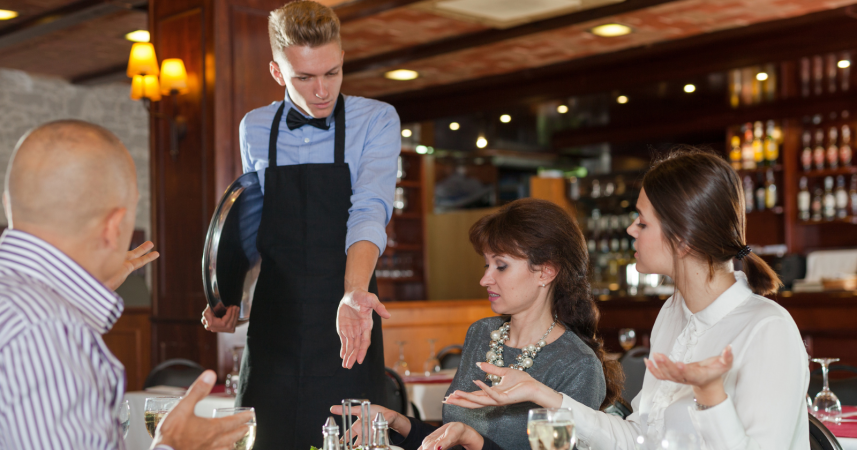
Snapping fingers, barking orders, or ignoring servers entirely reveals far more about your character than your order ever could. Classless people often think being demanding shows confidence — but to everyone watching, it screams insecurity and entitlement.
Classy people, by contrast, understand that kindness to service staff is one of the clearest signs of emotional intelligence. They say “please” and “thank you.” They make eye contact. They recognize effort.
I remember once dining at a beautiful riverside restaurant in Singapore, and watching a man click his fingers for more water like he was summoning a pet. Everyone at the tables nearby cringed. His Rolex didn’t matter; his manners did.
2. They talk so loudly it dominates the entire room
There’s confidence, and then there’s noise pollution.
Some people seem to believe the restaurant is their private stage. They laugh too loud, talk over others, and seem oblivious to how disruptive they are.
Loudness is often mistaken for charisma, but it usually stems from a lack of self-awareness. Genuinely confident people don’t need to fill every silence — they create calm in a room, not chaos.
3. They complain excessively — and about everything
Classless people find fault wherever they go. The food’s too cold. The lighting’s too dim. The music’s too loud. They’ll sigh loudly or criticize the decor as if their words are Yelp reviews waiting to happen.
There’s a difference between calmly mentioning a problem and making it everyone’s problem. Constant complaining not only ruins the experience for others but also reveals a fragile sense of self — one that depends on control and criticism to feel important.
As the Buddha once said, “What we think, we become.” Constant negativity only makes life smaller.
4. They don’t respect the space or the staff’s time
Leaving a mess on the table, dropping napkins on the floor, or wandering around the restaurant like it’s their living room — these small actions speak volumes.
Classless people assume someone else will clean up after them. They see service as servitude. But people who have class see it differently: they see shared responsibility.
After all, no matter how much you’ve paid, the restaurant isn’t your space. It’s a shared experience — and the best diners understand that respect for the environment is respect for everyone in it.
5. They boast loudly about money, work, or status
Nothing says “trying too hard” quite like bragging over dinner.
You’ve probably seen the type — dropping brand names, talking about “my team” or “my investments,” or emphasizing how much they travel or spend. It’s an attempt to impress, but it has the opposite effect.
True class comes from quiet confidence. You can feel it without a word being said.
When I was younger and newly successful online, I caught myself doing this — trying to validate my success through casual mentions of business wins or travel. But over time, I realized the people I respected most rarely talked about themselves at all. They asked questions. They listened. They left others feeling seen.
6. They’re rude or dismissive when something goes wrong
Mistakes happen. Orders get mixed up. Food takes too long.
But how you respond reveals your emotional maturity. Classless people get defensive or sarcastic, often saying things like “Unbelievable,” or “This would never happen where I usually eat.”
Classy people, on the other hand, stay composed. They understand that grace under pressure is the true mark of character.
As psychologist Daniel Goleman notes, emotional intelligence is largely about how we handle frustration — especially when we’re not getting what we want.
7. They treat dining out as a performance, not an experience
For some, eating out isn’t about connection or enjoyment — it’s about being seen.
They’ll stage photos, narrate their meals for social media, or constantly check their phones while ignoring the people across the table.
What they don’t realize is that real sophistication lies in presence. It’s in savoring the food, the company, and the moment.
There’s nothing wrong with sharing your meal online, but when the need for validation overshadows genuine experience, you’re not dining — you’re performing.
8. They overindulge — and make others uncomfortable
Whether it’s drinking too much, eating messily, or acting loud and uninhibited, classless people often cross lines of moderation without realizing it.
Excess doesn’t impress anyone. It signals a lack of self-control.
I once saw a man in Saigon drunkenly trying to flirt with waitstaff at a nice rooftop restaurant — unaware of how embarrassed his friends were. That’s the thing about classlessness: it’s often invisible to the person displaying it but painfully obvious to everyone else.
9. They ignore social cues and make others feel small
Some people dominate the table — interrupting, dismissing others’ opinions, or talking down to anyone they see as “below” them.
This behavior often stems from insecurity disguised as confidence. Classless people try to control conversations; classy people create space for others to shine.
I’ve noticed the most magnetic people I’ve met — from CEOs to monks — have one thing in common: they make you feel important. And that comes from humility, not ego.
10. They tip poorly — or not at all
Nothing defines someone’s character faster than how they handle tipping.
You don’t have to be wealthy to be generous. A good tip isn’t just about money — it’s a silent “thank you” for someone’s effort, time, and care.
Classless people rationalize stinginess (“It’s their job,” “The service wasn’t perfect”). Classy people understand gratitude is never wasted.
I once heard my father say, “How you treat people who don’t have to serve you says everything about who you are.” That stayed with me.
A final reflection: True class is invisible
Here’s the quiet truth: people with genuine class aren’t trying to look classy.
They don’t need to show off. They don’t correct others to feel superior. They don’t treat restaurants as arenas for status games.
Instead, they move through the world with awareness — mindful of how their energy affects others. They elevate spaces simply by being kind, grounded, and self-aware.
When I reflect on my own journey — from working in warehouses in Melbourne to running online businesses and dining in some of the world’s nicest places — I’ve learned that refinement isn’t about wealth. It’s about grace.
And grace, like mindfulness, is something you practice daily — in your tone, your patience, your small acts of kindness.
Because the truth is, class isn’t about what’s on your plate. It’s about what’s in your heart.
If You Were a Healing Herb, Which Would You Be?
Each herb holds a unique kind of magic — soothing, awakening, grounding, or clarifying.
This 9-question quiz reveals the healing plant that mirrors your energy right now and what it says about your natural rhythm.
✨ Instant results. Deeply insightful.