While millions of tourists clutch their guidebooks and snap identical photos, a small group of travelers are unlocking secret doors to authentic experiences using skills that transform awkward outsiders into welcomed guests.
Picture this: You're in a bustling Vietnamese market, confidently haggling in broken phrases you learned from a language app, wearing your best "traveler" outfit complete with cargo shorts and a money belt.
The vendor smiles politely but charges you triple the local price anyway.
Now imagine walking through that same market, exchanging knowing nods with locals, getting invited to try the grandmother's special recipe at a food stall, and leaving with both incredible deals and genuine connections.
The difference? Cultural intelligence.
After living in Southeast Asia for several years and marrying into a Vietnamese family, I've learned that the gap between being a tourist and being a welcomed visitor isn't about perfecting the language or memorizing every custom.
It's about developing a mindset that opens doors instead of closing them.
Whether you're planning a two-week vacation or considering a longer adventure abroad, these nine approaches will transform how you experience new places and connect with the people who call them home.
1) Learn the art of the greeting
Every culture has its own greeting ritual, and nailing this simple interaction sets the tone for everything that follows.
When I first arrived in Vietnam, I thought a wave and "hello" would suffice everywhere. Then I watched my wife greet her elderly neighbor with a slight bow and both hands pressed together. The warmth that simple gesture created was immediate.
Take ten minutes before your trip to research local greetings. In Thailand, it's the wai. In Japan, the depth of your bow matters. In parts of the Middle East, a handshake might only be appropriate between same genders.
These small efforts speak volumes. They say you respect the culture enough to learn its most basic social contract. And locals notice.
2) Dress like you live there, not like you're on safari
Nothing screams "tourist" louder than technical travel gear in a city center. Those zip-off pants and photography vests? Leave them for actual hiking.
I learned this lesson the hard way in Saigon. Decked out in my moisture-wicking everything, I stood out like a neon sign. Meanwhile, locals navigated the same heat in simple cotton shirts and regular pants, looking infinitely more comfortable.
Watch what locals your age and gender wear. In Buddhist temples across Asia, covered shoulders and knees show respect. In European cities, sneakers and athletic wear outside the gym mark you as American. In conservative countries, modesty isn't just polite—it's essential.
The goal isn't to pretend you're local. It's to show you're paying attention.
In my book Hidden Secrets of Buddhism: How To Live With Maximum Impact and Minimum Ego, I talk about the Buddhist principle of mindful observation. This applies perfectly to travel. Observe first, adapt second.
3) Master the local rhythm
Every place has its own pace, and fighting against it only creates frustration.
When I moved to Vietnam, my Western urgency collided hard with Vietnamese flexibility. I'd show up exactly on time for meetings while everyone else arrived when they arrived. I'd get frustrated when plans changed last minute. I was swimming against the current.
Then I learned to let go. Nothing in Vietnam goes exactly as planned, and that's not just okay—it's part of the charm.
Spanish siestas aren't laziness; they're adaptation to climate. Italian meals that stretch for hours aren't inefficient; they're social investments. New York's walking speed isn't rudeness; it's urban survival.
Find the local rhythm and sync with it. You'll stress less and experience more.
4) Eat where the plastic stools are
Want to find the best food? Skip the restaurants with English menus and air conditioning. Look for the spots with tiny plastic stools, no decorations, and a crowd of locals.
My most memorable meals in Vietnam have been at street stalls where pointing was my only form of communication. The lady running the bánh mì stand near my apartment doesn't speak English, but she knows exactly how I like my sandwich after months of gestures and smiles.
Street food isn't just about cheap eats. It's about participating in daily life. You're sitting shoulder-to-shoulder with office workers on lunch break, students grabbing breakfast, families having dinner.
Yes, use common sense about hygiene. But don't let fear keep you from these experiences. Look for high turnover—if locals are lining up, it's both safe and delicious.
5) Learn 20 words, not 200
You don't need fluency to connect. You need effort.
I'm learning Vietnamese to communicate with my wife's family, and it's humbling. My tones are wrong, my pronunciation makes people laugh, and I mix up words constantly. But every attempt earns smiles and patience.
Focus on practical words: Hello, goodbye, thank you, excuse me, delicious, how much, where, toilet, help, sorry. Then add numbers one through ten and "Can you write it?" for prices.
These twenty words will get you through most situations. More importantly, they show respect for the culture and create moments of genuine connection.
6) Navigate like you know where you're going
Even when you don't.
Standing on street corners staring at your phone or unfolding giant maps broadcasts uncertainty. In some places, this makes you a target. Everywhere, it marks you as an outsider.
Before leaving your accommodation, study your route. Take a screenshot of the map. If you get lost, duck into a café or shop to reorient yourself.
Walk with purpose, even if that purpose is finding the right street. Confidence in your body language matters more than actual knowledge of where you're going.
This connects to something I explore in Hidden Secrets of Buddhism: How To Live With Maximum Impact and Minimum Ego—the idea that presence and awareness shape our reality. When you move through a new place with calm attention rather than obvious confusion, you experience it differently.
7) Use transportation like a local
Nothing integrates you into a city's bloodstream faster than its public transportation.
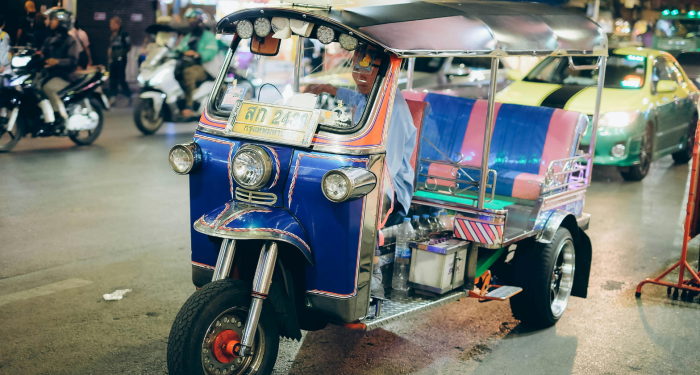
In Saigon, that means hopping on the back of a motorbike taxi, even though the traffic looks insane. In Tokyo, it's navigating the subway system. In Amsterdam, it's renting a bike.
Yes, taxis and Ubers are easier. But you miss the entire ecosystem of daily life. The morning commute energy, the unwritten rules of who offers seats to whom, the rhythm of rush hour.
Download local transportation apps. Watch how people pay, where they stand, how they queue. These mundane moments teach you more about a culture than any guidebook.
8) Shop at markets, not malls
Modern shopping malls are the same worldwide. Markets are where culture lives.
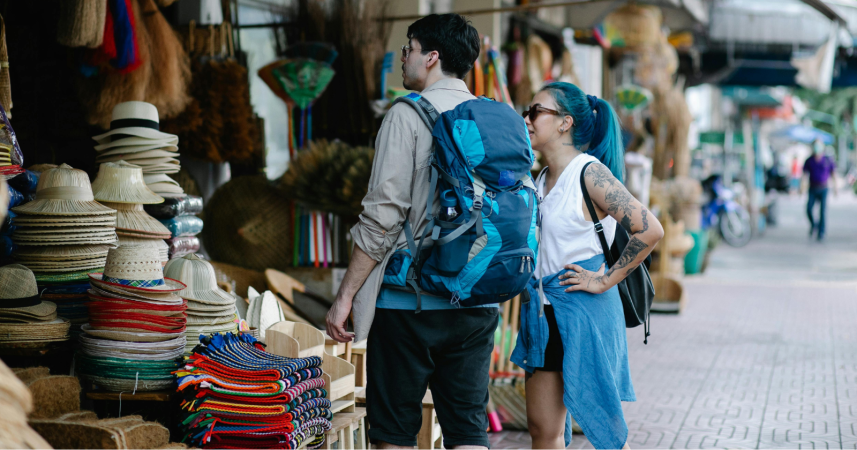
Every Sunday, I join my wife at our local wet market. It's sensory overload—the smell of fresh herbs mixing with fish, the sound of vendors calling out deals, the organized chaos of hundreds of people navigating narrow aisles.
Markets teach you what people actually eat, wear, and value. You'll see grandmothers picking through vegetables with expertise no restaurant chef could match. You'll learn which fruits are in season, what fresh fish looks like, how business really works.
Bring small bills. Smile a lot. Don't be afraid to try samples. And remember—haggling isn't confrontation; it's conversation.
9) Embrace productive confusion
The moments when everything goes wrong often become the best stories.
Getting lost led me to my favorite café in Saigon. A language misunderstanding introduced me to a dish I now eat weekly. Missing a bus forced me to share a taxi with locals who became friends.
When you stop seeing confusion as failure and start seeing it as opportunity, travel transforms. You're not trying to control experiences; you're letting them unfold.
This doesn't mean being reckless. It means being flexible. Having backup plans but not clinging to them. Saying yes more than no.
Final words
Cultural intelligence isn't about being perfect. It's about being present, respectful, and open to learning.
The tourists counting landmarks stay on the surface. The travelers developing cultural intelligence dive deeper. They come home with more than photos—they bring back expanded perspectives and genuine connections.
Every trip is a chance to practice. To notice more, assume less, and engage deeper. The goal isn't to blend in completely or pretend you're something you're not.
It's to move through the world with awareness and respect, creating positive exchanges wherever you go.
The next time you travel, challenge yourself. Order food without pointing at pictures. Take local transportation during rush hour. Strike up conversations beyond "where's the bathroom?"
The world opens up when you stop observing it and start participating in it.
What’s Your Plant-Powered Archetype?
Ever wonder what your everyday habits say about your deeper purpose—and how they ripple out to impact the planet?
This 90-second quiz reveals the plant-powered role you’re here to play, and the tiny shift that makes it even more powerful.
12 fun questions. Instant results. Surprisingly accurate.