After decades of finding friendship at the office water cooler, retired men discover they never learned the most crucial workplace skill of all — how to make friends when the workday ends.

Add VegOut to your Google News feed. 
Last Thursday, I watched my neighbor Jim stand at his mailbox for twenty minutes, sorting through junk mail he'd already read twice.
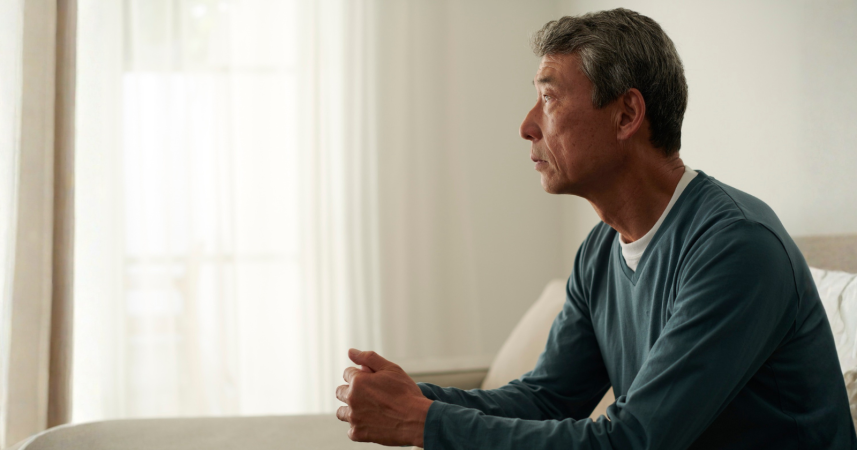
His wife passed six months ago, and I recognized that particular brand of lingering – the kind where you're hoping someone, anyone, might walk by and start a conversation. When I finally went over to chat, the relief on his face nearly broke my heart. "Haven't talked to anyone all week," he admitted, then quickly added, "Not that I'm complaining."
Jim isn't alone in his isolation, and he's certainly not choosing it. After spending decades where work provided built-in social structures and daily interactions, many retired men find themselves adrift in a world that suddenly requires them to actively create and maintain connections.
The workplace gave them colleagues, lunch companions, and water cooler conversations without them having to think about it. Now, without that scaffolding, they're discovering something nobody prepared them for: they never learned how to need people when the office lights went dark.
The workplace was their social training ground
For generations, men have been conditioned to view relationships through the lens of productivity and purpose. At work, friendships formed naturally around projects, deadlines, and shared goals. There was always a reason to connect – a meeting to attend, a problem to solve, a victory to celebrate. The structure did the heavy lifting of relationship maintenance.
But what happens when that structure disappears? Psychology Today reports that "Men's Social Networks Decline Significantly as They Age," and research backs this up dramatically. Studies show a 50% decrease in the number of emotional support providers between the ages of 30 and 90 for men, with the steepest decline often coinciding with retirement.
I think about my own father, a mailman who knew everyone in town by name. His work wasn't just delivering letters; it was his daily dose of human connection. When he retired, he struggled to recreate those casual interactions that had sustained him for forty years.
The routes he'd walked became foreign territory when he no longer had a reason to be there. He'd taught me so much about community, yet retirement revealed how much of his social world had been tied to that blue uniform and leather bag.
Nobody taught them the language of vulnerability
Here's what breaks my heart: most men of retirement age were raised in an era where asking for help or admitting loneliness was seen as weakness. They learned to be providers, protectors, problem-solvers – never the ones who needed solving themselves. The workplace allowed them to connect without vulnerability. They could build friendships around shared tasks rather than shared feelings.
David Braucher Ph.D. explores "The Pandemic of Male Loneliness," highlighting how cultural expectations have created generations of men who struggle to articulate emotional needs. When work relationships end, these men often lack the tools to say, "I'm lonely. I need a friend. Can we grab coffee just because?"
After my second husband's Parkinson's diagnosis, I watched him grapple with this exact challenge. As his world narrowed and work became impossible, he couldn't find the words to tell his former colleagues he missed them. Pride and conditioning created walls where bridges were desperately needed.
Those seven years taught me how deeply ingrained these patterns are, and how much courage it takes to unlearn them.
The myth of the grumpy old man
When retired men withdraw, we often mislabel it as grumpiness or antisocial behavior. We assume they're choosing isolation, that they prefer their own company, that they've become set in their ways. But Psychology Today identifies something called "Older Sad Man Syndrome," suggesting that what looks like irritability is often unrecognized depression and profound loneliness.
The Normative Aging Study followed 1,311 men and found that long-term retirees reported the least quantitative social support, while continuing full-time workers reported the most. This isn't about personality changes or becoming difficult with age.
It's about losing the primary structure through which they've understood and navigated relationships for most of their adult lives.
The cost of waiting for others to reach out first
There's a cruel irony in how retirement social dynamics often play out. Men wait for invitations that don't come, assuming their absence means they're not wanted. Meanwhile, their former colleagues and friends assume these men are enjoying their retirement, busy with grandchildren or hobbies. Both sides wait for the other to make the first move.
Do you remember the last time you reached out to a retired male friend or relative just to check in? Not for a holiday or special occasion, but simply because you were thinking of them?
I learned this lesson painfully after my divorce. Many couple friends stopped inviting me to things, and I assumed it was personal. Years later, I discovered they simply didn't know how to include me in their coupled world and were waiting for me to signal I was ready. So much connection lost to mutual hesitation and unspoken assumptions.
Breaking the pattern requires intentional action
The encouraging news from recent research involving 2,026 older adults is that interventions targeting social connections can make a real difference. But these interventions require something that goes against decades of conditioning: deliberate vulnerability and the admission of need.
After losing my second husband, I spent six months barely leaving the house. The isolation felt safer than the effort required to maintain connections. When I finally emerged, I had to learn something completely new at 68 years old – how to make friends without a built-in structure.
It meant joining groups where I knew no one, initiating coffee dates that felt uncomfortably like dating, and most challenging of all, admitting I was lonely and needed people.
The men I've watched successfully navigate retirement and maintain rich social lives all share one trait: they learned to be intentional about connection. They schedule regular meetups, join clubs not for the activity but for the people, and most importantly, they've given themselves permission to need others without shame.
Final thoughts
That Thursday with Jim at the mailbox became a weekly coffee date. He still struggles to reach out when he needs company, but we're working on it. Last week, he texted me a simple "Having a rough day" – eight months ago, he never could have sent those words. Progress looks different at this stage of life, but it's no less profound.
The tragedy isn't that retired men become stubborn or antisocial. It's that we've created a culture where their primary source of connection disappears overnight, leaving them without the tools to rebuild. Understanding this distinction is the first step toward change – both for the men experiencing this isolation and for those of us who love them.
What’s Your Plant-Powered Archetype?
Ever wonder what your everyday habits say about your deeper purpose—and how they ripple out to impact the planet?
This 90-second quiz reveals the plant-powered role you’re here to play, and the tiny shift that makes it even more powerful.
12 fun questions. Instant results. Surprisingly accurate.