
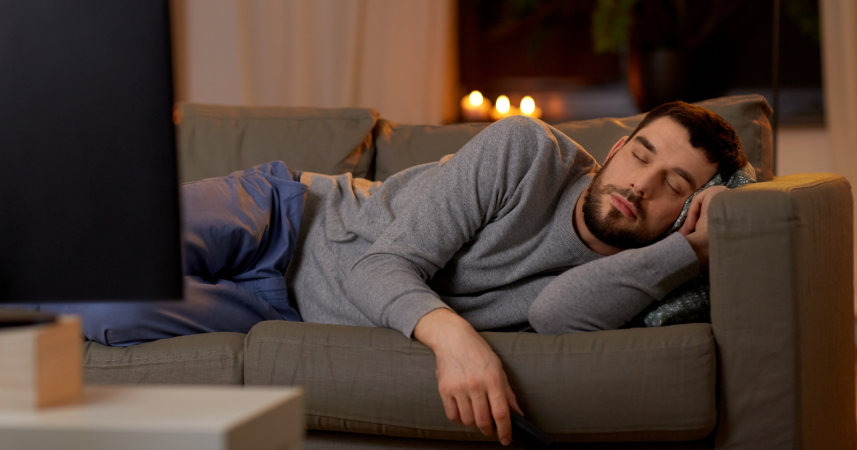
While millions rely on the familiar glow and comforting voices from their screens each night, psychologists reveal this common bedtime ritual often masks deeper anxieties we're unconsciously trying to silence.

Add VegOut to your Google News feed. 
Do you know someone who can't fall asleep without the TV on? Maybe that someone is you?
For years, I thought needing background noise to sleep was just a quirky habit. But as I dove deeper into psychology and my own anxiety patterns, I discovered there's usually more going on beneath the surface. The glow of the screen, the familiar voices, that constant stream of distraction... they're often serving as a buffer against anxieties we'd rather not face in the quiet darkness.
If you're someone who reaches for the remote every night before bed, you're not alone. Studies show that around 60% of adults watch TV within an hour of bedtime, and many can't imagine drifting off without it. But here's what psychology tells us: this habit might be your mind's way of managing deeper anxieties.
Let me walk you through six anxieties that often hide behind the need for nighttime TV, and trust me, recognizing them was a game-changer for my own sleep habits.
1) Fear of being alone with your thoughts
Ever notice how the moment your head hits the pillow, your brain decides it's the perfect time to replay every awkward conversation from 2015? Or suddenly remember that email you forgot to send?
This is what psychologists call intrusive thoughts, and they love to show up when external distractions disappear. The TV acts like a security blanket, giving your mind something else to focus on instead of spiraling into worry or self-criticism.
I used to be the queen of this. The second I turned off the lights, my brain would start its nightly performance of "Everything That Could Go Wrong Tomorrow." Having the TV on meant I could focus on someone else's drama instead of creating my own mental soap opera.
According to clinical psychologist Dr. Michael Breus, "Many people use television as a way to quiet their internal dialogue, but this actually prevents them from processing emotions and thoughts that need attention."
The irony? Avoiding these thoughts often makes them louder. Once I started reading for an hour before bed instead of watching TV, those racing thoughts actually calmed down. It wasn't immediate, but giving my brain structured quiet time helped it stop treating bedtime like an emergency brainstorming session.
2) Fear of silence and stillness
When was the last time you sat in complete silence without reaching for your phone, turning on music, or finding something to watch?
For many of us, silence feels uncomfortable, even threatening. It can trigger what researchers call "silence anxiety," where the absence of sound creates a sense of unease or impending doom. The TV fills that void, creating a comforting wall of sound between us and the quiet.
Growing up, my house was always noisy. Someone was always talking, music was playing, or the TV was on. Silence meant something was wrong. It took me years to realize I was carrying this association into adulthood, treating quiet like an enemy to be defeated rather than a natural state to embrace.
3) Anxiety about lack of control
This one hit close to home for me. The predictability of your favorite show, the ability to change channels when you want, the power button at your fingertips... TV gives us a sense of control when we're entering the vulnerable state of sleep.
Sleep requires surrender. You're literally losing consciousness, becoming defenseless. For those of us with control issues (guilty as charged), this transition can trigger anxiety. The TV becomes our safety net, something we can manage when everything else feels uncertain.
I discovered that my need for control stemmed from childhood anxiety about my parents' approval. Every achievement needed to be perfect, every decision calculated. That pressure followed me to bed each night. Having the TV on gave me something I could control in those vulnerable moments before sleep.
Learning to sit with discomfort instead of immediately problem-solving it away was transformative. Some nights are still harder than others, but recognizing this pattern helped me understand why the remote felt like a lifeline.
4) Fear of missing out (FOMO)
Sounds strange, right? How can you have FOMO while you're sleeping?
But think about it. That need to watch "just one more episode" or keep the news on to stay "informed"... it's often driven by anxiety about disconnecting from the world. The TV keeps us tethered to the outside, even as we're trying to rest.
Research from the Journal of Behavioral Addictions found that FOMO significantly correlates with problematic internet and television use, especially before bedtime. We're so afraid of missing something that we sacrifice the very thing we need most: quality sleep.
5) Perfectionism and the fear of unproductive time
Are you someone who feels guilty about "doing nothing"? Welcome to the club.
For perfectionists, bedtime can feel like wasted time. The TV tricks our brains into thinking we're doing something, even if it's just passive consumption. It's a way to avoid the discomfort of simply being.
I struggled with perfectionism that made me miserable until learning about "good enough." Every moment needed to be optimized, including sleep. Watching TV felt like multitasking, getting entertainment while falling asleep. Two birds, one stone, right?
Wrong. Harvard Health Publishing reports that blue light from screens can actually suppress melatonin production, making quality sleep harder to achieve. My perfectionist attempt to maximize time was actually sabotaging my rest.
6) Anxiety about nightmares or sleep disturbances
Sometimes the fear isn't about falling asleep, it's about what happens once we do.
If you've experienced nightmares, sleep paralysis, or other sleep disturbances, the TV might feel like protection. The background noise and light create a less complete sleep state, which can feel safer than deep, vulnerable sleep.
A friend once told me she kept the TV on because complete darkness reminded her of a traumatic experience. The flickering light and familiar voices were her armor against the night. While this coping mechanism made sense, it was also preventing the deep, restorative sleep her body needed to heal.
Final thoughts
Recognizing these anxieties isn't about judgment. We all have our coping mechanisms, and there's no shame in needing the TV to fall asleep. But understanding what drives this need gives you power to address the root causes, not just the symptoms.
Dealing with anxiety throughout my career taught me that awareness is the first step toward change. You might not be ready to turn off the TV tonight, and that's okay. Maybe start by setting a sleep timer, or trying one night a week without it. Small steps count.
Consider what your nighttime TV habit might be telling you. Is it masking anxiety that deserves attention? Could addressing these underlying fears lead to better sleep and less dependence on that glowing screen?
Remember, the goal isn't perfection. It's understanding yourself better and making choices that serve your wellbeing. Whether that means keeping the TV on with intention or gradually learning to embrace the quiet, the power is yours.
Sweet dreams, with or without the screen.
If You Were a Healing Herb, Which Would You Be?
Each herb holds a unique kind of magic — soothing, awakening, grounding, or clarifying.
This 9-question quiz reveals the healing plant that mirrors your energy right now and what it says about your natural rhythm.
✨ Instant results. Deeply insightful.

Avery White
Formerly a financial analyst, Avery translates complex research into clear, informative narratives. Her evidence-based approach provides readers with reliable insights, presented with clarity and warmth. Outside of work, Avery enjoys trail running, gardening, and volunteering at local farmers’ markets.
More Articles by Avery










