
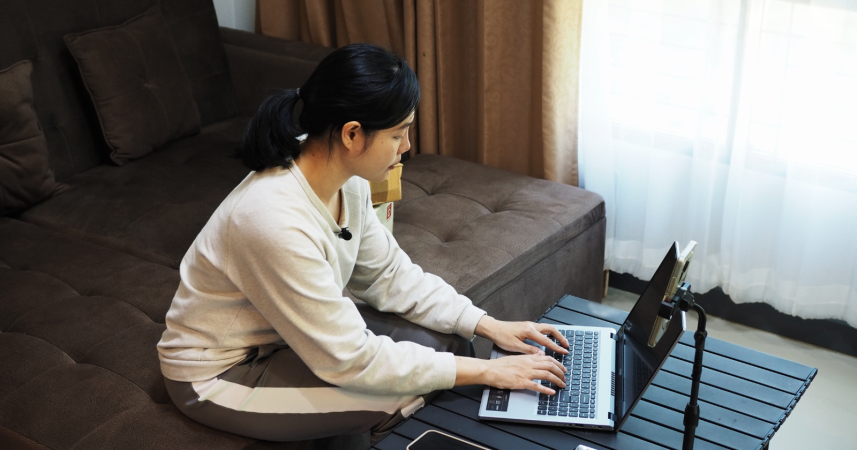
While most productivity experts insist on eliminating distractions, research reveals that people who work better with background TV actually possess unique psychological traits that give them a cognitive edge—from superior selective attention to enhanced creative thinking abilities.

Add VegOut to your Google News feed. 
Ever notice how some people seem to get their best work done with the TV humming in the background while others need complete silence?
I used to be firmly in the "silence only" camp. Back in my days as a junior analyst, I'd seek out the quietest corner of the office, convinced that any background noise would derail my focus.
But then I noticed something interesting: My most productive colleague always had earbuds in, streaming shows while crushing spreadsheets.
This got me curious about the psychology behind ambient noise and productivity. Turns out, research suggests that people who thrive with background TV aren't just tolerating distraction; they're actually wired differently.
These individuals often display specific psychological traits that make them uniquely suited to this work style.
If you've ever felt guilty about keeping Netflix on while tackling your to-do list, you might want to reconsider. The science behind this phenomenon reveals some fascinating insights about how our brains process information and maintain focus.
1) They have higher sensory processing sensitivity
Do you find complete silence almost oppressive? Like it's too loud in its own way?
People who work well with TV on often have what psychologists call high sensory processing sensitivity. This means their brains are particularly attuned to environmental stimuli and actually need a certain level of sensory input to function optimally.
I discovered this about myself when I transitioned from the corporate world to writing. Those 90-minute focused writing blocks I schedule? They're way more productive with something playing in the background.
The gentle hum of dialogue and music creates what researchers call a "cocoon effect," where the predictable noise actually helps filter out more jarring, unpredictable sounds.
Think of it like white noise for productivity. Your brain uses the TV audio as a buffer against more disruptive sounds like sirens, neighbors, or that one coworker who types like they're angry at their keyboard.
2) They excel at selective attention
Here's something that might surprise you: People who work with TV on often have superior selective attention skills.
Selective attention is your brain's ability to focus on relevant information while filtering out the irrelevant. It's like having a really good spam filter for your consciousness.
While it might seem counterintuitive, having TV on actually gives these individuals something consistent to filter out, which paradoxically sharpens their focus on the task at hand.
When I listen to psychology podcasts during my trail runs, I'm not catching every word. Instead, my brain is selecting the most relevant bits while maintaining my pace and watching the trail. The same principle applies to working with TV on. Your brain learns to treat it as background texture rather than primary content.
3) They're often creative thinkers
Research from the Journal of Consumer Research found that moderate ambient noise can actually enhance creative performance. Why? Because it creates just enough cognitive processing difficulty to promote abstract thinking.
Creative individuals often need this slight disruption to break out of conventional thought patterns. The TV provides random stimuli that can trigger unexpected connections and ideas. It's like having a creativity randomizer running in the background.
I've noticed this in my own work. Some of my best article ideas have come while half-listening to a documentary about something completely unrelated. The brain makes these beautiful, unexpected leaps when it's not forcing connections.
4) They have lower anxiety levels about perfectionism
Growing up labeled as "gifted" taught me all about the pressure to be perfect. Every assignment, every project had to be flawless. But here's what I've learned: People who can work with TV on often have a healthier relationship with perfectionism.
The background noise serves as a reminder that the world keeps moving regardless of whether your work is absolutely perfect. It creates a more relaxed mental state where "good enough" becomes acceptable, and paradoxically, this often leads to better work because you're not paralyzed by perfectionist anxiety.
Psychologists call this "optimal arousal theory." Some people need that slight edge of stimulation to prevent their anxiety from taking over. The TV provides just enough distraction to keep the perfectionist voice from getting too loud.
5) They're typically extroverted processors
Not all extroverts, mind you, but many people who work well with TV on display extroverted processing styles. They think better with external stimulation rather than in complete internal silence.
This doesn't mean they're all social butterflies. It means their cognitive processing benefits from external input. The TV mimics the energy of having people around without the actual interruption of real human interaction.
During those 70-hour weeks in my analyst days, I noticed that the extroverted processors in our team always migrated to the busier areas of the office. They needed that ambient energy to think clearly. TV provides a similar effect from the comfort of your home office.
6) They demonstrate cognitive flexibility
Cognitive flexibility is your brain's ability to switch between thinking about different concepts or adapt to new situations. People who can productively work with TV on often score high in this area.
Their brains can seamlessly shift attention when needed, dipping into the TV content during natural work breaks, then diving back into deep focus. It's like having multiple browser tabs open in your mind and knowing exactly when to switch between them.
This flexibility often extends to other areas of life too. These individuals tend to be good at multitasking, adapting to change, and thinking on their feet.
7) They have strong pattern recognition abilities
Ever notice how you can have a show on and somehow know exactly when something important is happening without actively watching?
People who work well with background TV often have exceptional pattern recognition skills. Their brains quickly learn the rhythms and patterns of shows, allowing them to tune in and out at appropriate moments without losing productivity.
This same pattern recognition helps in their actual work. They're often good at spotting trends, identifying problems before they become obvious, and making connections others might miss.
Final thoughts
The next time someone judges you for working with the TV on, remember that it might actually be a sign of cognitive strengths, not weakness.
Our brains are beautifully diverse in how they process information and maintain focus. What works for one person might be completely counterproductive for another, and that's perfectly okay.
If you're someone who thrives with background TV, embrace it. Use it strategically. Find the shows that provide the right level of ambient noise without being too engaging. Nature documentaries, familiar sitcoms, or cooking shows often work well.
And if you're someone who needs absolute silence? That's equally valid. The key is understanding your own cognitive style and creating an environment that supports your best work.
The research is clear: Productivity isn't about following rigid rules about the perfect work environment. It's about understanding your unique psychological makeup and working with it, not against it.
If You Were a Healing Herb, Which Would You Be?
Each herb holds a unique kind of magic — soothing, awakening, grounding, or clarifying.
This 9-question quiz reveals the healing plant that mirrors your energy right now and what it says about your natural rhythm.
✨ Instant results. Deeply insightful.

Avery White
Formerly a financial analyst, Avery translates complex research into clear, informative narratives. Her evidence-based approach provides readers with reliable insights, presented with clarity and warmth. Outside of work, Avery enjoys trail running, gardening, and volunteering at local farmers’ markets.
More Articles by Avery










