
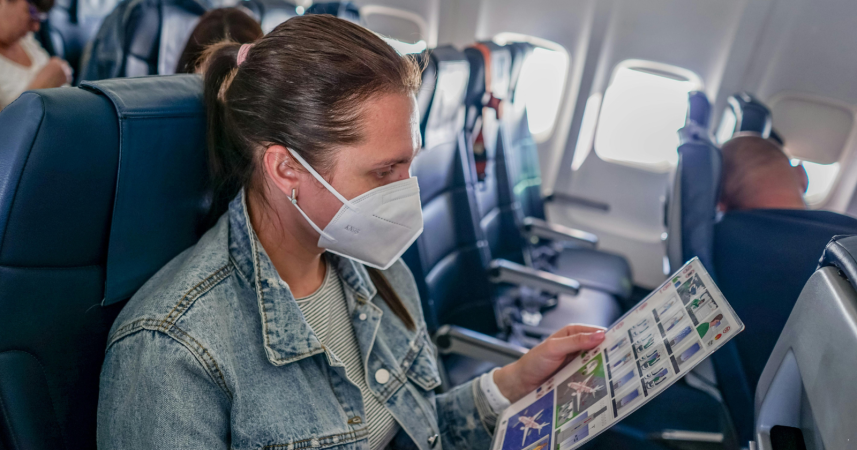
From a deep-seated fear of being trapped to an overwhelming need to control every exit strategy, your airplane seating preference might be revealing more about your anxiety patterns and past experiences than you ever imagined.

Add VegOut to your Google News feed. 
Ever noticed how some people beeline straight for the aisle seat on planes, trains, or even in movie theaters? I used to be one of them. Not just preferring it, but genuinely feeling anxious if I couldn't snag that coveted spot with easy access to the exit.
It wasn't until I started diving deeper into psychology that I realized this seemingly innocent preference might reveal something more profound about our relationship with control. And trust me, as someone who spent years in financial analysis before transitioning to writing about human behavior, I've learned that our small habits often tell the biggest stories about who we are.
According to psychological research, people who consistently need that aisle seat often share specific control-related traits that show up in other areas of their lives too. These aren't necessarily negative traits, but understanding them can help us recognize patterns that might be limiting our growth or affecting our relationships.
So if you're someone who gets genuinely stressed when you can't book that aisle seat, or if you know someone who does, stick around. What I'm about to share might just explain a lot more than your seating preferences.
1) You have a high need for autonomy
Think about it: when you're in the aisle seat, you don't need anyone's permission to get up. You don't have to awkwardly climb over strangers or wake up your snoring seatmate just to use the restroom. You're free to move when you want, how you want.
This need for autonomy often extends way beyond airplane seats. You might find yourself preferring jobs where you can set your own schedule, feeling frustrated when group projects slow you down, or getting irritable when plans change without your input.
I remember working in my corporate job and feeling suffocated whenever my manager micromanaged my projects. It wasn't about thinking I knew better; it was about needing the freedom to approach tasks in my own way. That same feeling would wash over me when I got stuck in a window seat, trapped by two sleeping passengers during a red-eye flight.
The connection? Both situations triggered my deep-seated need to maintain control over my own actions and decisions. Sound familiar?
2) You're uncomfortable with dependency
When you're in that middle or window seat, you're dependent on others for basic needs. Need to stretch your legs? Better hope your neighbor is understanding. Having a panic attack? You're at the mercy of how quickly others can move.
People with this trait often struggle to ask for help in daily life. You might drive yourself to the hospital with a broken ankle rather than call a friend. You might spend hours figuring out a problem alone instead of asking a colleague who could solve it in minutes.
Growing up, I learned early that asking for help meant potentially facing disappointment or criticism. My parents, though loving, had high expectations, and I internalized the belief that needing others was a sign of weakness. This translated into everything from refusing to ask for directions when lost to, yes, always booking that aisle seat so I'd never have to ask someone to move.
3) You have heightened anxiety about escape routes
Here's where things get really interesting. Psychologists have found that people who consistently choose aisle seats often score higher on measures of anxiety, particularly around feeling trapped or confined.
The aisle seat represents an escape route. Even if you have no intention of leaving, just knowing you could provides immense psychological comfort. This same pattern shows up in how you choose restaurants (near the door, please), where you park (easy exit preferred), and even in relationships where you might keep one foot out the door "just in case."
During my most anxious years, I'd scope out exits everywhere I went. Meetings, parties, even casual coffee dates. The aisle seat wasn't just a preference; it was a coping mechanism. And while there's nothing wrong with wanting options, when this need starts limiting where you'll go or what you'll do, it might be worth examining.
4) You struggle with uncertainty
The window seat passenger has no idea when they'll next be able to move freely. Will the person next to them sleep the entire flight? Will they be understanding about bathroom breaks? Too many unknowns.
If you're an aisle seat devotee, you probably like having answers to these questions before they become issues. You're in control of your own movement, eliminating a whole category of uncertainty from your travel experience.
This trait often manifests as over-planning in other areas. You might have backup plans for your backup plans, feel anxious when meetings don't have clear agendas, or struggle when friends suggest "playing it by ear."
I used to create detailed spreadsheets for weekend trips, complete with multiple contingency plans. My analytical background certainly contributed, but deeper down, it was about minimizing uncertainty. The same drive that made me excellent at risk assessment in finance also made me deeply uncomfortable with any situation I couldn't predict or control.
5) You're highly sensitive to physical boundaries
Personal space matters to everyone, but for aisle seat seekers, it might matter just a little bit more. The aisle gives you that extra few inches of space, that ability to lean away from your seatmate, that sense of having at least one side of your body unrestricted.
People with strong boundary needs often experienced either boundary violations or extreme boundary rigidity in their past. Maybe you grew up in a chaotic household where privacy was rare, or perhaps you were raised with such strict boundaries that any closeness feels threatening.
You might find yourself arriving early to meetings to choose your seat, feeling drained after crowded events, or needing significant alone time to recharge after social interactions. These aren't character flaws; they're simply your nervous system's way of maintaining equilibrium.
6) You equate control with safety
At its core, the aisle seat represents control, and for many of us, control equals safety. When we can control our environment, we feel less vulnerable to potential threats, whether real or imagined.
This equation often develops early in life. Maybe you had experiences where lack of control led to negative outcomes, or perhaps anxiety runs in your family, making you more prone to seeking controllable situations.
I spent years believing that if I could just control enough variables, I could prevent bad things from happening. Plan enough, prepare enough, sit in the right seat, and somehow I'd be safe from life's uncertainties. It took a lot of work to learn that while some control is healthy and necessary, the illusion of total control was actually making my anxiety worse, not better.
Final thoughts
If you recognized yourself in these traits, you're not alone. The need for control, especially in small ways like choosing an aisle seat, is incredibly common and often stems from completely understandable places.
The key is recognizing when these preferences cross the line from helpful coping strategies to limiting behaviors. Can you only fly if you get an aisle seat? Do these control needs interfere with relationships or opportunities? That's when it might be time to gently challenge yourself.
I've learned that sitting with discomfort, rather than immediately trying to control it away, has been one of my greatest teachers. Sometimes I deliberately book a middle seat now, just to practice being okay with not being in control. It's uncomfortable, sure, but it's also freeing.
Our seating preferences might seem trivial, but they often reflect deeper patterns in how we navigate the world. Understanding these patterns doesn't mean we need to change them all, but awareness gives us choice. And isn't that what control is really about anyway?
If You Were a Healing Herb, Which Would You Be?
Each herb holds a unique kind of magic — soothing, awakening, grounding, or clarifying.
This 9-question quiz reveals the healing plant that mirrors your energy right now and what it says about your natural rhythm.
✨ Instant results. Deeply insightful.

Avery White
Formerly a financial analyst, Avery translates complex research into clear, informative narratives. Her evidence-based approach provides readers with reliable insights, presented with clarity and warmth. Outside of work, Avery enjoys trail running, gardening, and volunteering at local farmers’ markets.
More Articles by Avery










