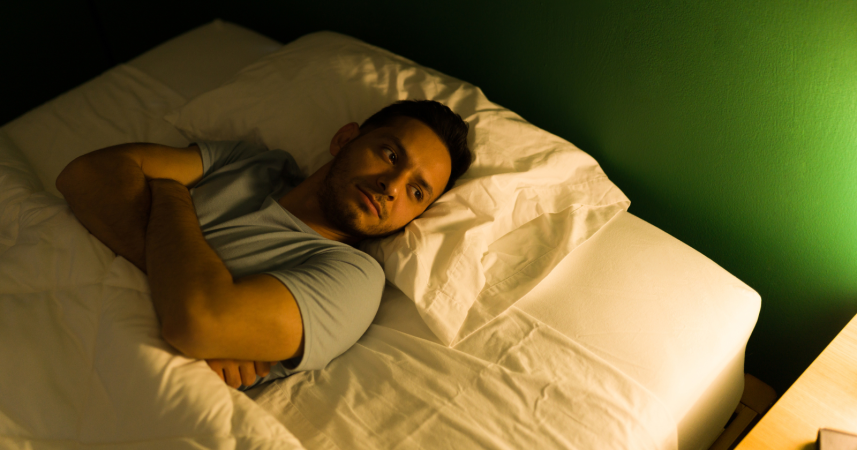
For millions of adults, that nightly ritual of checking the closet door isn't just a quirk—it's a window into the profound ways our childhood fears still shape our bedtime behaviors decades later.

Add VegOut to your Google News feed. 
Does the sight of an open closet door at night make your skin crawl? You're not alone, and there's actually a fascinating psychological reason behind it.
I'll admit it: I'm 43 years old, and I still can't sleep with my closet door open. Not even a crack. Every night, I double-check that it's firmly shut before I can even think about closing my eyes. For years, I felt embarrassed about this quirk until I discovered that millions of adults share this exact same habit.
What I've learned through my work studying psychological patterns is that these seemingly irrational bedtime rituals often trace back to deep-seated childhood fears. The open closet door isn't really about the door itself. It's about what our younger selves believed could be hiding in that dark space.
If you're someone who needs that closet door closed to feel safe at night, you likely share some common childhood experiences with others who have this habit. Let me walk you through eight fears that often shape this behavior, and maybe you'll recognize your own story in them.
1) Fear of the unknown lurking in darkness
Remember being a kid and staring into that black void of your closet? Your imagination ran wild with possibilities of what could be hiding there. Maybe it was monsters, maybe intruders, or maybe just something undefined and scary.
This fear of the unknown is one of our most primal instincts. As children, we couldn't rationalize away the darkness like adults supposedly can. But here's the thing: that childhood wiring doesn't just disappear. When I see an open closet at night, some part of my brain still registers it as a portal to danger, even though I logically know better.
The darkness represents uncertainty, and uncertainty feels unsafe. By closing the door, we're literally shutting out that uncertainty and creating a barrier between us and whatever our imagination might conjure up.
2) Fear of being watched
Did you ever feel like invisible eyes were watching you from your closet? This is incredibly common among kids who now can't sleep with open closets as adults.
Growing up as an only child, I spent a lot of time alone in my room, and that closet always felt like it had a presence. I'd convinced myself that something was observing me from that dark space, waiting for me to fall asleep. Even now, an open closet door makes me feel exposed and vulnerable, like I'm on display for an unseen audience.
Psychologists call this scopophobia, and it often develops in childhood when we're learning about privacy and personal boundaries. The closet becomes a symbol of intrusion into our safe space.
3) Fear of losing control
Control is everything when you're a scared kid trying to fall asleep. You can't control what happens in your dreams, but you can control your environment. Closing that closet door? That's taking charge.
I've noticed this pattern intensely in my own life. Being labeled "gifted" in elementary school meant constant pressure to be perfect, to have everything figured out. At night, when all that pressure would bubble up as anxiety, controlling small things like the closet door gave me a sense of power. It was something I could manage when so much else felt overwhelming.
This need for control often carries into adulthood. We close the closet door because it's one thing we can definitively handle before surrendering to sleep.
4) Fear of disappointment and not meeting expectations
This one might seem like a stretch, but stay with me. Many people who insist on closed closet doors grew up in households with high expectations. The open closet represents disorder, imperfection, something left undone.
My parents were both high achievers, and our house ran like clockwork. Everything had its place, including me. An open closet door felt like failure, like I hadn't properly completed my bedtime routine. It represented all those little ways I might fall short of expectations.
Even today, that open door can trigger feelings of inadequacy. It's fascinating how our childhood experiences with perfectionism can manifest in such specific ways.
5) Fear of vulnerability during sleep
Sleep is when we're most defenseless. As kids, we understood this instinctively. The closet door becomes a shield, a barrier between us and potential threats.
Think about it: when you're asleep, you can't defend yourself. You can't run. You can't even scream sometimes. That closet, with its hidden depths and shadows, represents all the ways we could be caught off guard. Closing it is like putting on armor before entering the battlefield of dreams.
This fear often intensifies if you experienced any form of childhood trauma or even just watched scary movies at too young an age. Your brain learned to associate open spaces with potential danger during your most vulnerable moments.
6) Fear of imagination becoming reality
Kids have incredibly vivid imaginations, and sometimes the line between fantasy and reality gets blurry, especially in the dark. If you imagined monsters in your closet often enough as a child, part of your brain still believes they might materialize.
I remember lying in bed, convinced that if I thought about something scary too hard, it would somehow become real and emerge from my closet. This magical thinking is normal in childhood development, but traces of it linger in our adult minds. The closed door acts as a barrier between imagination and reality.
7) Fear of unfinished business
An open closet can represent tasks left incomplete, problems unsolved, or conflicts unresolved. For anxious kids, bedtime was often when all the day's worries would surface.
Throughout my career, I dealt with anxiety that would spike at night. I'd lie there thinking about everything I hadn't done, should have done, or needed to do tomorrow. The open closet became a physical representation of all that unfinished business.
Closing it was like closing the book on the day, giving myself permission to rest.
Many adults who need closed closets report similar feelings. It's about creating closure, literally and figuratively, before we can relax.
8) Fear of the self hidden in shadows
This might be the deepest fear of all. Sometimes what scares us about the open closet isn't what might come out, but what parts of ourselves might be hiding in there.
Closets are where we hide things. As kids, maybe we hid report cards we didn't want our parents to see, or broken toys we weren't supposed to touch. The closet held our secrets and shames. Leaving it open at night felt like leaving those hidden parts of ourselves exposed.
Final thoughts
If you need that closet door closed to sleep, you're not weird or childish. You're human, carrying perfectly normal responses to childhood experiences. These fears served a purpose once, helping us feel safe and in control during vulnerable moments.
I keep a gratitude journal every evening now, something I was initially skeptical about but now find incredibly grounding. Part of my entry often includes appreciating my quirks and understanding where they come from.
That closed closet door? It's not a weakness. It's a reminder of the creative, cautious, and wonderfully complex child I once was.
So tonight, when you close that closet door, do it without shame. You're not alone in this ritual, and there's nothing wrong with creating the environment you need to feel safe and rest well. Sweet dreams, with all doors firmly shut.
What’s Your Plant-Powered Archetype?
Ever wonder what your everyday habits say about your deeper purpose—and how they ripple out to impact the planet?
This 90-second quiz reveals the plant-powered role you’re here to play, and the tiny shift that makes it even more powerful.
12 fun questions. Instant results. Surprisingly accurate.