
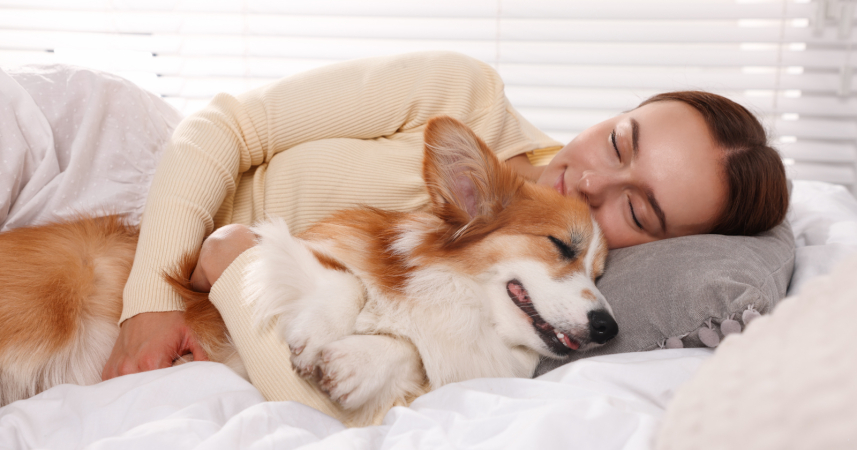
The nightly battle for blanket space with your four-legged companion might be revealing deeper truths about your attachment style, emotional boundaries, and even your approach to human relationships than any personality test ever could.

Add VegOut to your Google News feed. 
Does your furry friend claim their spot on your bed every single night without fail?
Some people think it's unhygienic or disruptive to sleep quality. Others wouldn't dream of kicking their pet out of the bedroom. But what if I told you that this simple choice reveals more about your personality than you might think?
After years of observing pet owners (and being one myself), I've noticed fascinating patterns in the people who share their sleeping space with their animals. Psychology backs this up too. The decision to let your pet sleep in your bed isn't just about convenience or comfort. It speaks volumes about your attachment style, your boundaries, and even your approach to relationships.
Before you start wondering if you're being psychoanalyzed by your sleeping arrangements, let me be clear: there's no right or wrong answer here. But understanding what your choices reveal can offer some pretty interesting insights into who you are as a person.
So if you regularly wake up with a face full of fur or find yourself contorted into weird positions to accommodate your pet's comfort, here's what psychology says about you.
1) You have a strong nurturing instinct
People who let their pets sleep in their beds often have an incredibly developed nurturing side. You're likely the friend who checks in when someone's having a rough day, the one who remembers birthdays, and probably the person who waters your neighbor's plants when they're away.
This nurturing instinct goes beyond just caring for others. It's about creating a sense of safety and comfort for those you love. When you let your pet into your most vulnerable space (because let's face it, we're pretty defenseless when we're asleep), you're essentially saying, "I want you to feel as secure as possible."
People who co-sleep with pets score higher on empathy scales. You likely pick up on subtle emotional cues from both humans and animals, responding with genuine care and attention.
I remember when I first adopted my rescue dog. She was terrified of everything, including sleeping alone. The first night she tentatively climbed onto my bed, I could have directed her to her own bed. But watching her finally relax and feel safe? That told me everything I needed to know about my own need to nurture and protect.
2) You value emotional connection over social conventions
Let's be honest: not everyone approves of pets in beds. Maybe your mother thinks it's unsanitary, or your friends joke about you being "that person" who treats their pet like a child.
But here's what choosing to share your bed with your pet really says: you prioritize authentic emotional connections over what society thinks you should do. You're someone who makes decisions based on what feels right to you, not what looks right to others.
This trait likely extends to other areas of your life too. You probably choose friends based on genuine connection rather than social status. You might pursue hobbies that truly interest you, even if they're not considered cool or mainstream.
3) You have a high tolerance for unpredictability
Anyone who sleeps with a pet knows that peaceful, uninterrupted sleep is often a distant dream. Between the 3 AM zoomies, the strategic bed hogging, and the occasional need to go outside, you've essentially signed up for nightly disruptions.
What does this say about you? You're adaptable. You can roll with the punches. You don't need everything to be perfectly controlled to feel comfortable.
This flexibility probably shows up in other ways too. You might be the person who doesn't panic when plans change last minute. You can find humor in chaos. You understand that life is messy, and you've made peace with that reality.
Studies on personality and pet ownership suggest that people who share beds with pets score lower on neuroticism scales. In other words, you're less likely to be anxious about things being "just so."
4) You might struggle with boundaries in relationships
Okay, this one might sting a little, but hear me out.
If you consistently prioritize your pet's comfort over your own sleep quality, or if you've had relationship conflicts because you refuse to compromise on the bed-sharing situation, it might indicate some boundary issues.
Do you also have trouble saying no to friends who ask for favors? Do you sometimes give more in relationships than you receive? The same personality trait that makes you wonderfully giving with your pet might also make you vulnerable to being taken advantage of by less considerate humans.
The key here is awareness. There's nothing wrong with being generous and accommodating, but make sure you're not sacrificing your own needs in the process.
5) You're likely more trusting than average
Think about it: you're literally unconscious for eight hours next to a creature with teeth and claws. Sure, it's your beloved pet, but this level of vulnerability requires deep trust.
This trusting nature probably extends beyond your pet relationships. You might be someone who assumes positive intent in others, gives people the benefit of the doubt, and believes in second chances.
Research from the University of Florida found that people who co-sleep with pets report higher levels of interpersonal trust. You're probably not the suspicious type who questions everyone's motives.
6) You value comfort over appearance
If you're willing to deal with pet hair on your sheets, the occasional muddy paw print, and explaining to houseguests why there's a dog-shaped indent in your mattress, you clearly prioritize comfort over keeping up appearances.
This is actually a sign of strong self-esteem. You know what makes you happy, and you're not willing to sacrifice that for the sake of having an Instagram-perfect bedroom.
You probably make similar choices in other areas. Maybe you wear your favorite worn-out sneakers even though they're not fashionable. Perhaps you've kept that ratty old armchair because it's the most comfortable spot in your house.
7) You process stress through physical connection
For many people who sleep with their pets, the physical presence of their animal is deeply calming. The warmth, the rhythmic breathing, the soft fur, all of these provide tangible stress relief.
This suggests you're someone who benefits from physical grounding when dealing with anxiety or stress. You might also be someone who hugs friends when they're upset, who finds massage therapeutic, or who feels better after physical exercise.
The American Pet Products Association found that 62% of pet owners who share beds with their animals report better stress management. Your pet isn't just a companion; they're part of your emotional regulation toolkit.
Final thoughts
Whether your bed is a human-only zone or a furry free-for-all, what matters most is that your sleeping arrangement works for you. These personality insights aren't judgments, they're just observations about the fascinating ways our choices reflect who we are.
If you recognized yourself in some of these traits, great! Self-awareness is the first step to personal growth. If some of these observations made you uncomfortable, that's worth exploring too.
At the end of the day (or night, in this case), the relationship you have with your pet is unique. And if that relationship includes midnight cuddles and morning breath that could knock over a horse, well, that just makes you human.
Sweet dreams, whether you're sleeping solo or in a pile of paws.
What’s Your Plant-Powered Archetype?
Ever wonder what your everyday habits say about your deeper purpose—and how they ripple out to impact the planet?
This 90-second quiz reveals the plant-powered role you’re here to play, and the tiny shift that makes it even more powerful.
12 fun questions. Instant results. Surprisingly accurate.












