
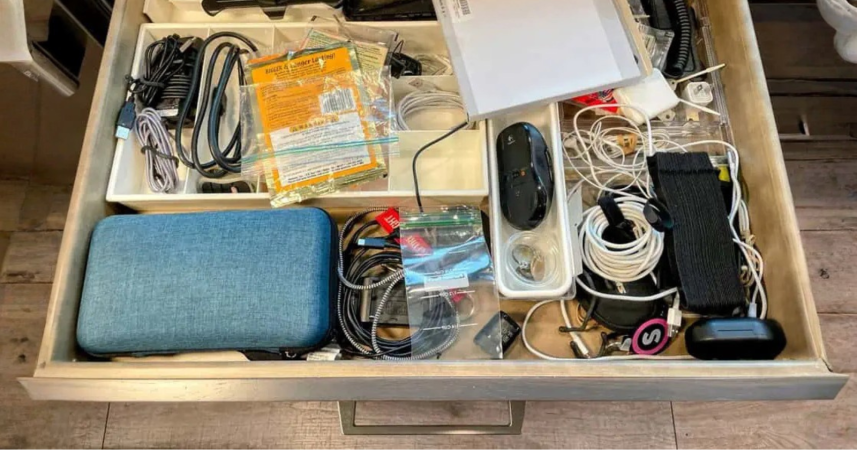
The drawer full of broken phones and obsolete gadgets you can't seem to throw away isn't about being practical—it's about the hidden ways you've learned to measure your own worth.

Add VegOut to your Google News feed. 
That old laptop from 2015? Still sitting in my closet. The smartphone with the cracked screen? In my desk drawer. The ancient printer that hasn't worked in years? Taking up space in my home office.
If you're nodding along right now, you're not alone. For years, I told myself I was being practical, environmentally conscious, or that I'd "fix them someday."
But working through my own relationship with possessions, especially after helping my parents downsize last year, I've discovered something deeper at play.
The inability to let go of broken electronics isn't just about being frugal or eco-friendly. Psychology reveals it's often tied to complex patterns around self-worth, identity, and our relationship with achievement.
These patterns run deeper than we realize, shaping not just our closets but our sense of self.
1) The "potential value" trap
Do you keep broken electronics because they "might be worth something" or you could "sell them online someday"?
This pattern often stems from a scarcity mindset tied to self-worth. When we link our value to what we possess or could potentially gain, broken items become symbolic of unrealized potential.
That broken tablet isn't just e-waste; it represents possible money, possible usefulness, possible value you haven't extracted yet.
I noticed this pattern intensely when I left my financial analyst career. Suddenly, without that steady paycheck, every possession felt like it needed to justify its existence through potential monetary value.
Those broken electronics became a safety net I couldn't release, even though they were worthless sitting in storage.
The truth? Most broken electronics have minimal resale value, and the mental energy spent holding onto them costs more than they're worth.
When we release the need to extract every ounce of value from possessions, we often find our sense of abundance actually increases.
2) The achievement archive syndrome
That first iPhone you bought with your own money? The gaming console from college? Sometimes we hold onto broken electronics because they represent past achievements or milestones.
Growing up with parents who emphasized education above all else, I learned early to tie possessions to accomplishment.
Each gadget marked a success: The laptop from my first bonus, the camera from a promotion. Even broken, they served as physical proof of my achievements.
Psychologists call this "material possession attachment," where objects become external validators of our accomplishments. When self-worth depends on these achievement markers, letting go feels like erasing our success story.
But here's what I've learned: Your achievements exist whether or not you keep the broken evidence.
3) The "I might need this" anxiety
How many times have you thought, "What if I need that cable?" or "The new phone might break and I'll need the old one as backup"?
This pattern often masks deeper anxiety about preparedness and control. When we feel our worth comes from being the person who always has solutions, who never needs help, broken electronics become insurance policies against future vulnerability.
During a particularly stressful period in my life, I noticed my electronics drawer growing. Each broken item represented protection against an uncertain future.
But this false security actually increased my anxiety, creating clutter that reminded me daily of potential problems rather than present abundance.
4) The identity investment pattern
Are you holding onto that broken DSLR camera because you "used to be into photography"? Or that tablet because you were "going to learn digital art"?
We often keep broken electronics that represent who we were or who we thought we'd become.
These items become monuments to past selves or unrealized dreams. When self-worth gets tangled with these identity markers, disposing of them feels like admitting failure or giving up on potential versions of ourselves.
I held onto a broken fitness tracker for two years after it stopped working. Not because I planned to fix it, but because letting it go meant acknowledging I wasn't the "fitness person" I'd tried to become.
Once I realized my worth wasn't tied to that identity, the tracker was easy to recycle.
5) The perfectionist's dilemma
"I just need to find the right recycling program" or "I'm waiting for the perfect time to properly dispose of these."
Sound familiar? This perfectionist pattern keeps us frozen in inaction.
When self-worth depends on doing everything "right," the fear of imperfect disposal becomes paralyzing. We'd rather hold onto broken items indefinitely than risk disposing of them imperfectly.
Looking through old report cards during my parents' move, I saw this perfectionism had been with me since elementary school. Being labeled "gifted" created pressure to never make mistakes, even with something as simple as throwing away old electronics.
The irony? Holding onto them indefinitely is often worse than imperfect disposal.
6) The sunk cost attachment
"But I paid $800 for this laptop!" Even when electronics are beyond repair, we hold on because of what we invested.
This pattern reveals how we tie self-worth to financial decisions. Admitting something expensive is now worthless feels like admitting we made a bad choice, that we weren't smart consumers.
For someone who spent years as a financial analyst, this hit particularly hard. I'd used money as a measure of self-worth for so long that every financial "loss" felt personal.
The psychological term "sunk cost fallacy" describes this perfectly. We can't get back what we spent, but we compound the loss by letting broken items take up physical and mental space. Your worth isn't determined by past purchasing decisions.
7) The environmental guilt complex
While environmental consciousness is important, sometimes "I don't want to add to landfills" becomes an excuse for inaction rooted in deeper patterns.
This can mask a fear of judgment or a need to be seen as a "good person." When self-worth depends on being morally superior or environmentally perfect, the guilt of disposal becomes overwhelming.
We'd rather bear the burden of storage than risk feeling like we're harming the planet.
The reality? Most cities have electronic recycling programs. Holding onto broken electronics in your closet doesn't save the environment. Taking action, even imperfect action, often does more good than paralyzed perfectionism.
8) The memory keeper mode
That broken phone holds photos you haven't transferred. The old laptop has files you might want someday. Sometimes we're not holding onto the device but the memories or data inside.
This pattern often connects to fear of losing our history, our story, our proof of existence. When self-worth feels fragile, these digital memories become anchors to our identity.
We keep broken devices as shrines to past experiences, relationships, or versions of ourselves.
After helping my parents sort through decades of possessions, I realized how much we use objects to hold memories we're afraid to forget. But memories live in us, not in broken hard drives.
Final thoughts
Recognizing these patterns in myself wasn't comfortable. It meant confronting how much I'd let external things define my internal worth. But awareness is the first step toward change.
Start small. Choose one broken electronic item and sit with the discomfort of letting it go. Notice what comes up. Is it anxiety about waste? Fear of needing it? Attachment to what it represents?
Your worth isn't stored in that drawer full of old phones or that closet of broken laptops. It never was. These items served their purpose, and holding onto them won't make you more valuable, prepared, or successful.
The space you create by letting go, both physical and mental, makes room for who you're becoming now. And that person doesn't need broken electronics to prove their worth.












