Your home says a lot about how you care for yourself. From cozy spaces and nourishing food to books, plants, and moments of reflection — the things you surround yourself with can quietly reveal how well you’re tending to your body and mind. If these seven things are already in your home, you’re doing better at self-care than most people realize.
Self-care is one of those buzzwords that gets thrown around a lot, isn’t it? We hear it in podcasts, read about it on social media, and see it plastered across skincare ads.
But here’s the truth — self-care isn’t just about bubble baths, face masks, or expensive retreats.
It’s about how you design your life — and that includes your home.
The things we keep around us say a lot about how we treat ourselves. Our homes are mirrors of our internal state.
When you walk into a space that’s calm, nourishing, and intentional, it reflects a deeper sense of care that most people overlook.
So if these seven things are already part of your home, chances are, you’re doing better at taking care of yourself than you might think.
1) A comfortable, uncluttered space
Let’s start with the obvious: clutter. It’s sneaky.
You think it’s just “stuff,” but it quietly chips away at your energy. When your home feels chaotic, your mind often follows suit.
Psychologists from Princeton University found that clutter literally competes for your attention — it makes it harder to focus and increases stress levels. No surprise there, right?
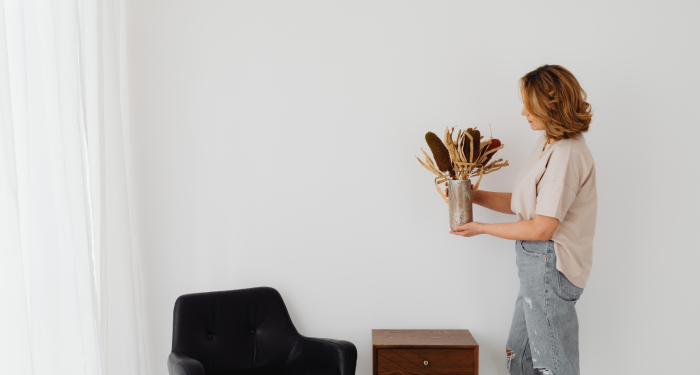
If your living space feels clean, functional, and comfortable — not necessarily spotless, but intentional — you’re already prioritizing mental peace.
It doesn’t have to look like a Pinterest board either.
Sometimes it’s as simple as putting things where they belong, having cozy lighting, or keeping only what brings you comfort or purpose.
Creating a space that feels like a sanctuary isn’t shallow — it’s smart. Your surroundings set the tone for how you feel every single day.
2) A stocked kitchen with nourishing food
You can tell a lot about how someone treats themselves by looking inside their fridge.
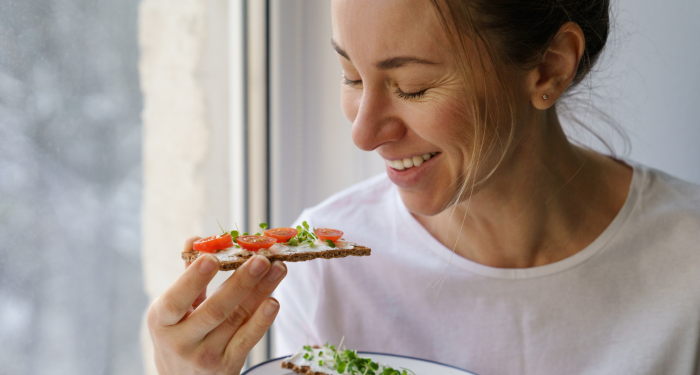
If yours contains real, nourishing food — fresh produce, whole grains, plant-based proteins, or even leftovers from a home-cooked meal — that’s a sign you’re investing in your well-being.
I say this not as a nutrition fanatic but as someone who once lived on takeout and caffeine.
Back when I was working long hours as an analyst, I convinced myself I didn’t have time to cook. My meals came in paper bags, and my body ran on stress and sugar.
It wasn’t until I made the switch to vegan cooking — simple, wholesome meals made from actual ingredients — that I realized how much food affects not just my body but my mood, focus, and emotional balance.
Feeding yourself well is one of the most underrated forms of self-respect. You don’t have to cook elaborate dishes.
Even stocking up on foods that fuel you — oats, lentils, greens, nuts, and good olive oil — means you’re prioritizing yourself.
3) Plants or greenery
I can’t talk about self-care without mentioning plants.
Something is grounding about having living things in your home. It connects you to nature, which most of us desperately need in a world of screens and concrete.
Multiple studies back this up — indoor plants can lower stress, boost mood, and improve air quality. They remind us to slow down, to water, to nurture, to notice.
You don’t need to turn your living room into a jungle. Even one low-maintenance plant on your windowsill can make a difference.
A peace lily, a pothos, or a snake plant — all thrive with minimal effort.
Caring for something else, even something as simple as a plant, subtly reinforces the message: I’m capable of nurturing. I’m capable of creating life and beauty in my space.
That’s self-care on a deeper level.
4) A space for rest — and I mean real rest

We often underestimate how much our environment affects our sleep.
If you have a bed that feels genuinely comfortable, soft lighting, and a space that helps you unwind at the end of the day, you’re ahead of most people.
Sleep deprivation has become a badge of honor in our culture — but it’s one of the fastest ways to burn out.
When I worked in finance, I wore exhaustion like a trophy. It wasn’t until I started waking up foggy and irritable that I realized how unsustainable it was.
Now, I treat my sleep space like sacred ground. I keep it free from distractions, use calming scents like lavender, and invest in good sheets.
Not expensive ones — just soft, breathable, and clean.
If your bedroom feels like a place that invites rest rather than activity, that’s real progress. You’ve recognized that rest isn’t lazy — it’s maintenance.
5) Books that feed your mind
You can tell a lot about someone by the books they keep nearby.
If you’ve got a few that inspire, challenge, or comfort you — whether they’re about psychology, nature, fiction, or philosophy — that’s a subtle but strong sign of self-investment.
Reading books forces you to slow down and focus on one thing. It’s the opposite of scrolling.
It stretches your attention span, sparks ideas, and reminds you of how vast the world is outside your own head.
I keep a small stack of my favorites on my nightstand. A few are on mindfulness, some on emotional intelligence, and one is an old gardening guide I found at a local market.
Just seeing them there makes me feel connected to the parts of myself that crave growth and curiosity.
It doesn’t matter what kind of books you have — only that they make you think, soothe your mind, or remind you who you are. That’s nourishment for the soul.
6) Tools for movement
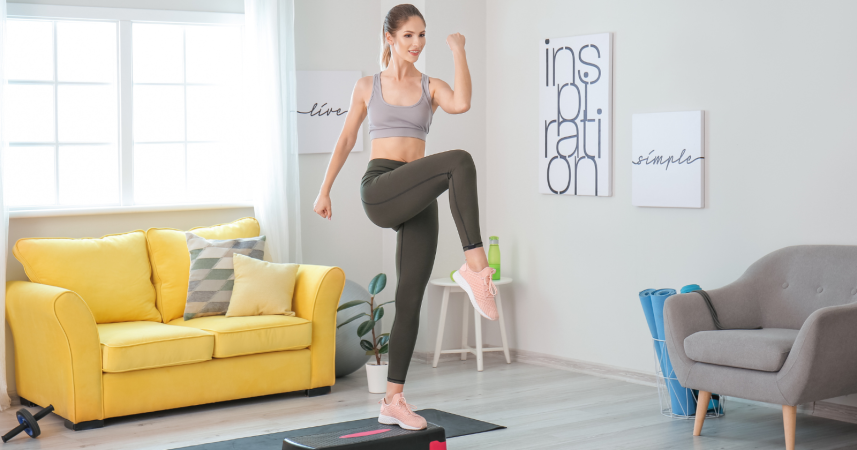
This doesn’t have to mean a full home gym. It could be a yoga mat in the corner, a set of resistance bands, running shoes by the door, or even a bike in the hallway.
If you have anything in your home that encourages you to move your body, that’s huge.
Physical activity isn’t just about fitness — it’s emotional regulation.
It clears stress hormones, boosts endorphins, and helps you reconnect with your body after hours of mental noise.
For me, trail running became that outlet. It started as a stress-relief habit after long days at the office.
Over time, it turned into something deeper — a meditative practice. Every step outdoors reminded me that I could keep going, no matter how tough things felt.
Having a visible reminder of that — like your running shoes or yoga mat — signals something important: you’re creating space for your body to feel alive.
7) A place for reflection
This one doesn’t have to be fancy.
It could be a small journal on your coffee table, a corner where you sit with your tea in the morning, or even a candle you light at night before bed.
If your home has a spot where you pause — to breathe, reflect, or just be — you’re practicing one of the most powerful forms of self-care: mindfulness.
It’s so easy to move through life on autopilot. But when you intentionally create a space that invites you to check in with yourself, you start cultivating emotional awareness.
I keep a journal near my favorite chair in the living room.
Sometimes I write a lot, sometimes just a sentence or two — something I noticed, something I’m grateful for, or even something that felt hard that day.
It’s not about perfection. It’s about presence.
If your home reminds you to slow down and connect with yourself, even for a few minutes, you’re already way ahead of the curve.
The bottom line
A self-caring home doesn’t mean perfection. It’s not about how it looks on Instagram or how well it’s color-coordinated. It’s about how it feels — to you.
If your space supports your body, mind, and emotions — even in small ways — that’s success.
Because self-care isn’t an event; it’s a system. It’s how you structure your days, how you feed yourself, how you rest, and how you create an environment that reflects care rather than chaos.
If you looked around while reading this and realized, hey, I already have a few of these things — take that as a quiet win.
You’re not just surviving. You’re building a life that takes care of you right back.