Walking through my friend's living room filled with "Live, Laugh, Love" signs and fake flowers, I was suddenly transported back to my childhood home—and realized these seven common decorating choices might be revealing more about our financial anxieties than we think.

Add VegOut to your Google News feed. 
Let me walk you through something that happened last weekend that really got me thinking.
I was visiting a friend I hadn't seen in years, catching up over coffee in her living room. As we chatted, I couldn't help but notice how she'd decorated her space. There were these mass-produced "Live, Laugh, Love" signs everywhere, fake flowers in vases, and those generic canvas prints you see at every big box store. And you know what? It reminded me exactly of the home I grew up in.
Growing up in a middle-class suburb, I saw these same decorating choices everywhere. My parents, both high achievers who expressed love through concern about financial security, filled our home with similar items. They wanted our house to look "nice" without breaking the bank, and these decorations seemed like the perfect solution.
But here's what I've learned after years of observing people and their spaces: certain home decor choices can reveal a lot about someone's socioeconomic background and mindset. And often, these items reflect what I call the "lower-middle-class trap" of trying to appear wealthier while actually highlighting financial constraints.
Before we dive in, let me be clear: there's absolutely nothing wrong with being lower-middle-class. I spent years paying off student loans until I was 35, and I know the struggle. But understanding these patterns can help us make more intentional choices about how we present ourselves and our homes.
1) Mass-produced inspirational wall art
You know those wooden signs with phrases like "Blessed" or "Family Rules" that you can find at every discount home store? They're everywhere in lower-middle-class homes, and there's a reason for that.
These pieces offer the illusion of personalization without the cost of actual custom artwork. They're trying to fill wall space and add "character" on a budget. But here's the thing: when everyone has the same "unique" piece, it stops being unique.
I remember walking through my old neighborhood and seeing the same "Gather" sign in at least five different dining rooms. It's like wearing the same outfit as everyone else at a party. You're trying to fit in, but you end up blending into the background.
Real art doesn't have to be expensive. Local artists, thrift store finds, or even your own photography can create a more authentic and personal space without screaming "I bought this at HomeGoods."
2) Fake designer items and knockoffs
Whether it's a fake Louis Vuitton bag displayed on a shelf or knockoff Eames chairs in the dining room, these items reveal something deeper than just budget constraints.
They show a desire to project an image that doesn't match reality. And trust me, people can tell. That "Chanel" perfume bottle filled with colored water as bathroom decor? It's not fooling anyone.
When I was working as a financial analyst, I saw colleagues do this all the time. They'd rather have a fake version of something expensive than find something genuine within their budget. But authenticity always wins over imitation.
3) Oversized flat-screen TVs that dominate the living room
Walk into a lower-middle-class home, and often the first thing you'll notice is a massive TV that seems to dwarf everything else in the room. The bigger, the better, right?
This isn't just about enjoying movies. It's about displaying one of the few "luxury" items they could afford. The TV becomes the focal point, not because of thoughtful design, but because it represents a significant financial investment.
I've been in homes where the TV is so large that people have to crane their necks to watch it comfortably. Meanwhile, the rest of the furniture is mismatched or worn. It's putting all your eggs in one basket, decoratively speaking.
4) Plastic flowers and artificial plants everywhere
Real plants die. They need water, sunlight, and care. Fake ones? They just need occasional dusting. On the surface, artificial plants seem practical and economical.
But there's something telling about filling your home with imitations of life. It suggests a preference for appearance over substance, for the easy solution over the rewarding challenge of nurturing something real.
A friend once told me, "I kill everything I touch," as she showed me her collection of silk orchids. But caring for plants is a skill you can learn, just like anything else. And there's something about real, living greenery that changes the energy of a space in a way plastic never can.
5) Matchy-matchy furniture sets from big box stores
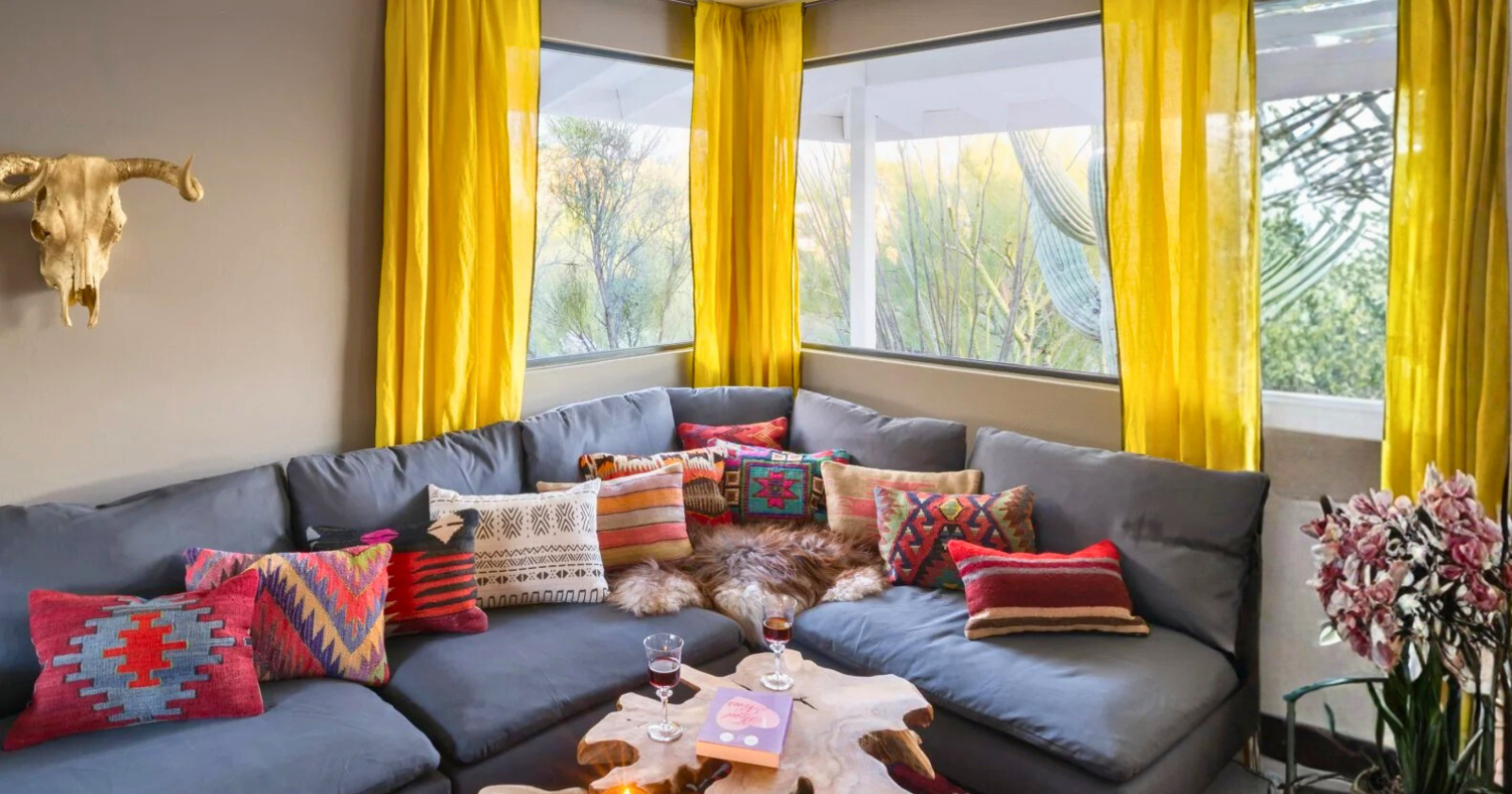
You've seen them: the living room where every piece matches perfectly because it all came from the same showroom display. The bedroom suite where the nightstands, dresser, and bed frame are clearly a package deal.
This approach to decorating shows a fear of making mistakes, of not knowing what "goes together." So instead of developing personal style, people buy the pre-approved set. It's safe, but it's also generic.
Some of the most interesting homes I've been in mix vintage finds with modern pieces, high-end items with budget discoveries. They tell a story. Matching sets? They just tell you which store had a sale.
6) Excessive seasonal decorations
Every holiday brings a complete transformation. Halloween? The house looks like a Spirit store exploded. Christmas? You can barely see the actual house under all the inflatable Santas and light displays.
This over-decorating often comes from a place of wanting to create magic and memories, especially for kids. But it can also reveal a need to keep up with the neighbors, to prove you can afford to be festive.
I grew up in a neighborhood where holiday decorating was practically competitive. My parents would stress about having enough decorations, worried that our house would look "cheap" compared to others. The irony? We were all in the same financial boat, just trying to out-decorate each other.
7) Gallery walls of generic prints and family photos in cheap frames
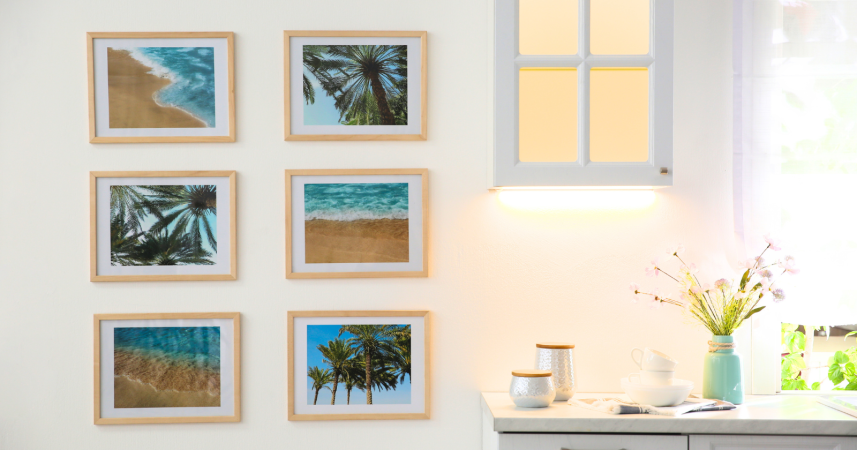
Those template gallery walls with a mix of motivational quotes, generic prints, and family photos in mismatched discount frames? They're trying so hard to look curated and personal, but they often achieve the opposite.
The problem isn't the family photos or even the idea of a gallery wall. It's the execution that gives it away. The frames are flimsy, the prints are mass-produced, and the quotes are the same ones you see on everyone's Instagram.
Creating a meaningful gallery wall doesn't require money as much as it requires intention. Choose photos that tell a story, invest in a few quality frames even if it means having fewer pieces, and skip the generic quotes altogether.
Final thoughts
Look, I'm not saying any of these decorating choices make someone a bad person or that there's shame in being lower-middle-class. I've been there. I understand the desire to make your space feel special on a budget.
But here's what I've learned: trying to fake wealth or status through home decor usually backfires. People see through it, and more importantly, it keeps you from developing your own authentic style.
The most impressive homes I've visited weren't necessarily the most expensive. They were the ones where people made thoughtful choices, where they chose quality over quantity, authenticity over imitation.
Your home should reflect who you are, not who you think you should be. And sometimes, that means having fewer things but choosing them more carefully. Sometimes it means living with blank walls until you find something you really love. Sometimes it means admitting you can't afford something instead of buying a knockoff.
Because at the end of the day, real style and real class have nothing to do with how much money you have. They're about being genuine, making thoughtful choices, and creating a space that truly feels like home.